



Quick answer: Bideli makes double-walled drum roasters from 1 kg to 12 kg capacity, built from stainless and carbon steel with a rated 30-plus-year service life. The 1kg and 1.5kg tabletop models suit home enthusiasts; the 6kg and 12kg commercial versions run simultaneous roast-and-cool cycles and save profiles on the automatic configuration. All models connect to Artisan roasting software via USB.
If you've spent any time comparing mid-range commercial drum roasters, you already know the pattern: Probat delivers exceptional heat control but the price and parts cost are prohibitive for most small operators. Diedrich leans into energy efficiency and infrared heat, which is real, but you give up some of the hands-on airflow control that matters during development. Bideli sits in a different spot: double-walled drum, four independent motors, and a parts philosophy built for a shop that can't afford downtime.
What makes a Bideli roaster different?
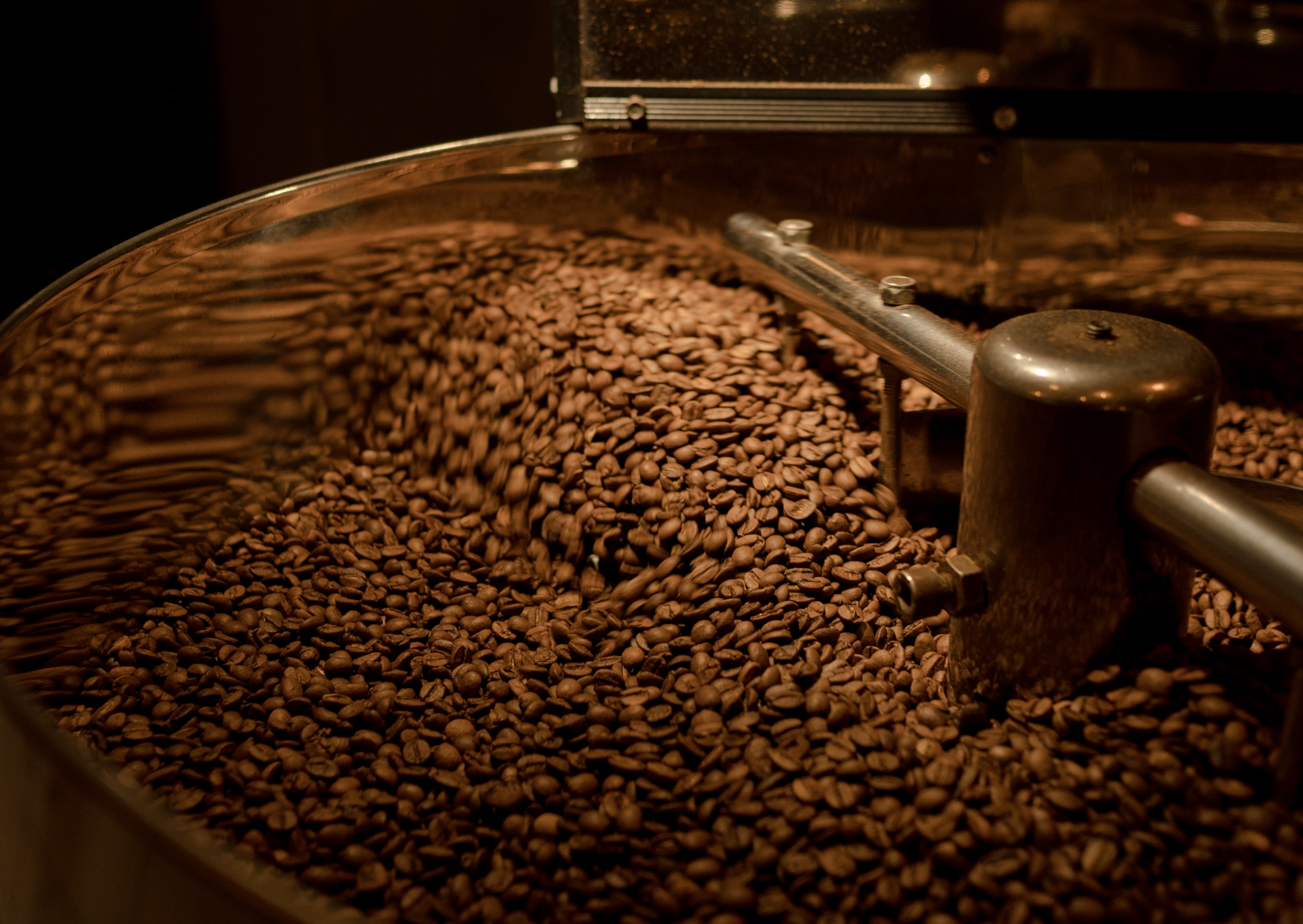
Bideli has been building drum roasters since the early 1990s. The machine design centers on three things that actually affect cup quality and operating cost.
The double-walled drum uses both conductive and convective heat transfer. That means the bean mass gets heat from direct contact with the drum surface and from hot air moving through it simultaneously. Special mixing blades inside the drum keep beans tumbling evenly, which reduces the scorching you get on lighter roasts when beans sit against a single hot surface too long.
Four motors handle separate functions independently: drum rotation, cooling, airflow, and chaff collection. The payoff is that roasting and cooling happen simultaneously rather than sequentially, which shortens total cycle time and locks flavor and aroma in faster. For high-volume days, that time savings compounds.
Control is analog-friendly. A USB logger connects to Artisan, the open-source roasting software, so you can log and replay any roast profile you dial in. A glass burner window and sample spoon handle real-time monitoring. Manual flame adjustment, hot air control, and a manual damper give you independent control over heat input and airflow, the two variables that matter most when you're chasing a specific development time ratio. The automatic versions of the 6kg and 12kg save those profiles on-machine, so you're not reliant on a laptop being present for every repeat batch.
Materials are stainless steel and carbon steel throughout. Bideli rates the machines for 30-plus years of service life. That's a real number if you're comparing total cost of ownership against a cheaper roaster you'll replace every 5 to 7 years.

Home models: 1kg through 3kg
Choosing the right roaster size starts with an honest read of your actual weekly volume. Bideli's tabletop lineup runs from 1kg to 3kg batch capacity.
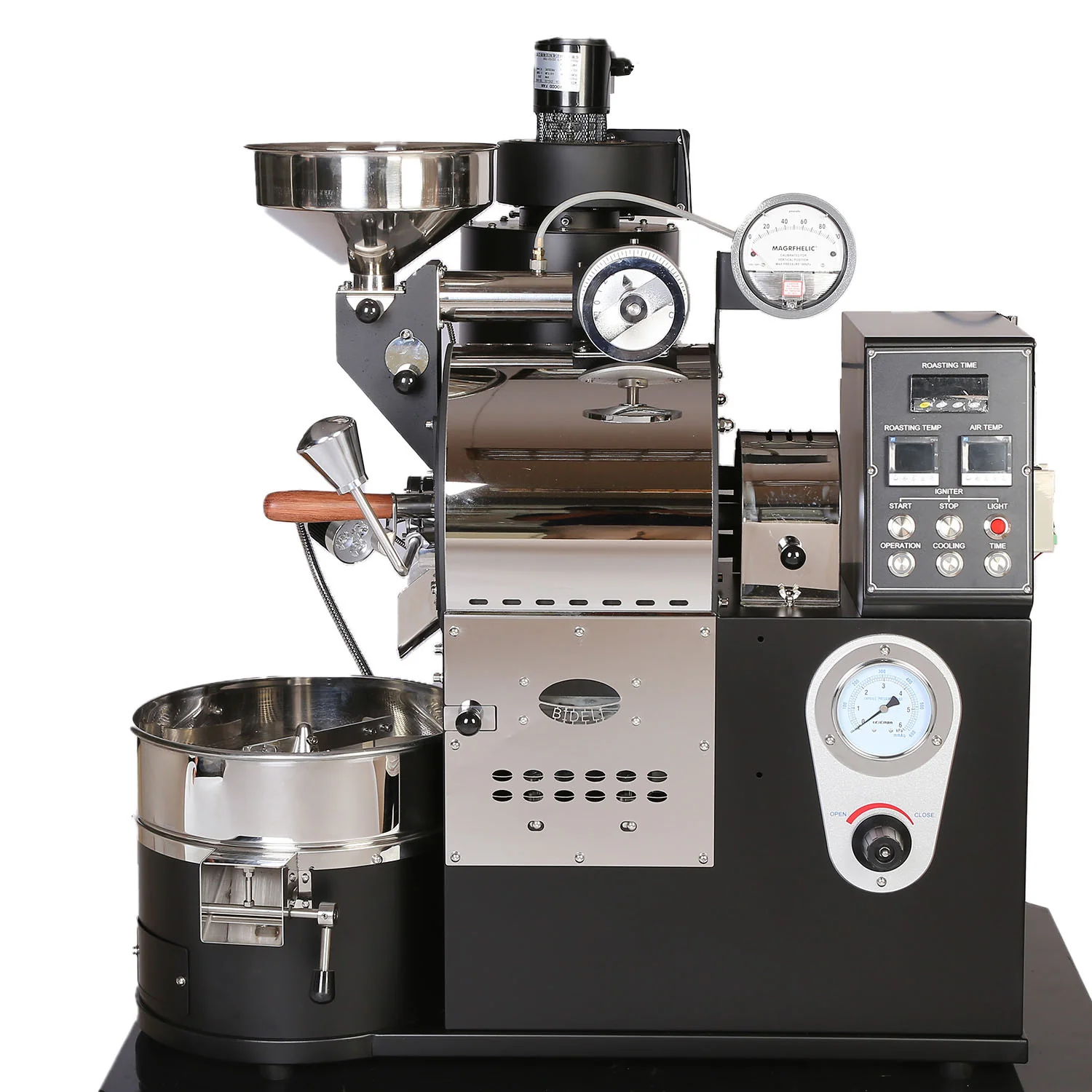
1kg Roaster
The starting point for serious home roasting. At 1kg per batch, you're producing enough for about a week of daily brewing, which lets you stay consistently fresh without stockpiling. The smaller drum size makes it easier to read color development through the window and catch first crack before it slips into second.
1.5kg Roaster
The 1.5kg automatic adds profile-saving to the home lineup. If you're roasting two or three different origins regularly and want to replay a dialed-in curve without rebuilding it from scratch each session, this is worth the step up from the 1kg.
2kg Roaster
Good for a home roaster who's supplying a small gathering or running a small side business. Rated at 2kg per batch; the original spec sheet lists a maximum green bean input of 3.5kg, which we'd recommend verifying with CRC before purchase, since loading over the rated capacity affects heat curve consistency. Wheeled base on this model is practical if you're moving it between a roasting space and storage.
3kg Roaster
The 3kg is the upper end of what most people would call a home machine. It also works as a sample roaster in a commercial setup, where you'd use it for small test batches before committing to a full production run on the 6kg or 12kg. The wheeled legs matter here because at 3kg you're moving a real piece of equipment, not a countertop appliance.
Commercial models: 6kg and 12kg
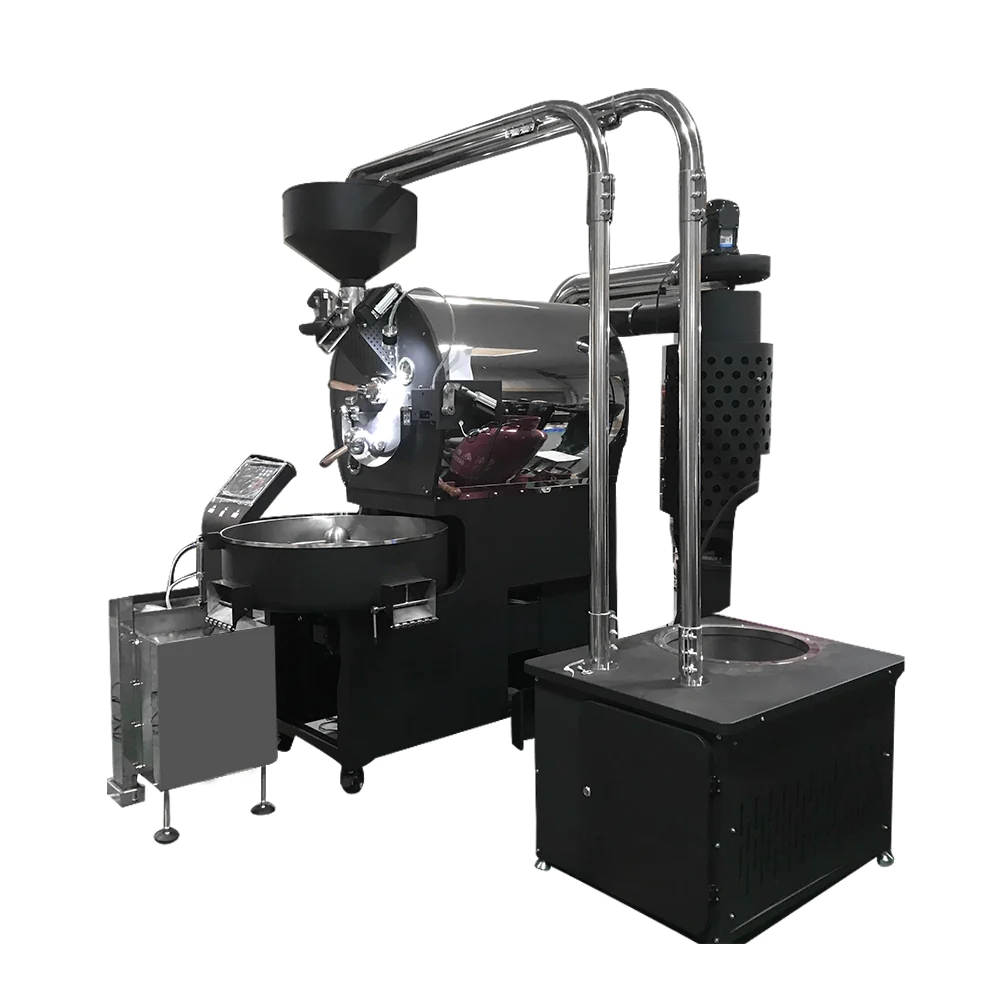
Both the 6kg and 12kg are available in manual and automatic versions. The automatic versions save roasting profiles on the machine, which is the feature that pays for itself fastest in a commercial context.
6kg Commercial Coffee Roaster
Right-sized for a small-to-medium cafe that wants to roast in-house without dedicated roasting staff. Six kilograms per batch gives you enough volume to supply a busy espresso bar through a week of service. The footprint is smaller than the 12kg, which matters in a real cafe kitchen where every square meter is spoken for. Feature set and build quality match the 12kg.

12kg Commercial Coffee Roaster
Built for continuous all-day roasting at higher volume. If you're running a roastery that supplies multiple accounts or a high-volume cafe where in-house roasting is a marketing pillar, the 12kg is the machine to look at. The simultaneous roast-and-cool cycle design means turnaround between batches stays tight even at full throughput.
Who should buy a Bideli roaster?
Bideli isn't the smallest home roaster on the market and it's not the cheapest entry into commercial roasting. The 1kg tabletop is real equipment, not a hobby appliance, and it shows in the learning curve. If you want something truly plug-and-play for weekend roasting experiments, look at an air roaster like the Fresh Roast SR800 first. Come back to Bideli when you're ready to pull consistent profiles on a drum and track them over time.
The sweet spot for Bideli is the serious home roaster who's outgrown air roasting and the small cafe that wants to roast in-house for the first time. The 30-plus-year rated service life and the Artisan integration mean you're buying infrastructure, not a gadget. That calculation makes sense when the alternative is buying two cheaper machines in the same decade.
For a deeper look at how drum and air roasters compare before you commit, the air vs. drum roaster comparison walks through the tradeoffs in detail. And if you're still sorting out common mistakes that affect roast quality, the guide on coffee roasting mistakes to avoid is worth reading before your first batch on any new machine.
Frequently asked questions
What batch sizes does the Bideli coffee roaster lineup cover?
Bideli makes roasters in five batch sizes: 1kg, 1.5kg, 2kg, and 3kg for home and prosumer use, and 6kg and 12kg for commercial settings. All use a double-walled drum design with conductive and convective heat transfer. The 1.5kg, 6kg, and 12kg are available in automatic versions that save roasting profiles on the machine.
Does the Bideli roaster connect to Artisan software?
Yes. All Bideli roasters include a USB data logger that connects to Artisan, the open-source roasting software used by home and commercial roasters to log and replay roast profiles. This lets you track bean temperature, rate of rise, and development time ratio across batches, and replay any profile you've dialed in without rebuilding it from scratch.
How does Bideli compare to Probat and Diedrich?
Probat is the benchmark for precision heat control in the commercial segment, but the price and ongoing maintenance cost are significant. Diedrich uses infrared heating for improved energy efficiency, with a different heat transfer profile than a traditional drum. Bideli positions between them on price, with a more hands-on control scheme (manual flame, hot air, and damper adjustment) and a lower total cost of ownership over a long service life. Which one wins depends on your volume, budget, and how much you want to manage the roast manually.
What does "simultaneous roasting and cooling" mean on the Bideli?
On most drum roasters, the cooling cycle starts after the roast ends, which adds 10 to 15 minutes of downtime between batches. Bideli's four-motor design runs roasting and cooling at the same time: one batch is finishing while the previous batch cools, which shortens total cycle time and increases throughput on high-volume days. This is most relevant on the 6kg and 12kg commercial models where back-to-back batches are the norm.
Is a Bideli roaster a good first drum roaster?
It depends on your starting point. If you've roasted on an air roaster like the Fresh Roast SR800 and understand basic rate-of-rise and development time concepts, the 1kg Bideli is a solid step up. If you're starting completely fresh on drum roasting, expect a steeper learning curve than an air roaster. Drum machines reward technique you'll build over 20 to 30 batches. The Artisan integration helps because you can see exactly what your heat curve looked like on every batch, which shortens the learning loop considerably.
What is the expected service life of a Bideli roaster?
Bideli rates its machines for 30-plus years of service, citing stainless steel and carbon steel construction and a design intended for heavy commercial use. That claim assumes regular maintenance: cleaning chaff from the collector, monitoring the drum probe for oil buildup, and servicing the burner per the manufacturer's schedule. Independent verification of the 30-year figure isn't something we can point to, but the materials specification is consistent with commercial equipment built for long service life.
Can I use a Bideli tabletop roaster in a small commercial setting?
The 3kg model is marketed as both a home and commercial sample roaster, and that's accurate. At 3kg per batch, you can supply a small counter-service coffee bar or run quality-control sample batches before production runs on a larger machine. The 2kg is borderline: fine for a very low-volume cafe or a large home setup, but you'd feel the throughput ceiling quickly in any setting with real daily volume.
Where can I buy a Bideli coffee roaster?
CoffeeRoast Co. carries the full Bideli lineup, from the 1kg tabletop through the 12kg commercial automatic. Browse the full Bideli collection to compare models side by side. If you're not sure which size fits your volume, the product pages list batch capacity, footprint dimensions, and power requirements so you can match the machine to your space before purchasing.
Key takeaways:
- Bideli drum roasters run from 1kg (home) to 12kg (commercial), all using double-walled drum construction with conductive and convective heat transfer.
- All models connect to Artisan roasting software via USB; automatic versions of the 6kg and 12kg save and replay profiles on-machine.
- Four independent motors enable simultaneous roasting and cooling, cutting batch cycle time compared to sequential-cycle machines.
- Stainless and carbon steel build is rated for 30-plus years of service, a total-cost-of-ownership argument that holds against cheaper machines with 5-to-7-year replacement cycles.
- The 1kg through 3kg tabletop models suit serious home roasters and prosumers; the 6kg and 12kg are sized for small-to-medium commercial operations.


Ali barakat
septiembre 04, 2025
Do you guys provide training?