



Quick answer: Match batch size to two years of projected weekly output, divide by 25 roasting hours per week, and size up one tier. Small-batch operations (1–5 kg/batch) should budget $3,000–$7,000. Mid-size (10–30 kg/batch) runs $10,000–$30,000. Drum roasters give you the most control; fluid-bed roasters are faster and cheaper to run. Buy bigger than you think you need today.
Most people shopping for a commercial roaster focus on brand reputation and sticker price. Those matter, but the decision that actually costs you money is getting the batch size wrong. A roaster you outgrow in 18 months means a second capital purchase, downtime, and retraining. A roaster that is too large for your current volume runs inefficiently and is harder to control at low loads.
What are the main types of commercial coffee roasters?
The roasting method determines how much control you have over the development curve and what flavor profiles you can reliably produce. Two types dominate commercial production.
Drum Roaster
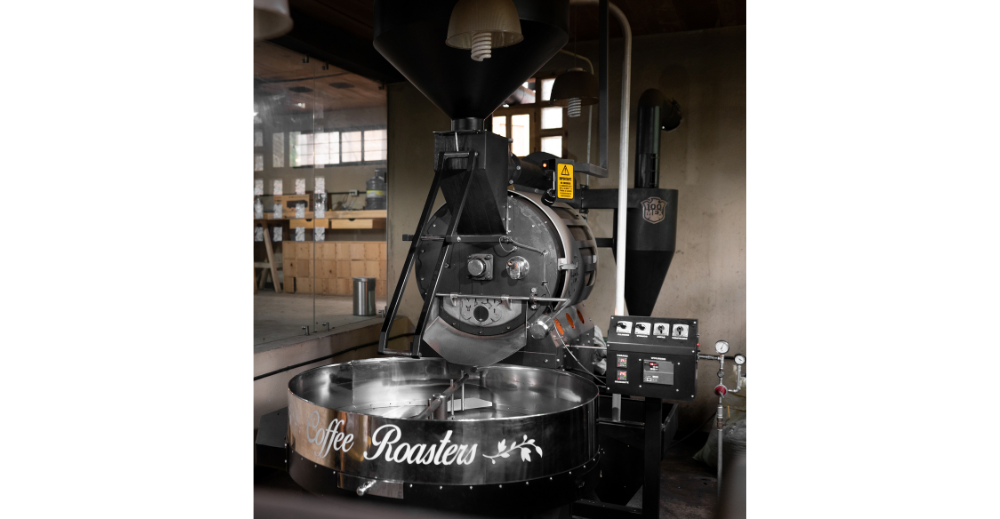
The drum roaster is the workhorse of commercial production. Beans load into a rotating cylindrical drum and are tumbled continuously over a heat source: gas burner, electric element, or wood fire. The rotation keeps every bean moving through the same thermal zone, which is why drum machines produce consistent, repeatable results across large batches.
The real advantage of drum roasting is control after first crack. You can hold the development phase, extend Maillard reactions for body, or cut short for brightness. That flexibility matters when you're developing distinct roast profiles for different origins or retail offerings.
The tradeoff: drum roasters are heavier, slower to heat up, and require more maintenance. The drum-temperature probe accumulates oils over time, which causes probe drift. Your read temperature slowly decouples from actual bean temperature until you clean it.
Air (Fluid-Bed) Roaster
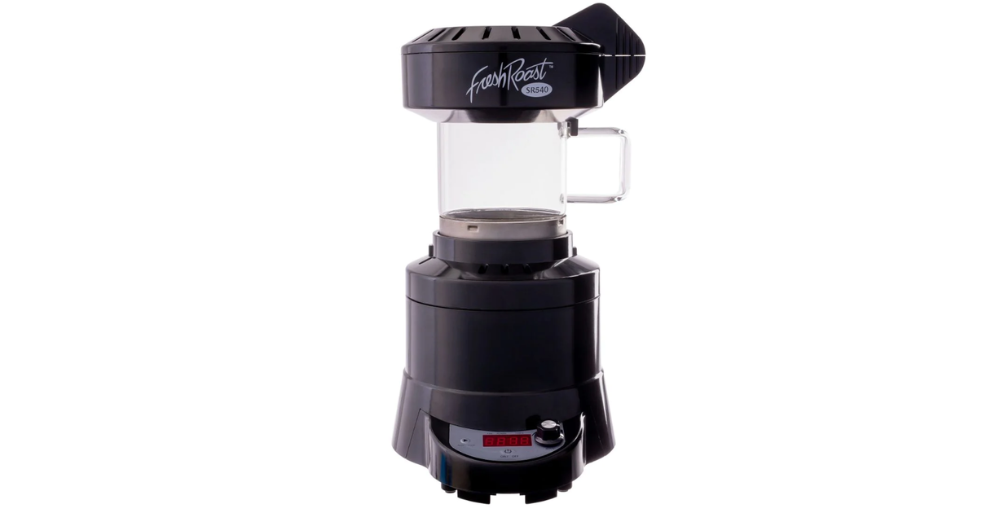
Fluid-bed roasters push hot air through the bean mass, which simultaneously heats and agitates the beans. No drum, no moving parts in the roasting chamber. They heat faster, are cheaper to operate, and produce a cleaner cup on washed single-origin coffees where you want bright acidity to lead.
The limitation: you cannot separate heat control from airflow control the way you can on a drum. Both are tied to the same variable. For multi-origin roasters running naturals and honeys alongside washed lots, a drum machine gives you more flexibility. For a shop focused on light-roast specialty coffee, a fluid-bed may be the better fit.
What factors should you consider when choosing a commercial roaster?
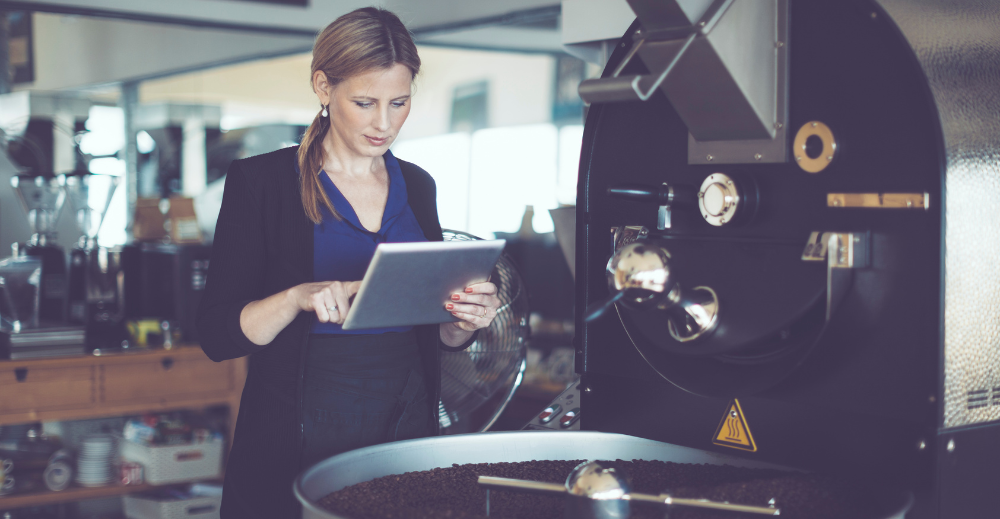
Most roasters that get this decision wrong make one of two mistakes: they buy on price without calculating volume, or they trust a sales rep who has only ever sold one brand. Here is what actually drives the decision.
Batch capacity matched to production needs. Calculate your weekly green coffee volume for the next two years, then find a machine that can produce that in 25 operating hours per week. One critical detail: beans lose 14–20% of their weight during roasting, so a machine's rated capacity in green weight will yield less in roasted weight. If you need 100 lbs of roasted coffee per week, you need a machine capable of processing roughly 120–125 lbs of green beans.
Budget: buy up, not down. The most common regret among commercial roasters is buying a machine they outgrow within 18 months. If your budget is $15,000 and the next tier up is $20,000, find out whether financing the difference makes sense. The second purchase always costs more in downtime and retraining than the premium would have.
Control surface quality. A roaster you'll run 20+ hours per week needs an interface that doesn't slow you down. Gas valves with poor resolution at low settings, probes that respond slowly, and up/down buttons instead of analog dials all cost you time and introduce roast variability. Ask to operate the machine before you commit, not just watch a demo.
Gas vs. electric. Gas machines respond faster to input changes, which matters when you're trying to steer a roast curve in real time. Electric machines have lower upfront costs but higher per-hour operating costs in most markets. Check your local utility rates and the machine's kWh draw before assuming electric is cheaper long-term.
Reliability track record. Talk to other roasters, not the manufacturer's sales team. The SCA (Specialty Coffee Association) forum and local roasting guilds are better sources than brand websites. Ask specifically about drum bearing life, burner igniter failure rates, and how fast replacement parts ship rather than just whether the machine makes good coffee.
One thing worth knowing: machines with thin single-walled drums, slow gas valves, excessive drum insulation, and poorly positioned bean-temperature probes will fight you on consistency even with skilled operators. These design choices are common in the lower price tiers and are worth screening for before purchase.
Which additional features are worth paying for?
Not every add-on justifies its cost. Four features consistently pay back in a commercial setting.
- Cooling trays. A fast, integrated cooling tray stops the roast on time. Beans keep developing for 60–90 seconds on residual heat after the drop. A slow or undersized tray means your City+ roast finishes as Full City whether you wanted that or not. Built-in is better than external.
- Chaff collection systems. Chaff (the silver skin that separates during roasting) is a fire hazard in a roastery environment if it accumulates in ducts or around heat sources. An integrated chaff collector is a fire-safety requirement in most commercial roasting setups, not an optional upgrade.
- Software profile logging. The ability to save, replay, and compare roast curves across batches is how you build consistency at scale. Look for Artisan compatibility or dedicated software with USB/Bluetooth data export. You want to be able to pull up a washed Ethiopian Yirgacheffe profile from six months ago and run it again without guessing.
- Smoke suppression or afterburner. If you're operating in a mixed-use building or in a jurisdiction with strict air-quality ordinances, an afterburner is not optional. It catalytically combusts smoke before it exits the stack. Some municipalities require this for a roastery operating permit.
How much does a commercial coffee roaster cost?

Entry-level tabletop commercial roasters capable of 1–5 kg per batch typically run $3,000–$7,000. Mid-size machines handling 10–30 kg per batch range from $10,000–$30,000. Large-format machines at 30+ kg per batch start around $30,000 and can reach $100,000 for fully automated high-capacity units.
What drives price within each tier: drum construction quality (single-wall vs. double-wall, stainless grade), burner or element specifications, probe count and positioning, control software, and the manufacturer's support infrastructure. A $12,000 machine from a manufacturer with a US parts warehouse and same-day phone support is often worth more than a $9,000 machine where replacement burners ship from overseas on a six-week lead time.
Gas vs. electric cost also varies by region. In markets where natural gas is cheap relative to electricity (much of the US South and Midwest), gas machines have lower operating costs despite higher purchase prices. Do the math on your local utility rates before defaulting to either.
Is coffee roasting a profitable business?
It can be, but the margin math is tighter than it looks from the outside. Green coffee at specialty grade runs $4–$12 per pound depending on origin, processing, and certification. Roasted specialty coffee retails at $18–$28 per pound. The spread looks healthy until you account for the 14–20% weight loss during roasting, packaging, labor, equipment amortization, and the cost of sourcing relationships.
Profitability usually comes from wholesale channel development, not retail-only pricing. Cafes, restaurants, and office accounts buy in volume at $12–$16 per roasted pound wholesale, with lower acquisition cost per pound than retail. The roasters who build sustainable businesses treat the roaster itself as the production asset and wholesale relationships as the revenue engine.
Bean quality matters more than most operators expect. Higher-grade green coffee (SCA score 85+) produces a product that commands and holds premium retail pricing. Lower-grade beans cut input costs but compress your ability to price above commodity, which is where specialty roasters lose their differentiation.
Four commercial roasters worth a serious look
These machines cover the range from entry-level small-batch to serious mid-volume production. All four are available through CoffeeRoast Co.'s commercial roasters collection.
Bideli 12kg Commercial Coffee Roaster
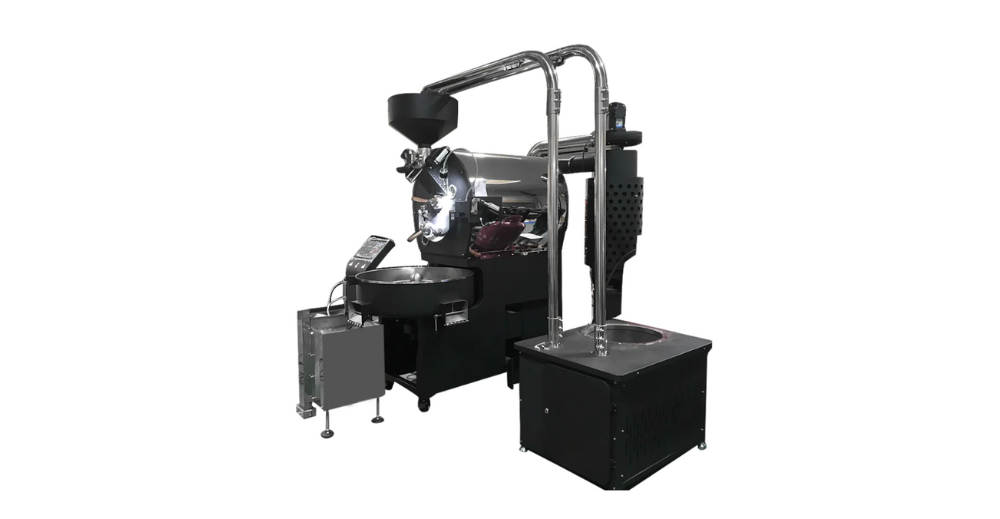
The Bideli 12kg is an automatic drum machine built for operators who want pre-programmed profile execution without constant manual attention. You set temperature presets and alarm triggers; the machine runs the profile. It includes a sampler spoon and sight window so you can pull beans mid-roast and check color without stopping the drum.
Good fit for: mid-volume roasteries doing 50–150 kg per week across multiple origins. The automation reduces operator-to-operator consistency variation, which matters when you're training new staff.
Golden Roasters GR5 (5 kg)

A stainless-steel drum roaster designed for small-to-mid commercial operations. The GR5 accepts both gas and electric heat sources, which gives you installation flexibility. Built-in cooling tray and chaff collector mean you're not sourcing those separately. The control board is straightforward: analog-style interface, no proprietary software lock-in.
Good fit for: specialty coffee shops that roast in-house at 5 kg per batch, or small wholesale operations targeting 20–40 kg per week. The GR5 is one of the more honest values in this tier. It doesn't over-promise on automation but delivers reliable, controllable drum behavior.
Santoker R3 Manual Coffee Roaster
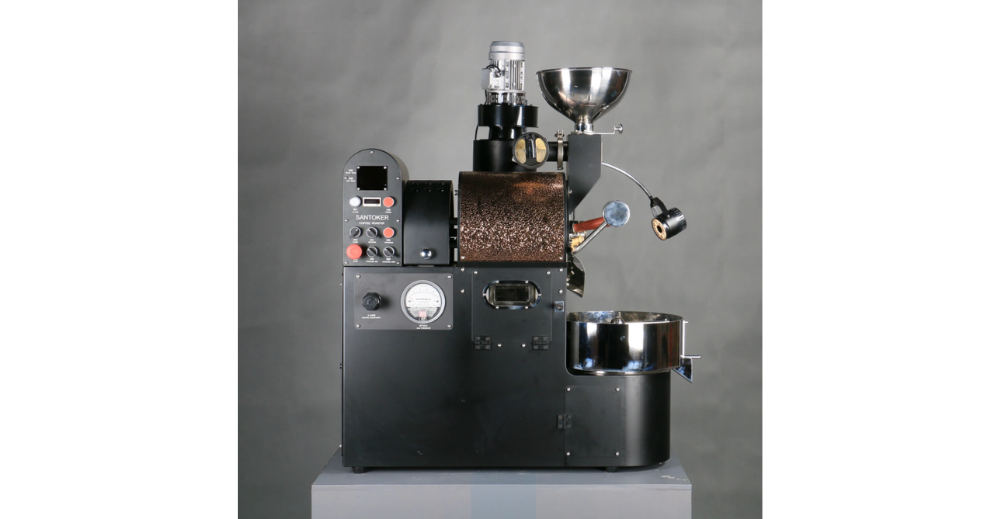
The Santoker R3 runs 500g–3,200g per batch in gas or electric configuration. It's a manual machine at its core, but it can execute a saved roast curve automatically once you've dialed in a profile. High-grade drum motors give you independent control of drum speed, hot-air volume, cooling tray, and cooling agitation, which is more granular control than most machines at this batch size offer.
Good fit for: small-batch artisan roasters who want to develop distinct single-origin profiles without the cost of a larger machine. The manual-first design means the operator learns the machine deeply before leaning on automation. That's a feature if you care about craft; it's a limitation if you need throughput.
Kaleido Sniper M10 Electric Coffee Roaster
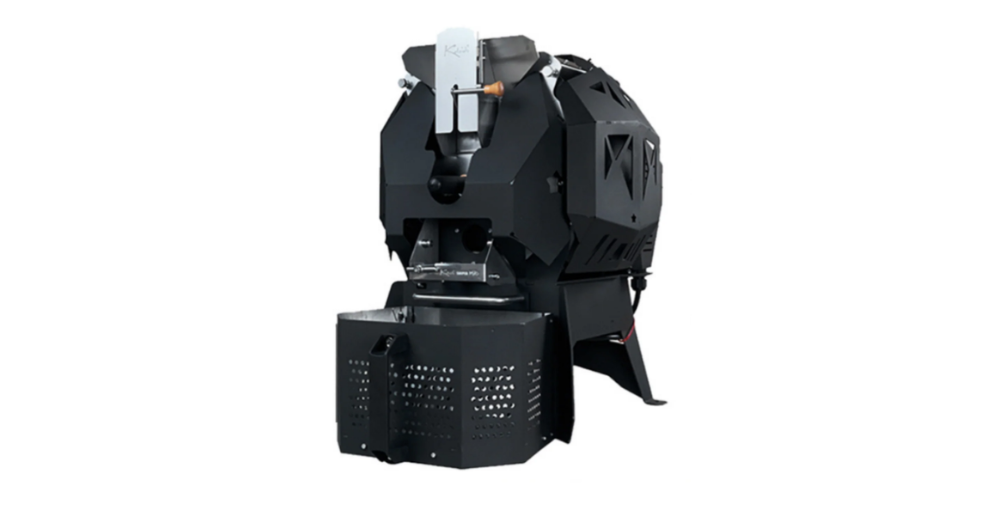
The M10 sits at the upper end of the home-to-micro-commercial boundary: 500–1,000g optimal batch, 1,200g maximum. Its electric heating system and Artisan software integration make it the cleanest data-logging experience in this batch-size tier. The horizontal sampler lets you pull beans without opening the drum, and the built-in smoke extraction system keeps emissions low even in light-commercial settings.
Good fit for: specialty shops and micro-roasters that prioritize roast-curve precision over volume. If you're running fewer than 10 kg per week and want Artisan profile logging out of the box, this is the most accessible machine to do it on. It's not a production machine. At 1.2 kg maximum, it won't scale past boutique volume.
Frequently Asked Questions
What batch size should a beginner commercial roaster start with?
Calculate your realistic weekly green coffee volume for the next two years, then find a machine that can hit that output in 25 operating hours per week. Most new commercial roasters start at 5–10 kg per batch and find they need 10–15 kg within two years. If you're within $5,000–$8,000 of the next batch-size tier and your projected growth supports it, size up now.
Is a drum roaster or fluid-bed roaster better for commercial use?
Drum roasters dominate commercial production because they give you independent control over heat, drum speed, and airflow, which matters when you're developing profiles across diverse origins. Fluid-bed machines heat up faster, cost less to operate, and produce brighter cups on washed coffees, but they're less common at commercial scale because you can't separate heat from airflow control the way you can on a drum.
How do I account for weight loss when sizing a commercial roaster?
Green coffee beans lose 14–20% of their weight during roasting as moisture and CO₂ release. A machine rated at 10 kg per batch in green weight will yield roughly 8–8.6 kg of roasted coffee per batch. Plan your production math on roasted-weight output rather than green-weight batch size, or you'll consistently under-produce against your weekly targets.
What's the typical lifespan of a commercial coffee roaster?
A well-maintained commercial drum roaster from a reputable manufacturer typically runs 10–20 years before major component replacement. The most common failure points are drum bearings, igniter systems, and temperature probes. Replacement part availability from the manufacturer is a more important long-term factor than initial build quality. A great machine with no local parts support is a liability.
Does a commercial roaster require a dedicated ventilation system?
Yes. Every commercial roaster produces smoke and chaff that must be vented to the exterior. Most commercial roasting permits require a dedicated exhaust stack with a minimum draw rate specified by the local fire marshal. Machines with afterburner or catalytic smoke suppression systems simplify the permitting process in jurisdictions with strict air-quality rules, but they don't eliminate the exhaust requirement.
What's the difference between a manual and automatic commercial roaster?
A manual roaster requires the operator to adjust heat, airflow, and drum speed in real time as the roast progresses. An automatic machine can execute a pre-programmed profile once the operator has dialed it in. Automatic machines reduce batch-to-batch variability when multiple staff operate the roaster; manual machines give skilled roasters more real-time control. Most commercial operations use automatic profile replay for their core SKUs and manual mode for new-origin development.
How do I evaluate a commercial roaster's software integration?
Prioritize Artisan compatibility. It's the dominant open-source roast-logging platform and gives you portability if you switch machines. Also check: data export formats (CSV is more useful than proprietary), connectivity options (USB is more reliable than Bluetooth for a production setting), and whether the software is licensed per-machine or per-seat. Proprietary software with no export capability locks your roast data to the machine.
Key takeaways:
- Size your machine to two years of projected production, not current volume. Most roasters regret buying too small, not too large.
- Drum roasters give you more control over the development phase and handle diverse origins better. Fluid-bed roasters are faster and cheaper to run but less flexible.
- Beans lose 14–20% of their weight during roasting. Factor roasted-weight output into your production math rather than the green-weight batch rating.
- Evaluate replacement part availability and manufacturer support alongside the machine's specs. A great roaster with six-week part lead times will cost you more in downtime than it saved at purchase.
- Browse CoffeeRoast Co.'s full commercial roasters collection to compare batch sizes, heat sources, and control systems side by side.


Dejar un comentario