



Quick answer: The Eureka Mignon Specialita (55 mm flat burrs, stepless, ~$700) is the best-value electric espresso grinder for most home setups. New to espresso? Start with the Baratza Encore ESP at ~$200. Espresso requires a grind of 250 to 400 microns and micro-adjustable settings. A blade grinder or filter-only burr grinder will not produce a dialed-in shot.
Most people blame the machine when their shots taste off. Or the beans. Or the tamp. It's almost always the grinder. The Istituto Nazionale Espresso Italiano specifies a brew window of 25 to 30 seconds for a properly extracted shot — and your grinder is what determines whether you can hit that window consistently at all.

Manual vs. electric: which type do you actually need?
Two questions settle this: how often are you pulling shots, and how much precision do you want? If you're grinding on Saturday mornings and don't mind the arm work, a good manual grinder performs better than most people expect. If you're grinding daily or chasing light-roast single-origins by extraction yield, electric is the right tool.

Manual grinders
The case for manual is real. They're quiet, easy to travel with, and the best ones punch well above their weight on grind quality. The Kinu M47 Classic weighs 2.6 lbs, fits in a carry-on, and produces results that outperform most electric grinders under $300. The real limitation is capacity: about 1.3 oz per load, which is fine for a double shot but falls apart if you're making drinks for a group.
Adjustability is the other constraint. Most manual grinders offer fewer than 40 grind steps. Workable for espresso, but narrower than a stepless electric when you're chasing a specific extraction profile.
Electric grinders
Electric grinders are faster, handle larger batches, and give you finer grind-size control. The tradeoffs are noise, counter space, and price. Entry-level electric starts at around $200 with the Baratza Encore ESP; serious home options run $600 to $900. Commercial territory starts at $1,000 with machines like the Fiorenzato F64 EVO PRO.
If you're pulling espresso daily, a good electric grinder pays for itself in fewer wasted beans during dial-in and more consistent shots. The speed of adjustment alone is worth it.
Conical vs. flat burrs: what the difference means in the cup
Every espresso grinder uses burrs, not blades. Blade grinders chop beans unevenly and can't reliably hit the 250 to 400 micron range espresso needs. Burr geometry, though, has a real effect on what ends up in your cup.
Conical burrs
A conical grinder nests a cone-shaped inner burr inside a ring-shaped outer burr, and beans feed through by gravity. That design runs cooler and quieter than flat burrs, and the resulting grind is bimodal — a mix of fine particles and larger grinds. In the cup, you get a denser, richer espresso with more body and a lingering bittersweet finish. That's the traditional Italian espresso character.
Conical burrs are more forgiving to dial in, generate less heat, and tend to last longer before they need replacing. The Kinu M47's 47 mm conical burrs are rated for considerably more throughput than comparable flat burrs before wear sets in. The downside is less shot-to-shot uniformity, and the geometry creates more pockets for grounds to accumulate between cleanings.
Flat burrs
Two opposing disk-shaped rings pulverize beans using centrifugal force. The grind comes out unimodal — very consistent particle sizes with minimal fines. What that gives you in the cup is clarity: more brightness, a cleaner finish, and better separation of flavor notes. A washed Ethiopian Yirgacheffe often comes through more distinctly with flat burrs.
Flat burrs are the standard in prosumer and commercial machines for this reason. The tradeoffs are real: flat-burr grinders run hotter, cost more, and require more precise dial-in. Burr lifespan is also shorter — typically around 1,300 lbs before replacement versus roughly 2,200 lbs for conical sets, though these figures vary by manufacturer and grinding volume.
Burr material: ceramic, steel, and SSP
Material affects sharpness, heat tolerance, lifespan, and price. Here's what actually matters at each level.
Ceramic burrs stay sharp longer and don't heat up as fast, which is why they show up in travel-friendly manual grinders. The catch is brittleness: a small stone that sneaks into the hopper can crack a ceramic burr. Grind quality at the fine end of the espresso range is also noticeably lower than steel.
Steel burrs — stainless or hardened carbon — are sharper and more consistent. They heat up faster than ceramic, which matters when you're grinding back-to-back shots in volume, but for a home double-shot it's rarely a problem. Steel is the right call for espresso above entry-level manual.
SSP burrs (Sung-Sim Precision, South Korea) are aftermarket replacements for compatible grinders, rated for roughly 10,000 lbs before replacement. The Mazzer Mini A ships with 189D twin burrs and accepts SSP sets. One honest caveat: installation requires careful alignment and sometimes light modification to the grinder body. Not plug-and-play.
How burr size affects grind quality
Bigger burrs grind faster, run cooler, and need fewer micro-adjustments to stay dialed in. Entry-level grinders use 38 to 40 mm burrs. Prosumer models run 55 to 64 mm. Commercial grinders start at 64 mm. Both the Mazzer Mini A and the Fiorenzato F64 EVO PRO run 64 mm flat burrs, which is the practical floor for serious home or light commercial use.
Larger burrs do have one genuine downside: less tolerance for misalignment. A 0.5-degree tilt that barely registers on a 40 mm burr set becomes much more noticeable at 64 mm. Proper alignment matters more as burr size increases, and grounds retention grows with surface area. If you're single-dosing, that's worth factoring in before you buy.
Stepped vs. stepless: dial-in precision explained
Espresso lives in a narrow grind window — 250 to 400 microns — and your ability to move within that window in small increments separates a grinder that can dial in from one that can't.
Stepped grinders have fixed preset positions. They're faster to reset, less prone to accidental movement, and genuinely useful for beginners who want a reliable starting point. The Baratza Encore ESP has 40 steps total, with 20 dedicated to the espresso range. That's workable for most medium-roast dial-in work, though experienced baristas notice the gap between steps when chasing a specific extraction.
Stepless grinders have continuous adjustment with no detents — you can split the difference between any two positions and repeat it precisely. The Eureka Mignon Specialita's dial is the clearest example at this price tier: near-infinite adjustability across its full range. That matters when you're dialing in a light-roast single-origin where a half-setting shift in coarseness changes extraction yield by 2 to 3 percent.
The 7 best espresso grinders at CoffeeRoast Co.
Best budget manual: Sandbox Smart G1
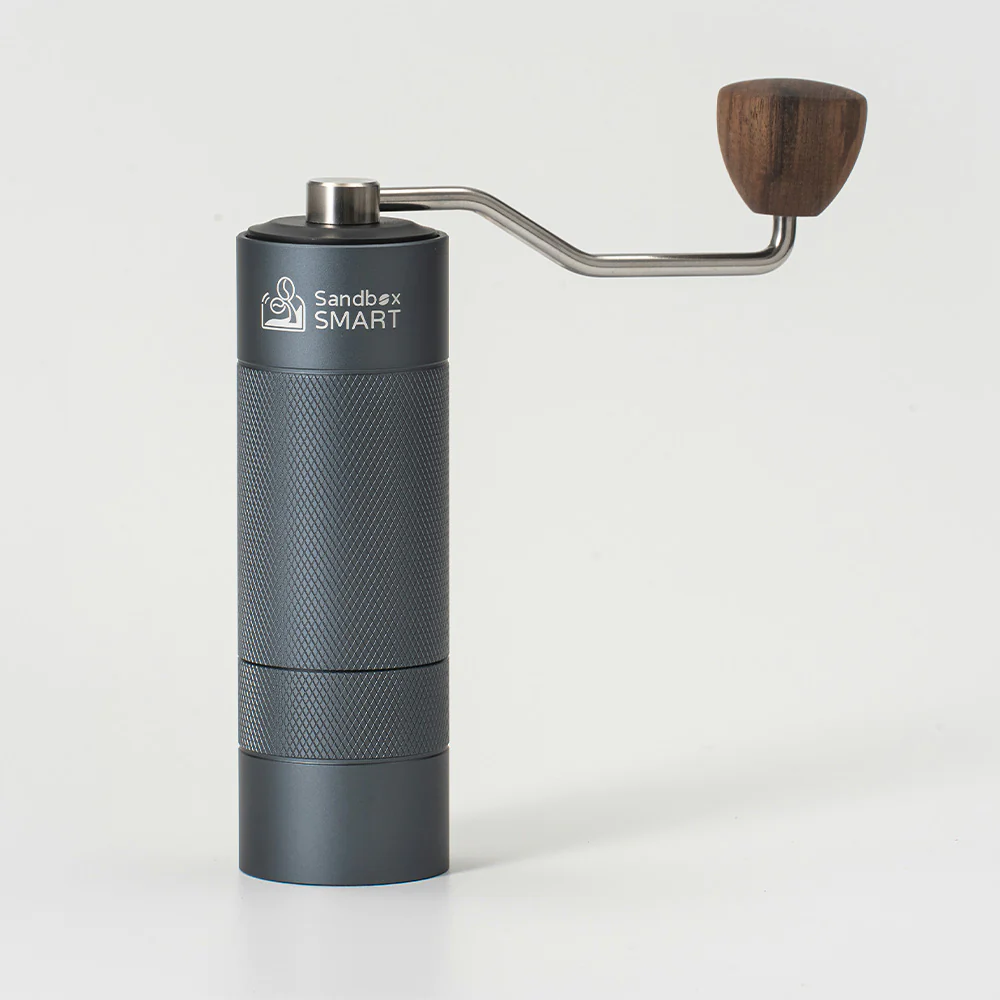
Taiwanese-made, built around an aluminum alloy body with 38 mm pentagonal conical stainless steel burrs and 30 stepped grind levels. It weighs 3.3 lbs and fits in a jacket pocket. The dual-bearing design keeps the burr stable under load — exactly what you need at fine espresso grind sizes — and the build quality genuinely surprises people at this price point. Single-dose capacity sits at 1.3 oz, enough for a double shot.
The wood-handled crank detaches for compact storage, and the burr pulls out without tools for cleaning. This is the right pick for occasional home espresso or travel. If you're pulling six shots a day, step up to an electric. For weekends and trips, the G1 is a smart buy.
- Burr: 38 mm conical stainless steel, 30 stepped levels
- Capacity: 1.3 oz, single dose
- Weight: 3.3 lbs | Dimensions: 8" x 7.5" x 2.7"
- Warranty: 1 year
Best premium manual: Kinu M47 Series
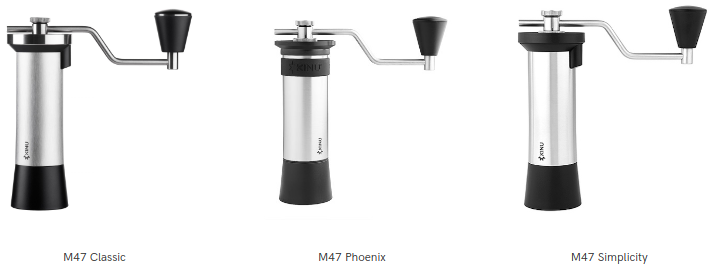
Made in Germany, the Kinu M47 is the serious manual option. It runs 47 mm stainless steel conical burrs, stepless adjustment, and a quad ball-bearing movement that keeps the burr aligned under grinding pressure. It's built for serious home baristas who want a premium manual experience and handles the full range of brew methods, but espresso is where it earns its price.
Three variants: the Classic (2.6 lbs, stainless steel funnel and catch cup, 5-year warranty, top seller in the line), the Simplicity (2.1 lbs, same 47 mm burrs, streamlined mechanism), and the Phoenix (1.6 lbs, silicone grip, lightest and most affordable, though it lacks the full-metal auto-centering drive shaft of the Classic). All three ship with an EVA hard case.
- Burr: 47 mm conical stainless steel, stepless
- Capacity: 1.2 oz (Classic/Simplicity), 1.4 oz (Phoenix)
- Weight: 1.6 lbs Phoenix / 2.1 lbs Simplicity / 2.6 lbs Classic
- Warranty: 5 years

Best budget electric for beginners: Baratza Encore ESP
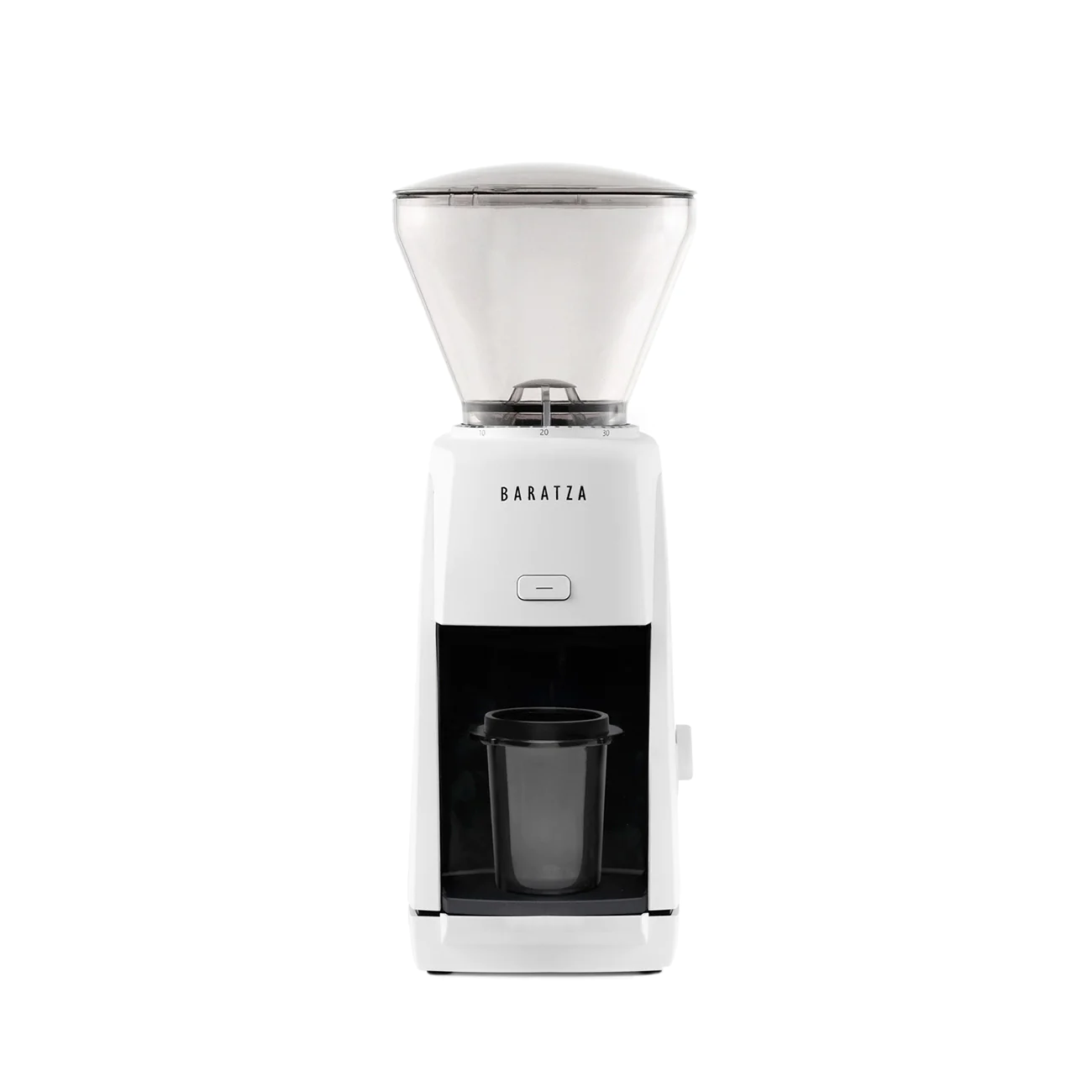
Baratza's redesign of the original Encore, built from the ground up for espresso. It runs an Etzinger M2 burr set: 40 mm conical hardened alloy steel, 550 RPM, 120V/70W, with a dual-threaded collar giving 40 total grind settings (20 espresso, 20 filter). The anti-static dosing cup fits 54 mm portafilter baskets directly and adapts to 58 mm with the included ring.
It retains more grounds between shots than I'd like, and it's not quiet. At around $200, though, it pulls shots that compete with grinders costing twice as much. Baratza's parts availability is unmatched at this price — if something breaks, you can fix it yourself. The Sette 270 has more micro-adjustments and programmable dosing, but for someone new to espresso, the Encore ESP's simplicity is a genuine advantage rather than a compromise.
- Burr: 40 mm conical hardened alloy steel, 40 stepped levels
- Motor: 70 W / 550 RPM
- Capacity: 8 oz hopper
- Weight: 7 lbs | Dimensions: 13.7" x 6.3" x 4.7"
- Warranty: 1 year
Best premium electric for beginners: Baratza Sette 270
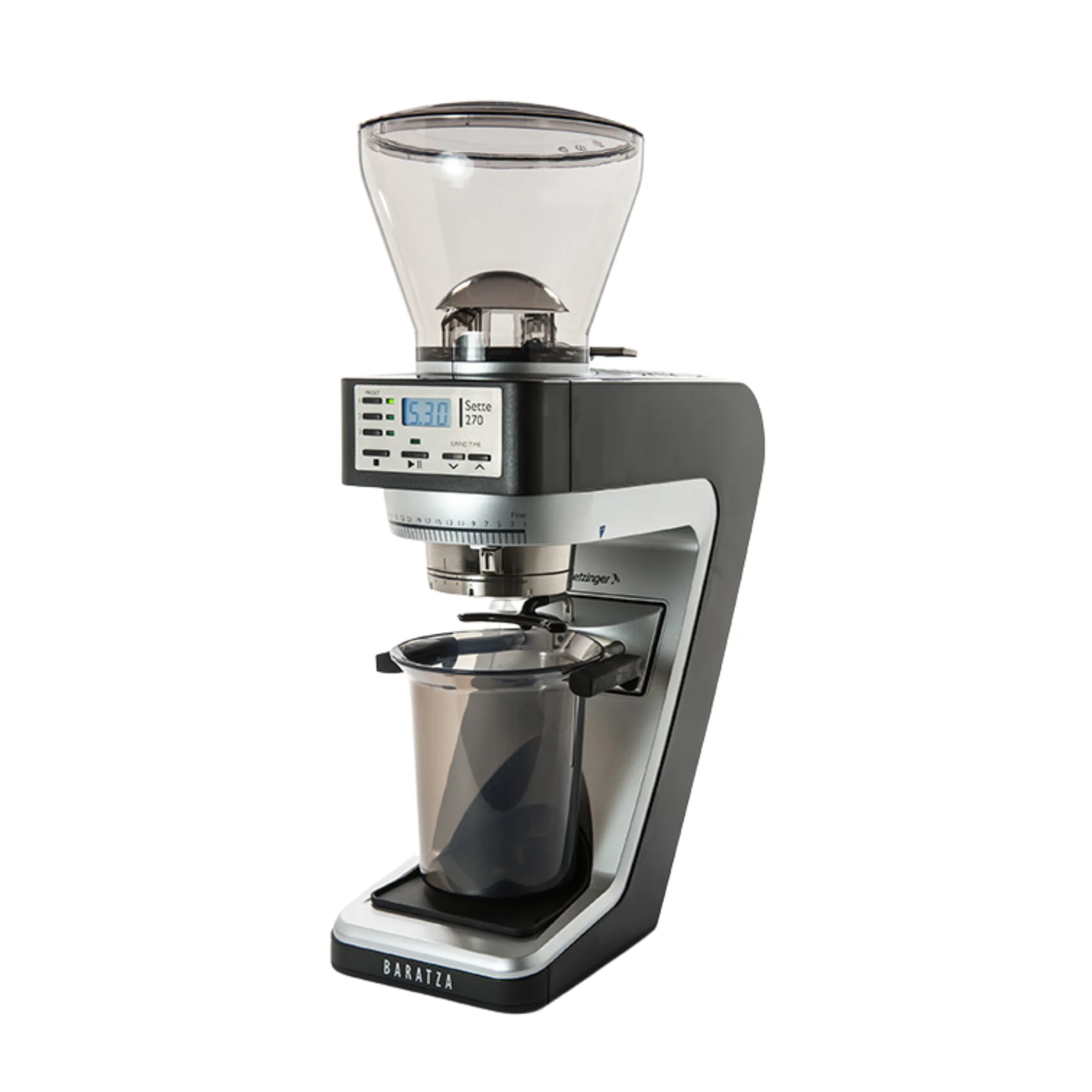
CoffeeRoast Co.'s second-best-selling electric grinder, and it earns that spot. The Sette 270 uses an inverted burr alignment — the outer burr rotates rather than the inner one — which cuts grind retention to near zero and makes adjustments faster and more responsive. You get 30 macro steps and 9 micro-steps for 270-plus total grind positions, plus programmable dosing that saves three grind times to 0.1-second precision.
Because retention is so low, you can dial in a different recipe and switch back without flushing grams of stale grounds first. That's a real advantage if you're rotating between two coffees. It's louder than the Encore ESP and costs around $360, but if you want programmable precision without crossing into prosumer territory, this is the right pick.
- Burr: 40 mm conical steel, 270+ stepped levels
- Motor: 200 W / 650 RPM
- Capacity: 10.6 oz hopper
- Weight: 7 lbs | Dimensions: 15.8" x 9.5" x 5.3"
- Warranty: 1 year
Best value flat-burr for home/light commercial: Eureka Mignon Specialita
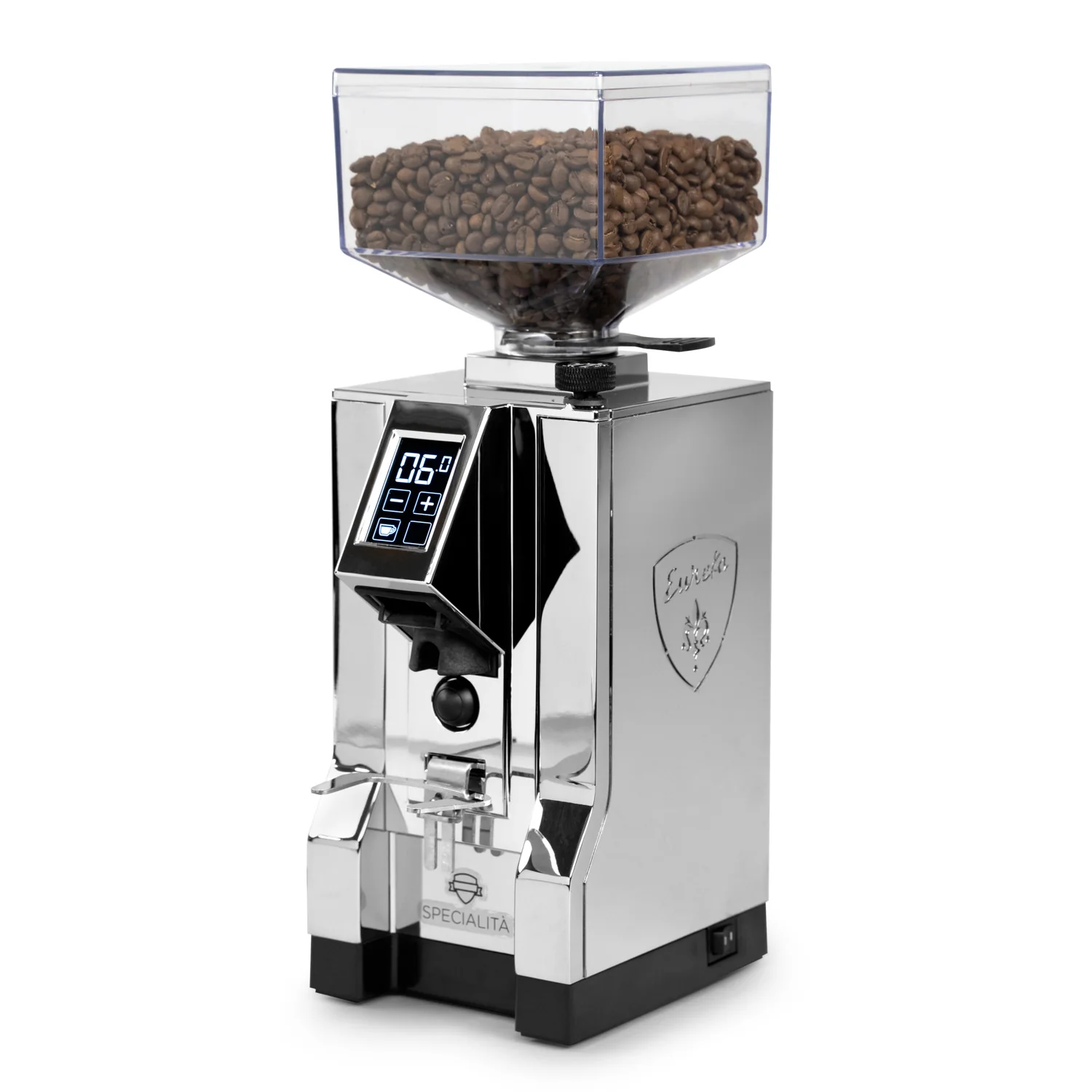
Eureka has been making espresso grinders in Florence since 1920. The Specialita is their most refined home model: 55 mm hardened steel flat burrs, stepless dial, 1350 RPM motor, and a sound-insulated metal case with rubber mounts. The programmable LED touchscreen handles single, double, or continuous timed dosing. At 12.3 lbs with a 5" x 5.6" footprint, it's genuinely compact for what those burrs deliver.
The wider exit chute reduces clumping compared to earlier Mignon models, and low retention makes it practical for single-dose workflows. At around $700, it sits between the Baratza tier and commercial-grade territory. For home setups pulling under 10 shots a day, it produces flat-burr grind quality that competes well above its price point. The Breville Smart Grinder Pro doesn't come close on shot-to-shot consistency at this price.
- Burr: 55 mm flat hardened steel, stepless
- Motor: 310 W / 1350 RPM
- Capacity: 12 oz hopper
- Weight: 12.3 lbs | Dimensions: 5" x 5.6" x 13.8"
- Colors: black, white, red, chrome aluminum
- Warranty: 1 year
Best premium flat-burr for home/light commercial: Mazzer Mini A
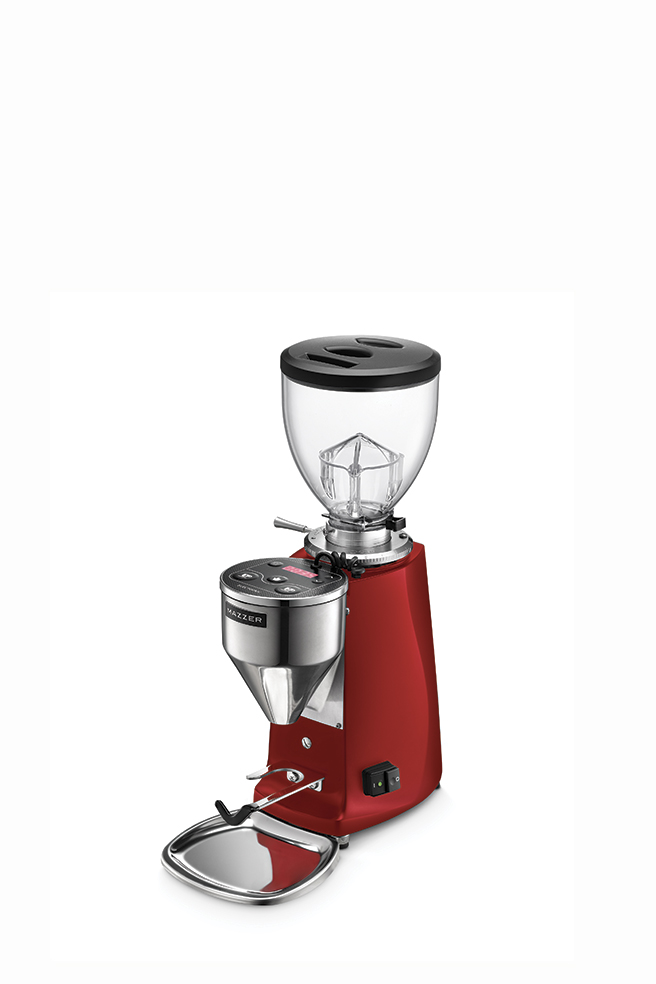
The benchmark other home espresso grinders get measured against, and with good reason. The Mini A ships with 189D twin flat burrs at 64 mm, a 250 W motor at 1600 RPM, stepless adjustment collar, programmable two-dose timer accurate to 0.05 seconds, and direct-to-portafilter grinding. At 22.5 lbs in die-cast aluminum, it's built to last decades. The 189D burrs are SSP-upgradeable if you want to push grind uniformity to its ceiling.

The honest caveat: the 1.3 lb hopper makes it poorly suited to single-dose workflows without modification. If you're grinding fresh every shot, the Specialita handles that more gracefully. The Mini A is right when you want commercial-grade 64 mm flat-burr performance at home and you're pulling enough shots to justify the workflow overhead.
- Burr: 64 mm flat stainless steel (189D, SSP-upgradeable), stepless
- Motor: 250 W / 1600 RPM
- Capacity: 1.3 lb hopper
- Weight: 22.5 lbs | Dimensions: 18.5" x 6.25" x 7.75"
- Colors: black, red, white, silver, aluminum
- Warranty: 1 year
Best for heavy commercial use: Fiorenzato F64 EVO PRO
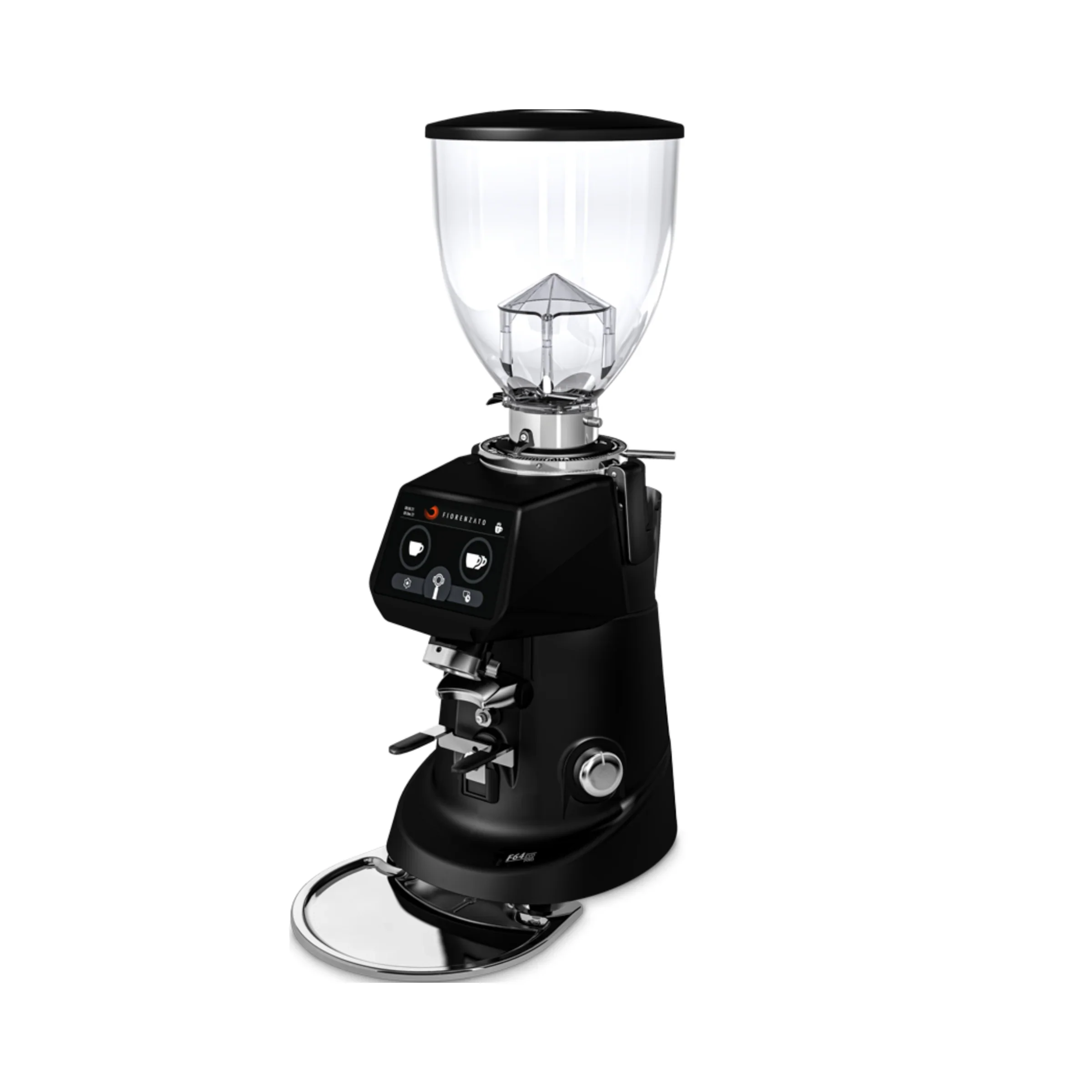
The professional version of the F64 EVO, built for medium to high-volume cafe use. The burrs are M340 food-grade steel coated with Red Speed titanium, which extends lifespan under daily grinding loads. The 350 W motor runs at 1550 RPM with a continuous micrometric adjustment ring nut. An auto-cooling fan with integrated thermostat keeps burr temperature stable across back-to-back shots — in a busy service environment, heat builds fast and damages aromatic oils in the bean.
The CapSense LCD touchscreen displays burr wear state and lets you program doses without interrupting service. There's a built-in anti-clumping blade in the grind chamber. At 28.7 lbs in cast steel, this doesn't move once you place it. You can bundle it with the PUQpress Gen 5 M4 tamper to remove tamp variability entirely.
- Burr: 64 mm flat titanium-coated M340 steel, stepless
- Motor: 350 W / 1550 RPM
- Capacity: 3.3 lb hopper
- Weight: 28.7 lbs | Dimensions: 24.5" x 9" x 9.5"
- Warranty: 1 year
Frequently asked questions
What grind size does espresso actually need?
Espresso needs a grind between 250 and 400 microns. Finer than 250 microns and the puck chokes water flow — the shot over-extracts and tastes bitter and harsh. Coarser than 400 microns and water moves through too fast — the shot under-extracts and tastes sour and thin. The Istituto Nazionale Espresso Italiano's 25 to 30 second brew window is a direct result of landing in that grind range correctly.
Is a blade grinder okay for espresso?
No. Blade grinders chop beans randomly and produce wildly uneven particle sizes. The resulting puck has channeling spots and slow-flow spots at the same time, so the shot is simultaneously over- and under-extracted. Espresso needs a burr grinder, full stop. A used entry-level Baratza from their certified refurbished program will outperform any blade grinder on the market.
Do I need a stepless grinder, or will stepped work?
Stepped is fine for most home setups. The Baratza Encore ESP's 20 espresso-range steps are enough to dial in consistent shots on medium roasts. Stepless starts to matter when you're chasing light-roast single-origins, where a half-step change in grind coarseness can shift extraction yield by 2 to 3 percent. If you're not yet tracking extraction yield, start with a stepped grinder.
What's the difference between the Eureka Mignon Specialita and the Mazzer Mini A?
Both use flat steel burrs, but at different diameters: 55 mm for the Specialita versus 64 mm for the Mini A. The Mini A's larger burrs produce more consistent grounds and handle higher throughput, but the Specialita manages single-dose workflows more gracefully and costs about $300 less. For home use under 10 shots a day, the Specialita is the more practical choice. The Mini A earns its price in a light commercial context where those 64 mm burrs are working through hundreds of shots per week.
Can I upgrade my grinder's burrs to SSP?
Only if your grinder is compatible, and installation requires patience. The Mazzer Mini A accepts SSP burrs as a drop-in upgrade; other grinders may need modification to the burr carrier or body. SSP burrs run roughly $150 to $250 depending on the set and coating, and they're rated for approximately 10,000 lbs before replacement. Worth it for a serious home setup, but not plug-and-play.
How often should I clean my espresso grinder?
For a home electric pulling 1 to 3 shots per day: brush the burr chamber weekly, deep-clean the burrs monthly. Grinder tablets like Grindz can substitute for a full disassembly on a weekly schedule. Worth knowing: grind retention compounds with old coffee oils and noticeably affects flavor before the grounds even look dirty. The Baratza Encore ESP's quick-release burr makes the monthly cleaning routine easier than most grinders at its price.
Is the Fiorenzato F64 EVO PRO overkill for a home setup?
For most homes, yes. The F64 EVO PRO is built for 50 to 200 shots per day in a commercial environment. Its titanium-coated burrs and auto-cooling fan deliver real value at that volume. At 5 shots a day, a Mazzer Mini A or Eureka Specialita does the same job for less money and less counter space. The F64 EVO PRO makes sense only if you're pulling near-cafe volume at home or competing at a level where thermal stability matters.
Where do I start if I've never bought an espresso grinder before?
Start with the Baratza Encore ESP at around $200: stepped adjustments, excellent parts support, and grind quality that competes with machines costing twice as much. Spend six months learning what extraction variables you actually care about. Then you'll know whether to step up to the Sette 270 or move to a flat-burr machine. Buying a $700 grinder before you've pulled a consistent shot is getting ahead of yourself.
Key takeaways:
- Espresso requires a grind between 250 and 400 microns; blade grinders and filter-only burr grinders cannot reliably reach that range.
- For daily home use, flat-burr electric grinders (Eureka Mignon Specialita at 55 mm, Mazzer Mini A at 64 mm) outperform conical options on shot-to-shot consistency.
- The Baratza Encore ESP is the right starting point for new home espresso setups; the Sette 270 is the logical upgrade once you've outgrown stepped adjustability.
- Burr size matters: 40 mm is entry-level, 55 to 64 mm is prosumer, and 64 mm-plus is commercial. Match burr size to your actual shot volume.
- Browse the full lineup in the manual grinder and electric grinder collections at CoffeeRoast Co., and sharpen your technique with the guide on how to grind coffee beans for espresso.
Article reviewed by the CoffeeRoast Co. Editorial Team. Specifications sourced from manufacturer documentation and CoffeeRoast Co. product listings, cross-checked May 2026.


留个言