



Quick answer: Pick 2-3 single-origin beans with complementary profiles, start with a 50/50 ratio by weight using 100-200 g per bean, and taste each component separately before you combine anything. Post-roast blending gives you the most control for home use. Adjust one variable at a time, keep written notes, and let your palate decide the final ratio.
Most first blends fail the same way: people start tweaking ratios before they've ever brewed each bean on its own. If you can't describe what an Ethiopian Yirgacheffe tastes like solo, you won't hear what it's doing inside a blend. That's the discipline blending asks of you — and it's exactly what makes the classic Mocha Java work so well. Yemeni Mocha at 60%, Indonesian Java at 40%: the Yemeni does the expressive, fruity heavy lifting, and the Java keeps everything grounded.
What is a coffee blend, and why does it exist?
A coffee blend is two or more single-origin beans combined in one bag. Those origins might come from different countries, different growing zones, or even separate micro-lots on the same farm. The point is that no single origin is carrying the whole cup by itself.
Blends and single-origins solve different problems. A single-origin showcases one specific place — its altitude, soil chemistry, processing method, terroir, the whole story. A blend trades that specificity for balance, consistency, or a flavor target no single origin can hit alone. Neither is better. A well-built espresso blend like CoffeeRoast Co.'s Infinite Bliss isn't a shortcut; it's a deliberate flavor decision that took many iterations to dial in.
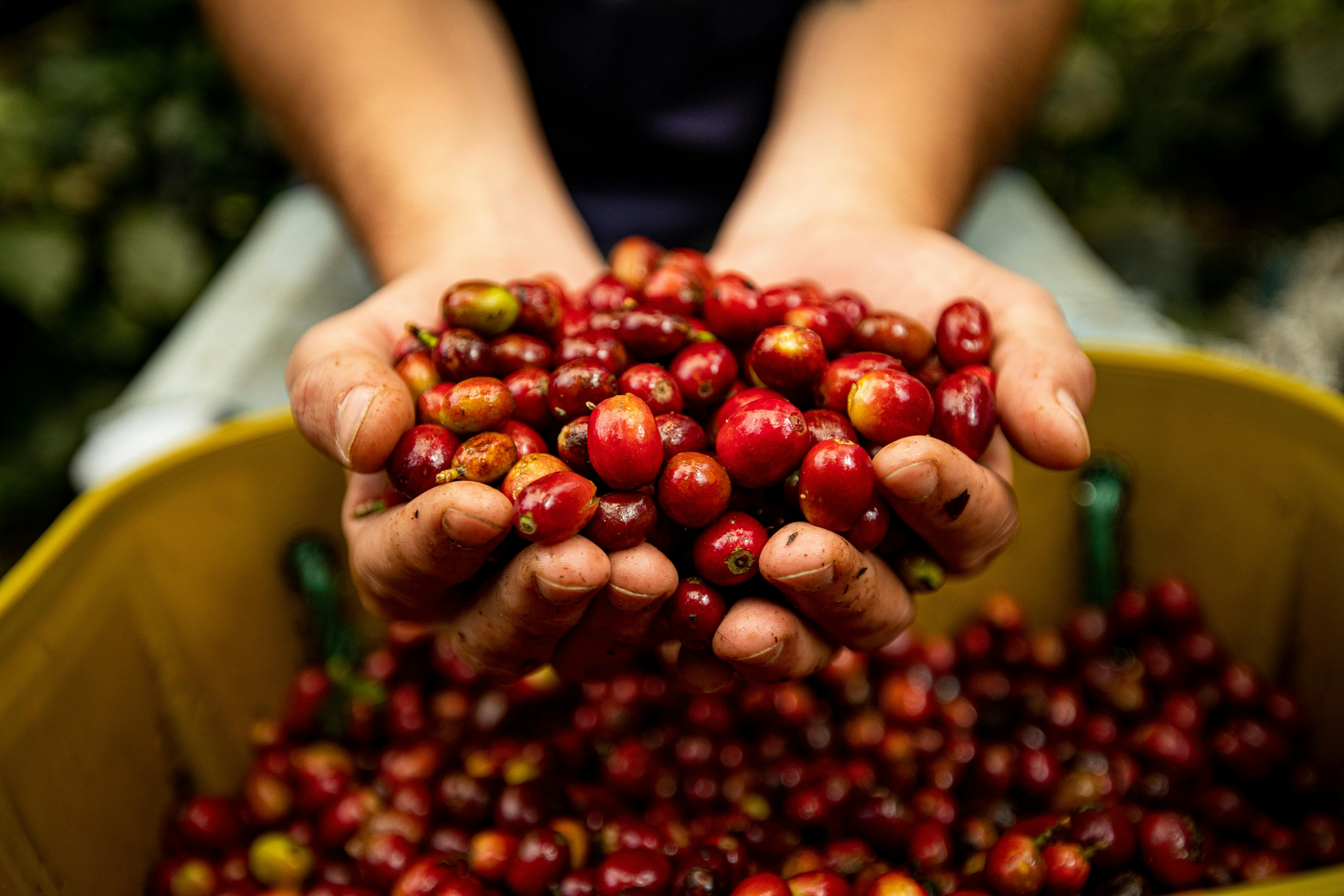
Blending has been part of the coffee trade for a long time — importers started mixing beans from different shipments to keep a consistent product through variable harvests. When one origin came in weaker, another picked up the slack. Commercial roasters scaled that logic. The bad reputation came later, when cost-cutting led some producers to stretch blends with chicory or roasted grain fillers. That's rare in specialty today, but the suspicion it created is exactly why transparent blend labeling reads as a trust signal rather than a marketing trick.
What are the most popular coffee blends, and what makes them work?
A few blends have survived for decades because they solve a specific pairing problem cleanly. Here's what each one is doing and why it holds up:
- The breakfast blend runs light to medium roast, built for brightness and easy drinkability. It usually starts with a washed Central American base and adds a small percentage of African bean for acidity lift. Nothing aggressive at 7 a.m. — that's the whole idea.
- Mocha Java is the original pairing: Yemeni Mocha for fruit and wine notes, Indonesian Java for earthy body. The 60/40 Yemeni-forward ratio is most common, though roasters adjust based on available lots.
- Espresso blends anchor on Brazilian for body and low acidity, then pull in Colombian for sweetness or Ethiopian for brightness. The goal is a cup that survives milk without going sour. CoffeeRoast Co.'s espresso blend follows this same three-component architecture.
- The French roast blend uses Central and South American beans taken dark enough that roast character does most of the work: smoky and chocolatey with a bold finish.
- The house blend pairs Central American milds with Indonesian for body. It's built to be approachable across a wide range of drinkers, which matters a lot in a cafe context.
- The Italian roast blend goes darker still, typically using Asian and Pacific beans that handle extended roast development without burning out.
How do you pick beans for a coffee blend?
Start with origin. Origin tells you what each bean contributes before a roaster even touches it. Altitude, soil chemistry, rainfall, processing method — all of that shapes the green bean's flavor potential. You're working with that raw material, not overwriting it.
Here's how the major growing regions tend to play inside a blend:
- Ethiopian Yirgacheffe delivers floral and citrus notes; Kenyan AA brings a juicy, blackcurrant-forward acidity. Both are high-intensity beans — better used as accent components than as a base. Push either one above 40% of your blend and it tends to drown out everything else.
- Colombian adds smooth body with nutty undertones. Brazilian gives you chocolatey depth and low acidity, which is why it's the go-to base for espresso blends.

- Sumatran Mandheling brings intense earthiness and spice. Vietnamese Robusta adds body and caffeine, but it can overpower everything else above 20-25% of the blend. Worth knowing before you reach for it just to boost caffeine.
- Yemeni beans add winey notes and spice complexity. Supply is inconsistent and prices run high, which is why most Mocha Java interpretations now swap in Ethiopian natural-process beans instead.
- Papua New Guinea offers tropical fruit character; Hawaiian Kona brings smooth chocolate and nutmeg. Both work best as small-percentage additions that lift a blend's top notes without taking over.
Roast level is the second variable to nail down. Light roasts keep acidity and fruit character front and center. Medium roasts add sweetness and body. Dark roasts shift toward chocolate and smoke — useful for anchoring an espresso blend, but they'll flatten an Ethiopian's floral notes if you push too far. Honestly, if two beans taste indistinguishable after roasting, you're adding cost rather than complexity.
How do you build your first coffee blend, step by step?
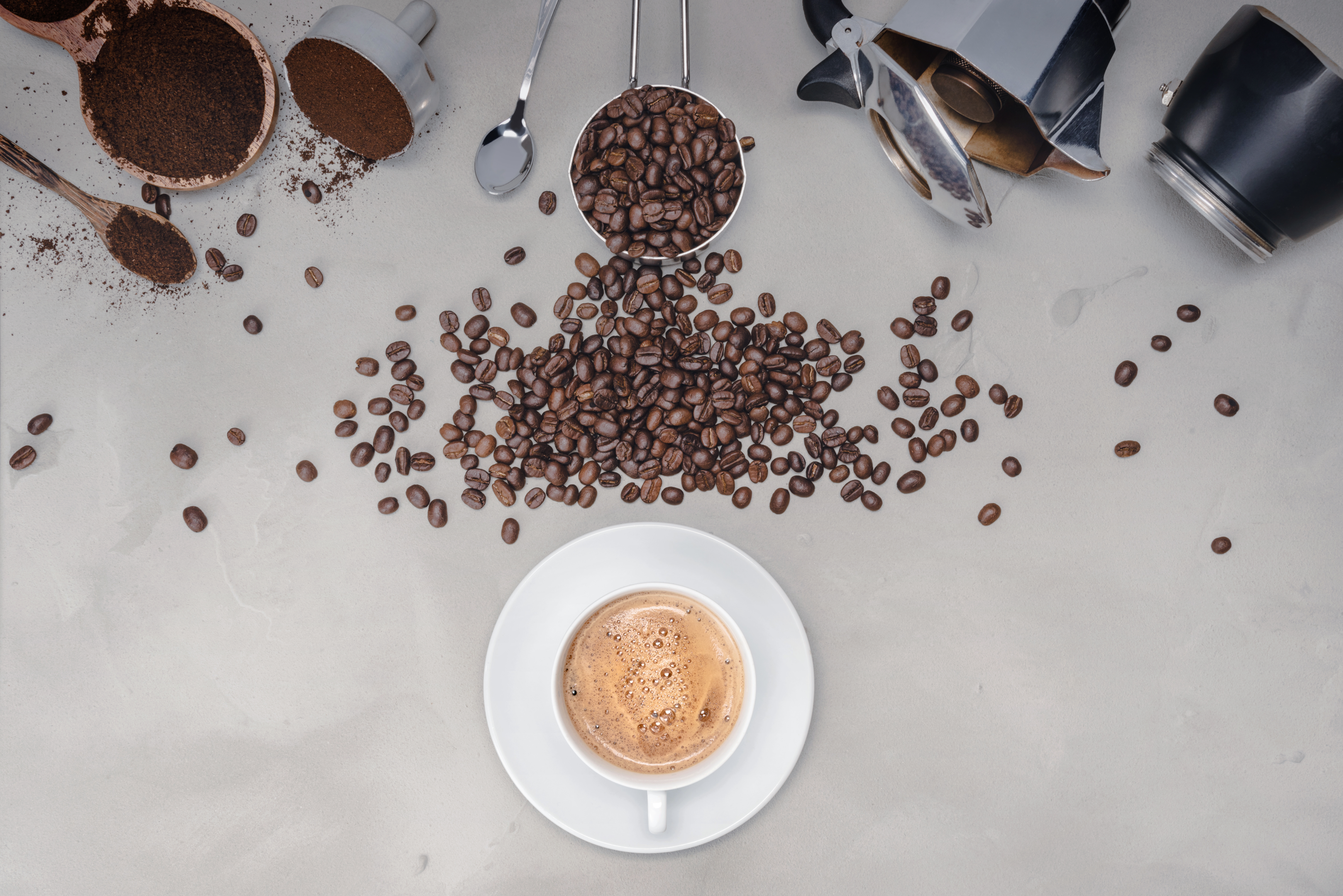
Before you touch the scale, brew each bean separately. Use 150 ml of water, same method, same temperature, same grind for each one. Take written notes — not mental ones. If you can't describe what each bean contributes on its own, you won't hear what it's adding inside the blend.
Three pairings that work well as starting points:
Smooth and bright: Ethiopian Yirgacheffe + Colombian Supremo. Start at 40% Yirgacheffe, 60% Colombian. The Yirgacheffe handles brightness and floral aromatics; the Colombian grounds the cup with body and sweetness. Adjust from there depending on how much acidity you actually want.
Balanced and nutty: Guatemalan Antigua + Brazilian Santos. Antigua brings chocolate and caramel with a faint citrus edge. Brazilian Santos adds nuttiness and structural body. This is a forgiving pairing — neither bean is particularly aggressive, so small ratio shifts won't throw the whole cup off.
Floral and caramel: Ethiopian Harrar + Costa Rican Tarrazu. Harrar's jasmine and citrus character pairs nicely with Tarrazu's caramel and nuttiness. One practical heads-up: Harrar is a natural-process bean with real batch-to-batch variation. A 60/40 split that worked with one lot may need a small tweak when the next lot arrives.
If you're chasing a specific flavor profile rather than general balance:
- Bold and chocolatey: Sumatran Mandheling as the base at 60-70%, with Guatemalan Huehuetenango adding sweetness and body.
- Smooth and nutty: Brazilian Cerrado as the foundation, with Costa Rican Tarrazu adding sweetness without pulling the cup away from its nutty character.
- Bright and citrusy: Ethiopian Yirgacheffe at 50-60%, with Colombian or Kenyan adding structure underneath.
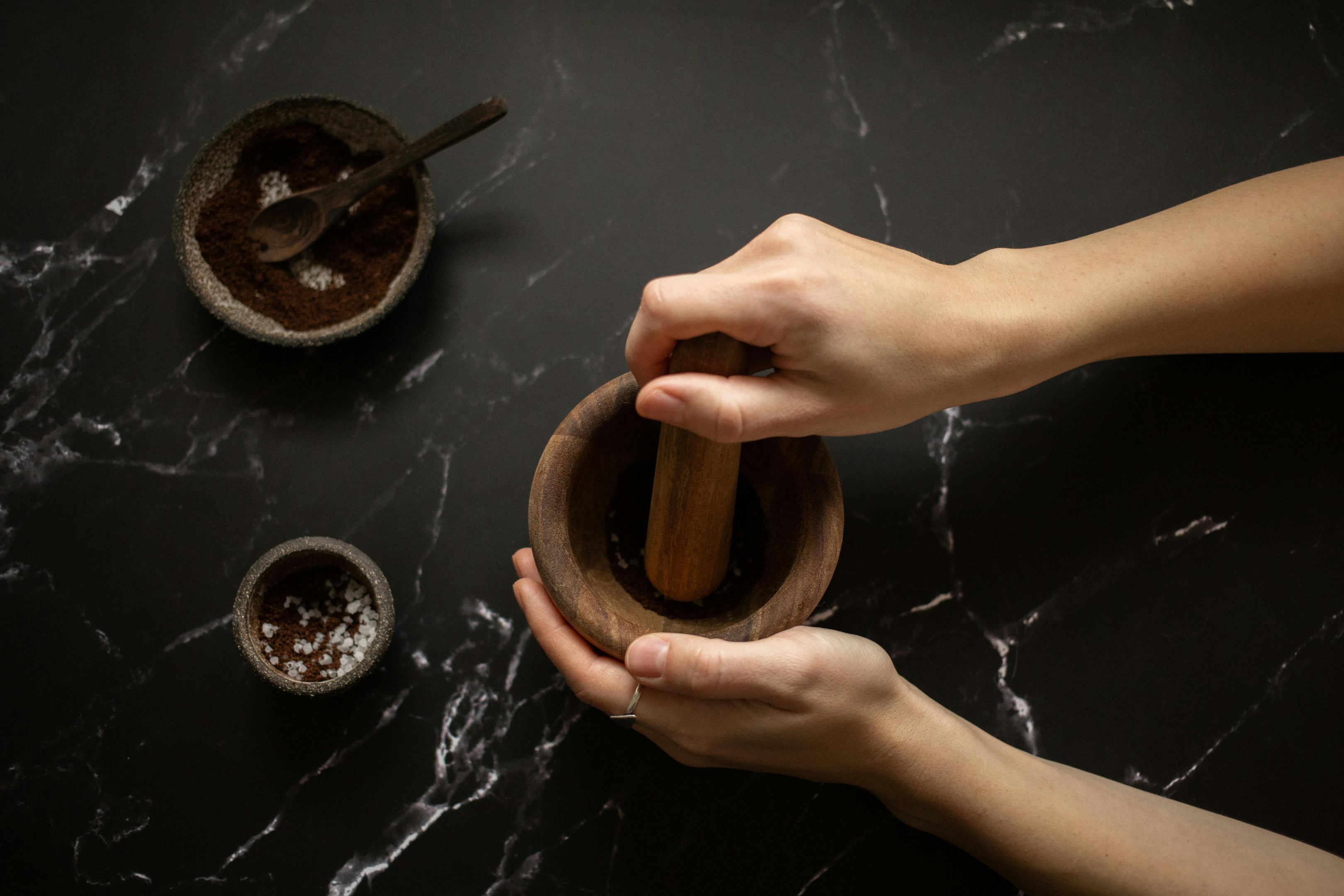
On ratios: start at 50/50 using 100-200 g per bean. That gives you enough coffee for multiple test batches without wasting much. Taste it. Then move in one direction and taste again. Small adjustments tell you more than big ones — jumping from 50/50 to 80/20 in one step skips all the useful middle ground.

Write everything down. The ratio, the roast level of each component, the brew method, what you tasted. Blending without notes means you'll eventually nail something and have absolutely no idea how to repeat it.
Should you blend before or after roasting?
Pre-roast blending means combining green beans before they go into the roaster. Everything roasts together, which produces uniform color and a cohesive final cup. One roast, one profile. The catch is that different origins don't develop at the same rate. A dense Ethiopian high-altitude bean and a lower-density Brazilian may hit their ideal development at different points in the roast curve. Blend them green and you're compromising on at least one of them.
Post-roast blending lets you roast each origin separately to its ideal profile, then combine the roasted beans. More steps, sure — but you're not sacrificing one bean to accommodate another. For home blenders, this is usually the better starting point. You can taste each roasted component on its own before committing to a ratio, and you can adjust without re-roasting anything.
Most specialty roasters use post-roast blending for exactly this reason. Pre-roast makes more sense when the beans have similar density and moisture content, or when you're scaling production and the efficiency gain outweighs the slight flavor compromise.
How do grind size and brewing method affect a coffee blend?
You can build a great blend and still brew it badly. Grind and method aren't afterthoughts — they're part of the flavor equation.
Grind size controls extraction rate. Finer grinds give water more surface area, which pulls flavor faster and can tip a blend toward bitterness if you're not careful. Coarser grinds slow extraction, which can leave a blend tasting thin or sour if the grind is too open for your brew time. This matters more with blends than with single-origins, because different beans can extract at slightly different rates at the same grind setting. A coarser natural-process Brazilian may need a finer grind to match the extraction speed of a denser washed Ethiopian. If your blend tastes sour up front and bitter at the back, uneven extraction between components is usually the culprit. Adjust grind size one step at a time and taste after each change.
Brew method shapes which qualities come forward:
- Pour-over and drip are transparent methods that show you acidity and clarity clearly. Good for blends where you want the origin character to lead.
- French press adds body through immersion and keeps oils in the cup. A blend that reads thin in a pour-over often feels fuller and rounder in a press.
- Espresso concentrates everything. Sweetness, acidity, and bitterness all amplify. A component that's mildly acidic as a filter coffee can taste sharp as an espresso shot. Blends built for espresso need balance dialed in before the shot is pulled.
- Cold brew suppresses acidity and brings out sweetness and chocolate notes. A blend that reads bright and citrusy hot can taste smooth and mellow cold.
Match your blend to the method you actually use most. Build for body if you're a French press person. Build for balance under pressure if you pull espresso every morning.
Frequently asked questions
Can you blend coffee beans with different roast levels?
Yes, and it works well when the components serve different roles. A light-roast Ethiopian paired with a medium-roast Brazilian gives you brightness from one and body from the other. The practical issue: darker-roasted beans extract faster than lighter ones at the same grind setting. If your blend reads sour up front and bitter at the back, one component is under-extracted while the other is over. Adjust grind size one step finer or coarser and taste again before you touch the ratio.
How many single-origin beans should you use in a blend?
Two or three is the right range for home blending. Two beans let you clearly hear what each is contributing. Three adds complexity without making it impossible to troubleshoot. Four or more origins blur into each other — the flavors become harder to isolate and adjust. Get comfortable with two-bean blends before adding a third.
What is the best starting ratio for a coffee blend?
50/50 gives you the clearest read on both components. From there, taste and move in one direction: 60/40 if you want one bean to lead, 70/30 if you want it to dominate. The classic Mocha Java runs 60/40 Yemeni-forward, but plenty of roasters adjust that based on the lots they're working with. No formula beats your palate.
Does blending coffee affect caffeine content?
It can, depending on species. Arabica beans average around 1.2% caffeine by dry weight; Robusta runs roughly twice that. If your blend includes Vietnamese Robusta or another Robusta component, caffeine per serving will be meaningfully higher than an all-Arabica blend. If you're blending purely within Arabica origins, the caffeine difference between beans is small enough that it won't change much cup to cup.
Is it better to buy a pre-made blend or build your own?
Both are valid — they serve different needs. A well-made commercial blend like CoffeeRoast Co.'s Infinite Bliss espresso blend has been dialed in across hundreds of iterations. You're buying the benefit of that work. Home blending makes sense if you want to experiment, understand how origins interact, or chase a specific flavor that nothing off the shelf quite hits. If I had to pick one place to start, it'd be a good commercial blend — so you know what a finished, balanced cup looks like before you start building your own.
What is the difference between a coffee blend and a single-origin?
A single-origin comes from one defined place: one country, one region, sometimes one farm or lot. A blend combines beans from two or more origins to hit a flavor target no single origin can reach, or to hold consistency across seasonal harvest variation. A Kenyan AA and a well-built espresso blend are both excellent — they're just solving different problems for different drinkers.
Key takeaways:
- Brew each bean separately before combining anything. You can't blend what you can't taste in isolation.
- Start at 50/50 by weight, then adjust one variable at a time. Small ratio shifts tell you more than big ones.
- Post-roast blending gives home roasters more control. Pre-roast blending trades that control for operational simplicity.
- Vietnamese Robusta above 20-25% of a blend will overpower everything else. Use it deliberately, not as filler.
- Match your blend to your actual brew method. Espresso blends need balance built in; French press blends reward body.


留个言