



Quick answer: The right espresso machine depends on how much control you want. Beginners get the most value from a semi-automatic like the Lelit Kate ($699, built-in grinder, heats in 10 minutes). For push-button convenience, the Breville Barista Touch handles grinding to frothing automatically. Manual lever machines reward skill but punish inconsistency.
Here's the mistake I see almost every new espresso person make: they research machines for weeks, pick a good one, then grab whatever grinder is cheapest. The grinder is where your shot actually starts. A so-so grinder paired with a great machine still produces so-so espresso, because uneven particle size means uneven extraction — and you'll taste that every single time. Figure out your grinder situation first, then choose the machine that fits how hands-on you want to be.
How do espresso machines work?
Espresso machines push hot water through finely ground coffee at 9 bars of pressure, producing a concentrated 1–2 oz shot in 25–30 seconds. That pressure is everything. It's what pulls oils and dissolved solids out of the coffee that a drip machine simply can't reach — which is why a well-pulled shot has that syrupy weight and that hazelnut-brown crema sitting on top.
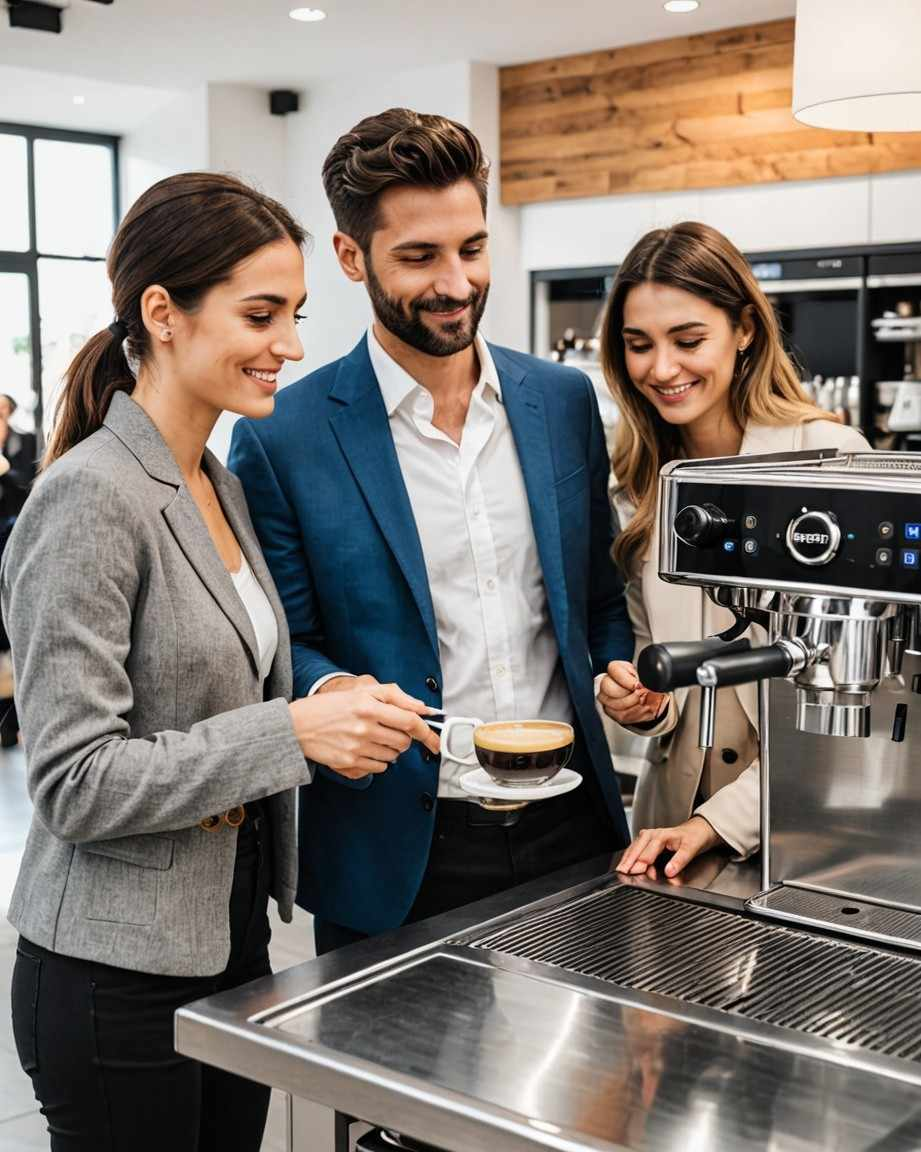
Water temperature during extraction targets 195–205°F (90–96°C). Go below that window and the shot tastes sour and thin — the heat wasn't there to pull out the sweeter compounds. Push above it and you're into over-extracted, bitter territory. Machines with a PID (proportional-integral-derivative) controller hold that range reliably throughout the shot. Cheaper machines without one can drift 5–10°F mid-pull, which is enough to throw off the taste.
You'll see pumps advertised at up to 15 bars, but don't let that number impress you. Actual extraction pressure is regulated to 9 bars in most designs regardless of what the pump is rated for. Consistent 9-bar pressure is what matters; a higher pump rating doesn't make better espresso.
What are the essential parts of an espresso machine?
Five components drive how well a machine performs. If you understand what each one does, you'll read specs clearly instead of getting sold on marketing numbers.
Water tank. Stores the water for brewing. Removable tanks are easy to refill and descale, which is standard on home machines. Plumbed-in machines connect directly to a water line and skip the tank entirely — that only really matters if you're pulling 30+ shots a day and don't want to babysit a reservoir.
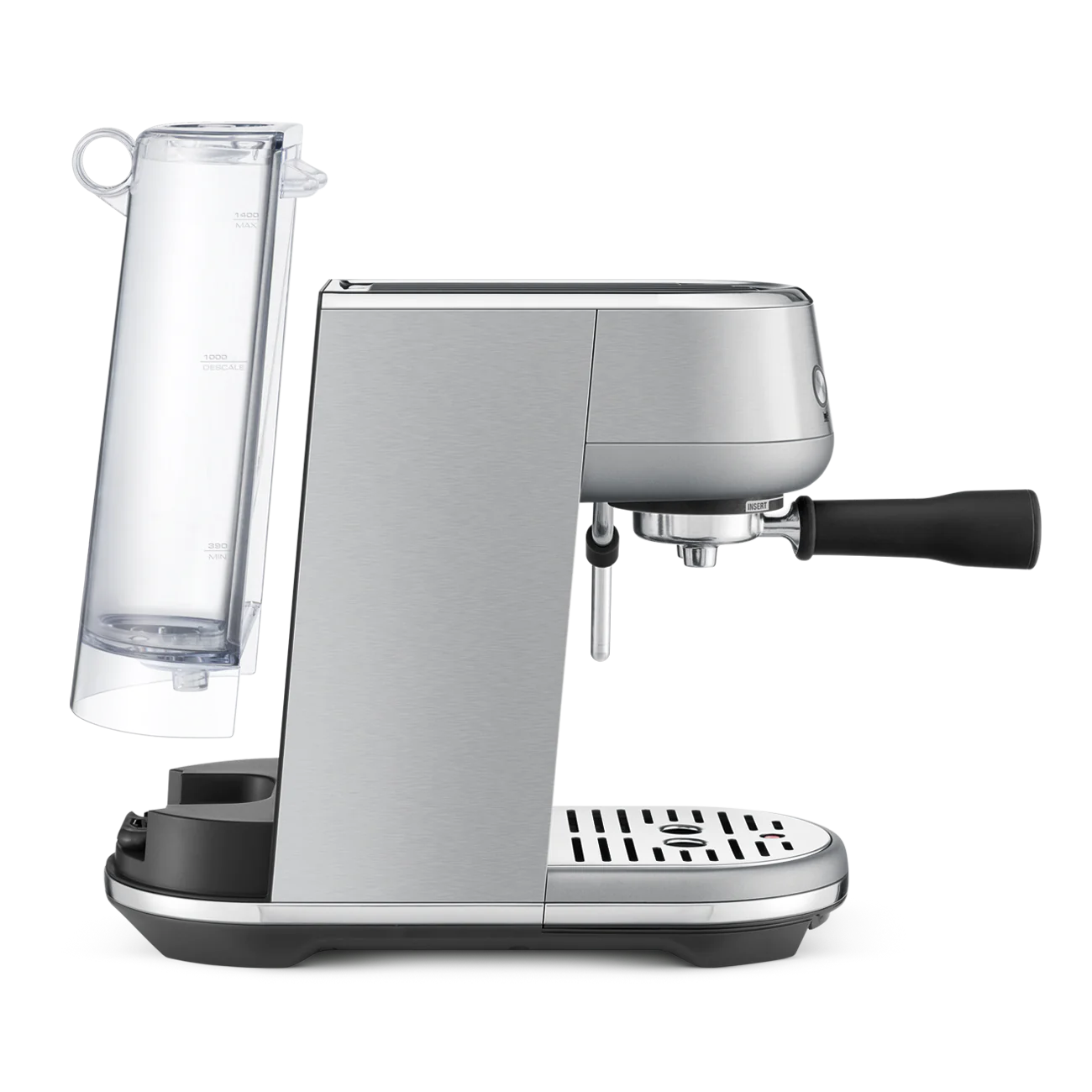
Boiler. Heats water to brewing temperature and holds it there. Three configurations show up in the home market, and they affect your workflow more than almost anything else:
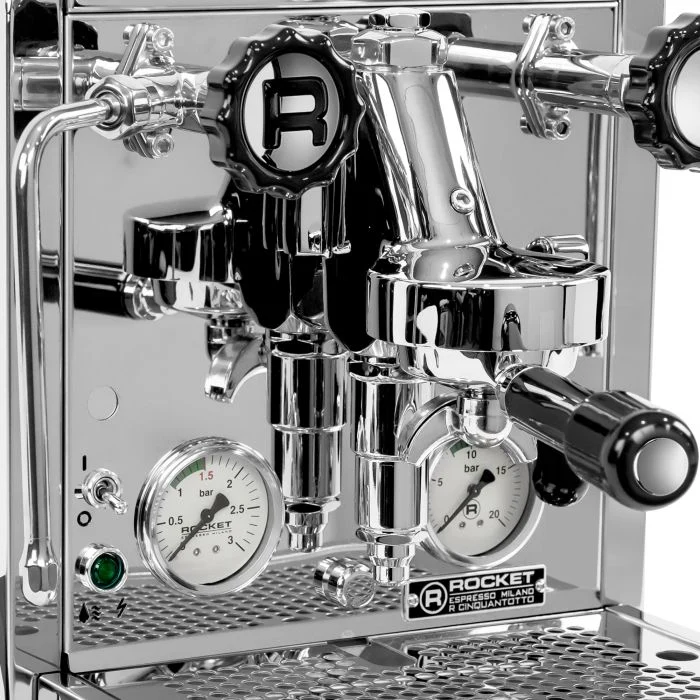
- Single boiler: one thermal mass handles both brewing and steaming. You'll wait 30–60 seconds between tasks while the boiler switches temperatures. Totally fine for 1–2 drinks a day.
- Double boiler: separate chambers run brew and steam at the same time. No waiting, no compromises. Standard on prosumer machines like the Lelit Bianca and up.
- Thermoblock: heats water on demand through a small exchanger instead of holding a reservoir. Heat-up time under 60 seconds on most designs, though temperature stability isn't quite as solid as a traditional boiler.
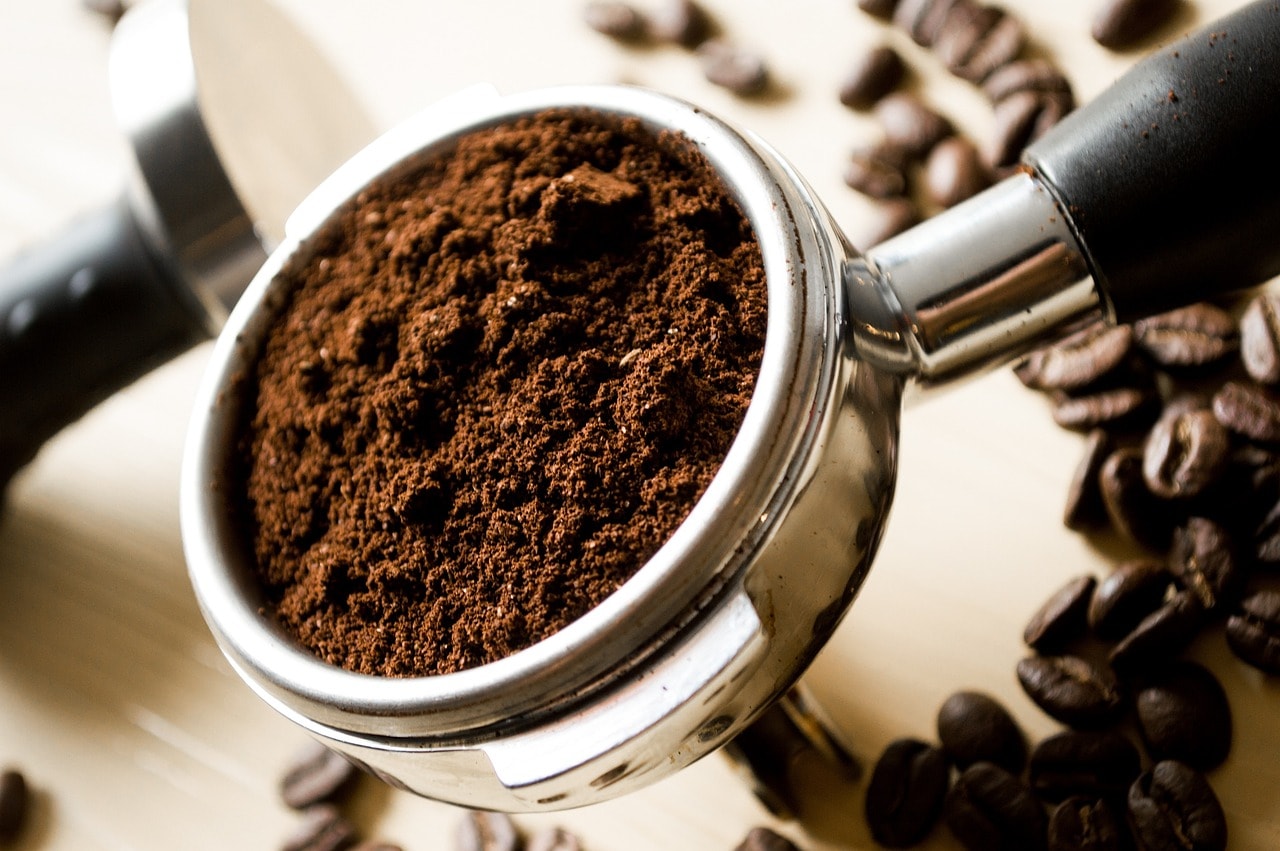
Portafilter. The metal basket that holds your ground coffee and locks onto the group head. Size matters here: 58mm is the commercial standard, and it's the best choice for a home machine because it opens up access to third-party precision baskets from VST and IMS that genuinely improve extraction consistency. Breville uses 54mm on several models — it works, but your aftermarket basket options are more limited.
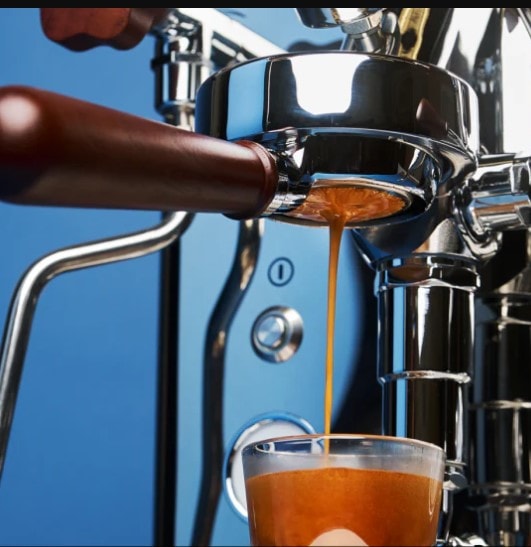
You've got three portafilter styles to know: single spout (one shot), double spout (two shots from one puck), and bottomless. The bottomless portafilter has no spout and leaves the basket fully exposed underneath. It's the best diagnostic tool in home espresso — if your distribution or tamp is off, you'll see it immediately as uneven flow or spraying. Pick one up early. Seriously.
Pump. Generates the pressure. Vibratory pumps are standard on home machines under $1,000; they work well, but they're audible. Rotary pumps are quieter, more consistent under load, and last longer, which is why they show up on machines above roughly $1,500. If your kitchen is small and noise matters to you, it's worth factoring in when you're comparing models.
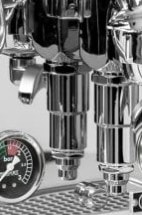
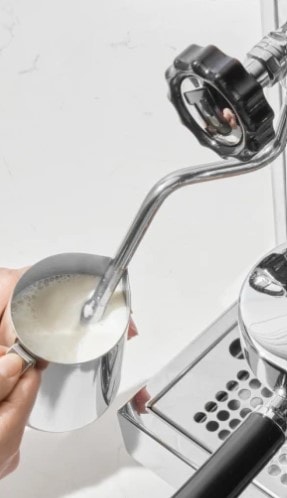
Steam wand. Injects steam into cold milk to build microfoam for lattes and cappuccinos. Pull the wand off at 150–155°F (65–68°C) — go past that and the milk tastes scalded and flat. A 4-hole tip produces noticeably silkier texture than a single-hole tip at the same temperature. That's one of the real differences between a $400 machine and a $700 one, not just branding.
Group head. Where the machine meets the portafilter. Water passes through the group head's shower screen to distribute evenly across the puck. Before every single shot, run hot water through the group head for a few seconds before locking in the portafilter. A cold group head drops water temperature 5–10°F right at the puck — enough to pull a sour shot even if everything else was perfect.
Which type of espresso machine is right for you?
Three types, three different relationships with your morning coffee. None of them is objectively the best; it depends entirely on what you want out of the process.
Manual (lever) espresso machines use a spring piston or direct lever to build pressure. You're in control of everything: grind, dose, tamp, and the pull itself. The ROK Espresso Maker is a smart entry point if you're curious about lever espresso without spending $500+ to find out. It's compact, needs no electricity, and travels well.
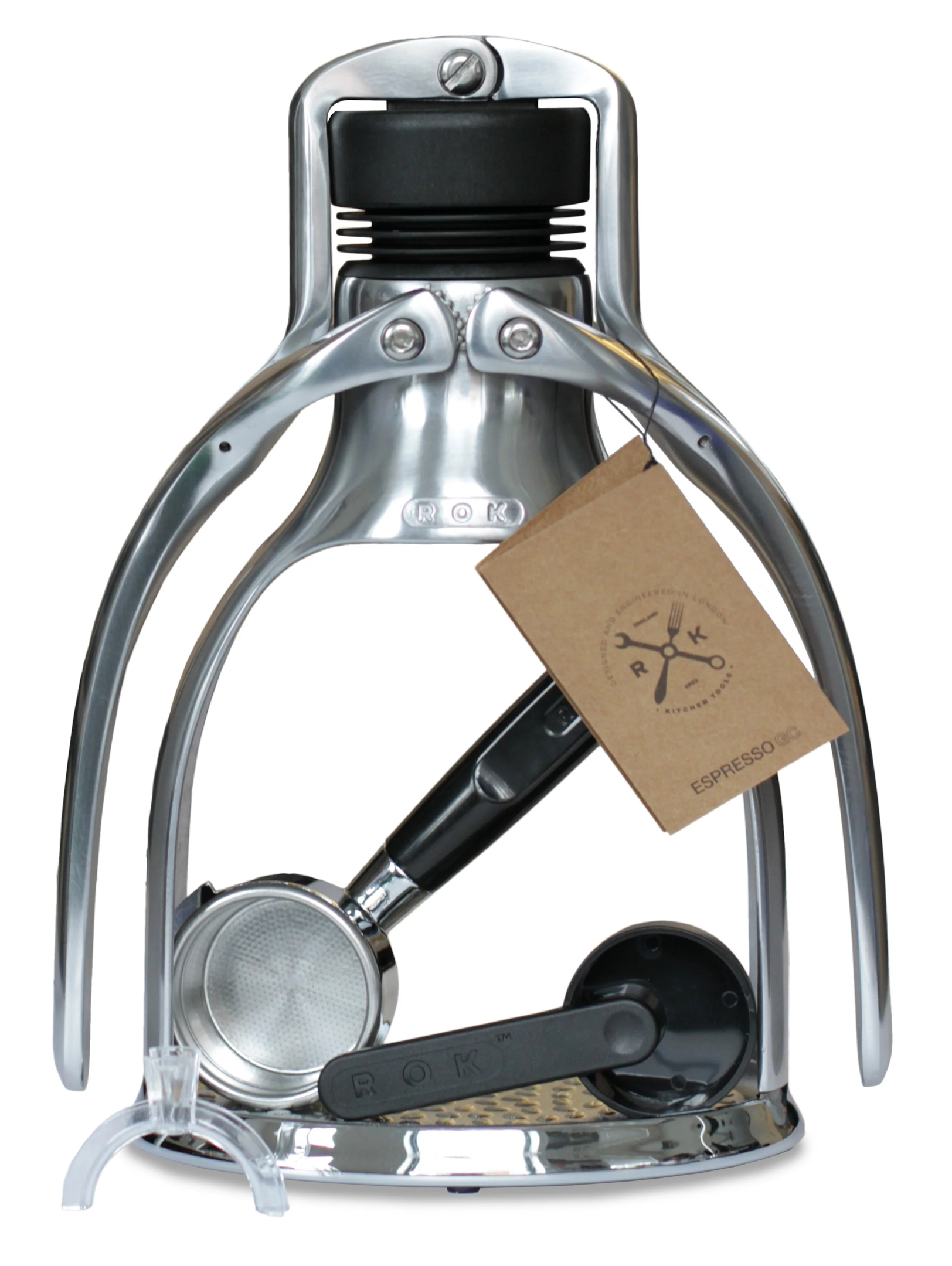
That said, be honest with yourself here. Your first 50–100 shots on a lever machine will be inconsistent while you build feel for the pressure. If you want good espresso from day one, this isn't your path yet.
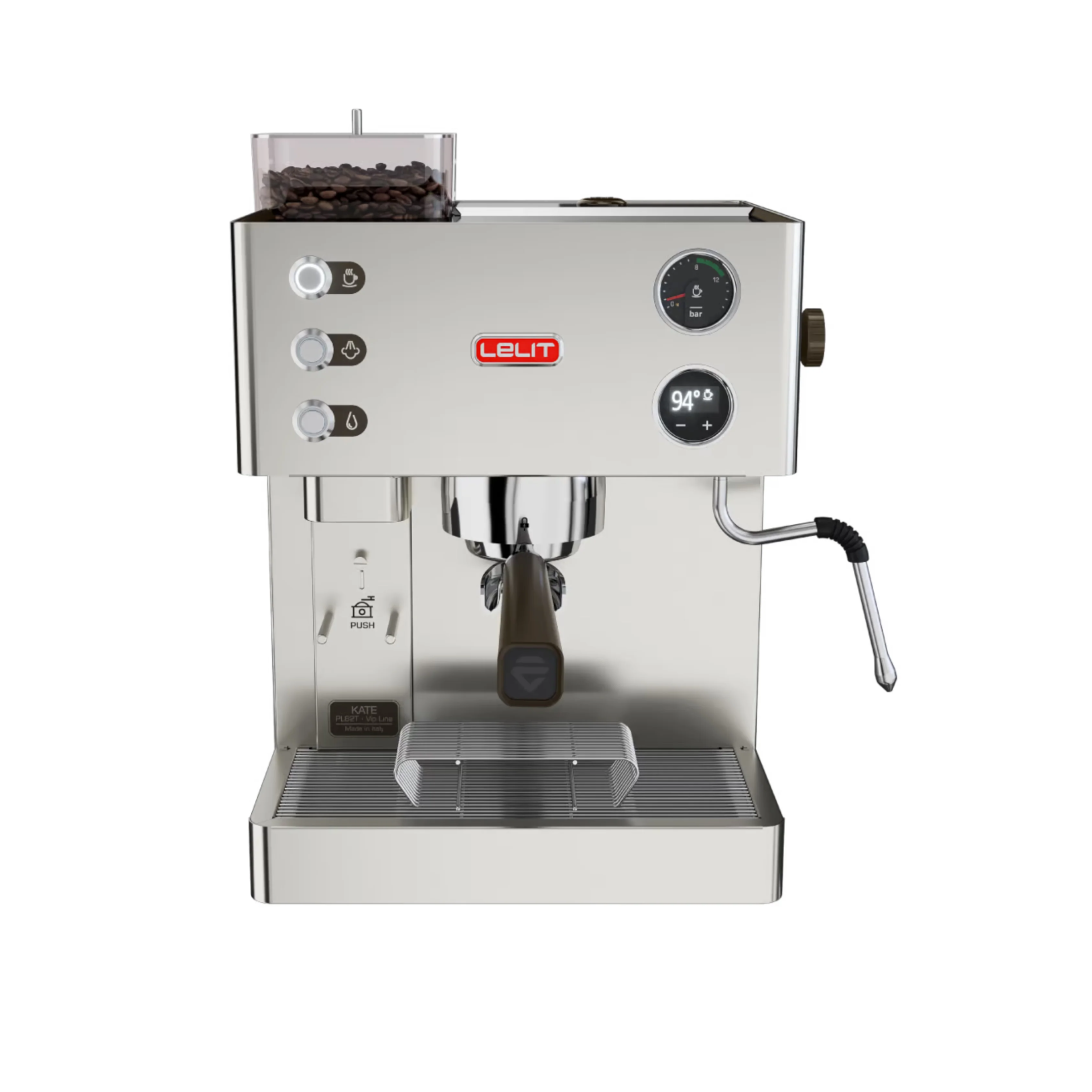
Semi-automatic espresso machines handle the pump and temperature automatically while leaving grind, dose, distribution, and tamp to you. That balance is exactly why I'd recommend them to most people who actually want to learn espresso. The Lelit Kate is a great example: built-in grinder with micrometric adjustment, heats up in under 10 minutes, brews straight into a standard mug. It teaches you real skills without making the machine a mystery box.
Super-automatic espresso machines do everything in one press: grinding, dosing, tamping, brewing, milk frothing. The Breville Barista Touch is a strong pick here. Touchscreen interface, automatic milk texturing, pre-programmed drink profiles. If you want cafe-quality drinks without a learning curve — and you're comfortable paying for that convenience — it genuinely delivers.
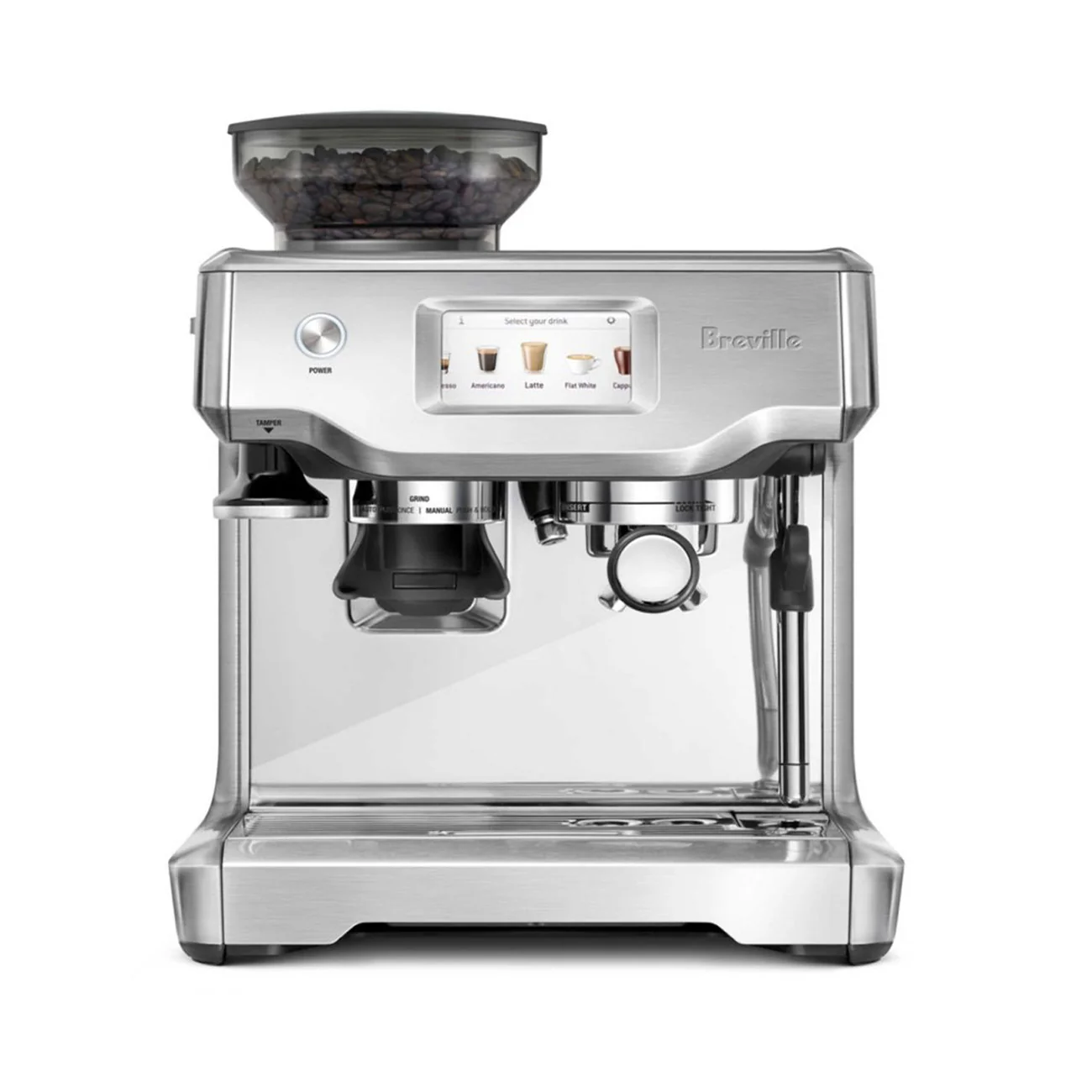
The honest trade-off: super-automatics are harder to repair and more expensive to service. When something breaks in the integrated grinder, the whole machine is down. A semi-automatic with a standalone grinder fails in smaller, cheaper pieces — and that's actually a real advantage over time.
Why does the grinder matter more than the machine?
Espresso demands a grind finer than almost anything a basic burr grinder can handle consistently. What you need is a narrow, even particle-size distribution at the fine end of the dial. When particles are uneven, some extract too fast and some too slow, and the shot tastes like both at once. That's why two identical machines pulling from the same beans can taste completely different depending on the grinder.
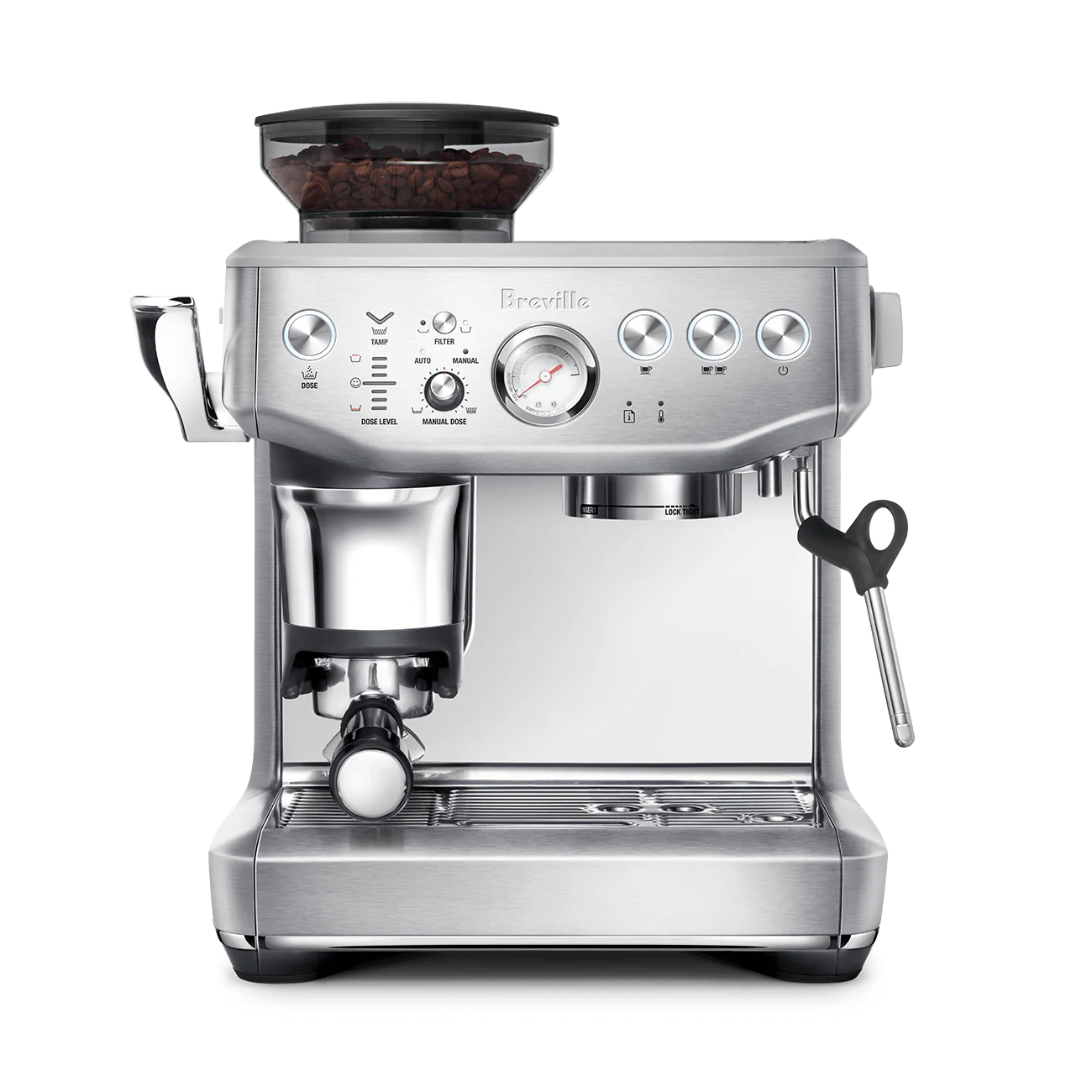
The Breville Barista Express Impress solves this neatly by building a 25-setting grinder directly into the machine body. If you want one purchase that gets you espresso-ready without sourcing components separately, this is the most practical answer I know at its price point. The integrated grinder has real limits compared to a dedicated standalone, but it outperforms most separate grinders in the same price class.
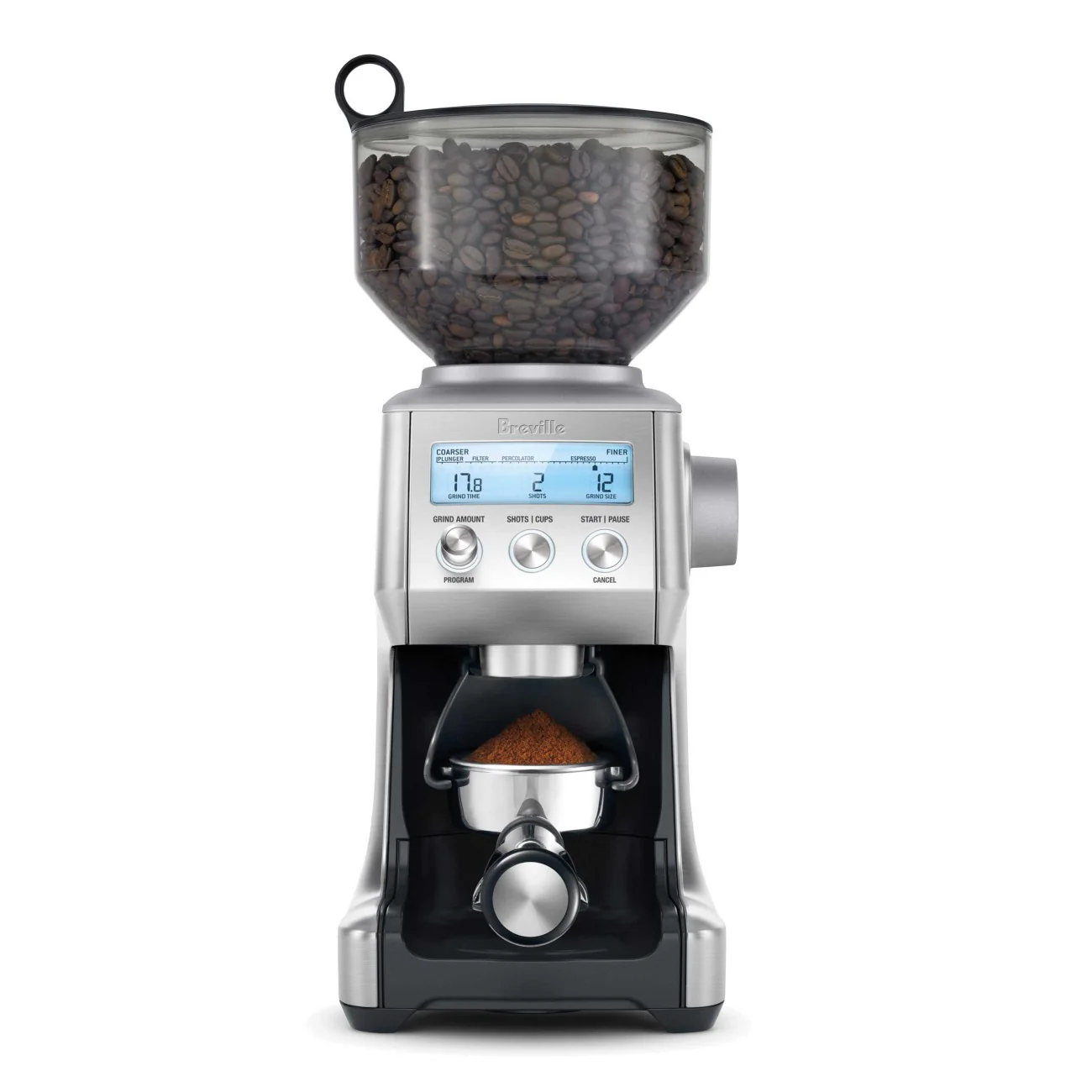
Already have a machine and want to upgrade the grind? The Breville Smart Grinder Pro offers 60 grind settings spanning French press all the way down to Turkish, with a built-in timer for repeatable dosing. It's one of the more honest entry-level espresso grinders at its price — though if you get deep into dialing in shots, you'll eventually want to move up from it.
What accessories do you actually need?
Most accessories are optional. Two aren't.
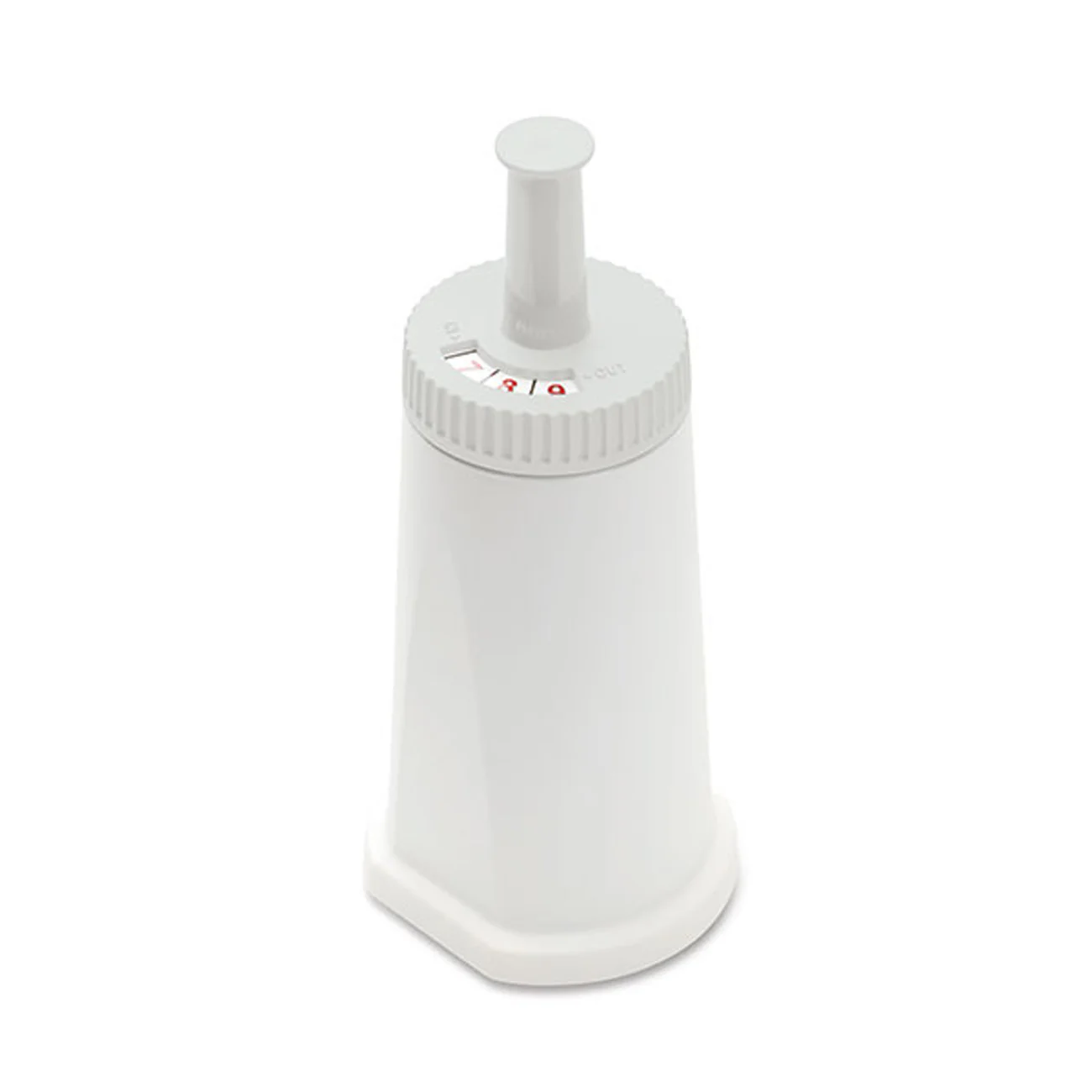
Water quality is something most guides gloss over, and that's a mistake. Espresso is over 90% water — if your tap runs high in chlorine or heavy metals, you will taste it in the cup. The Breville ClaroSwiss Water Filter handles chlorine, sediment, and scale-forming minerals in one inline cartridge. Bonus: it extends boiler life by reducing mineral buildup inside the machine.
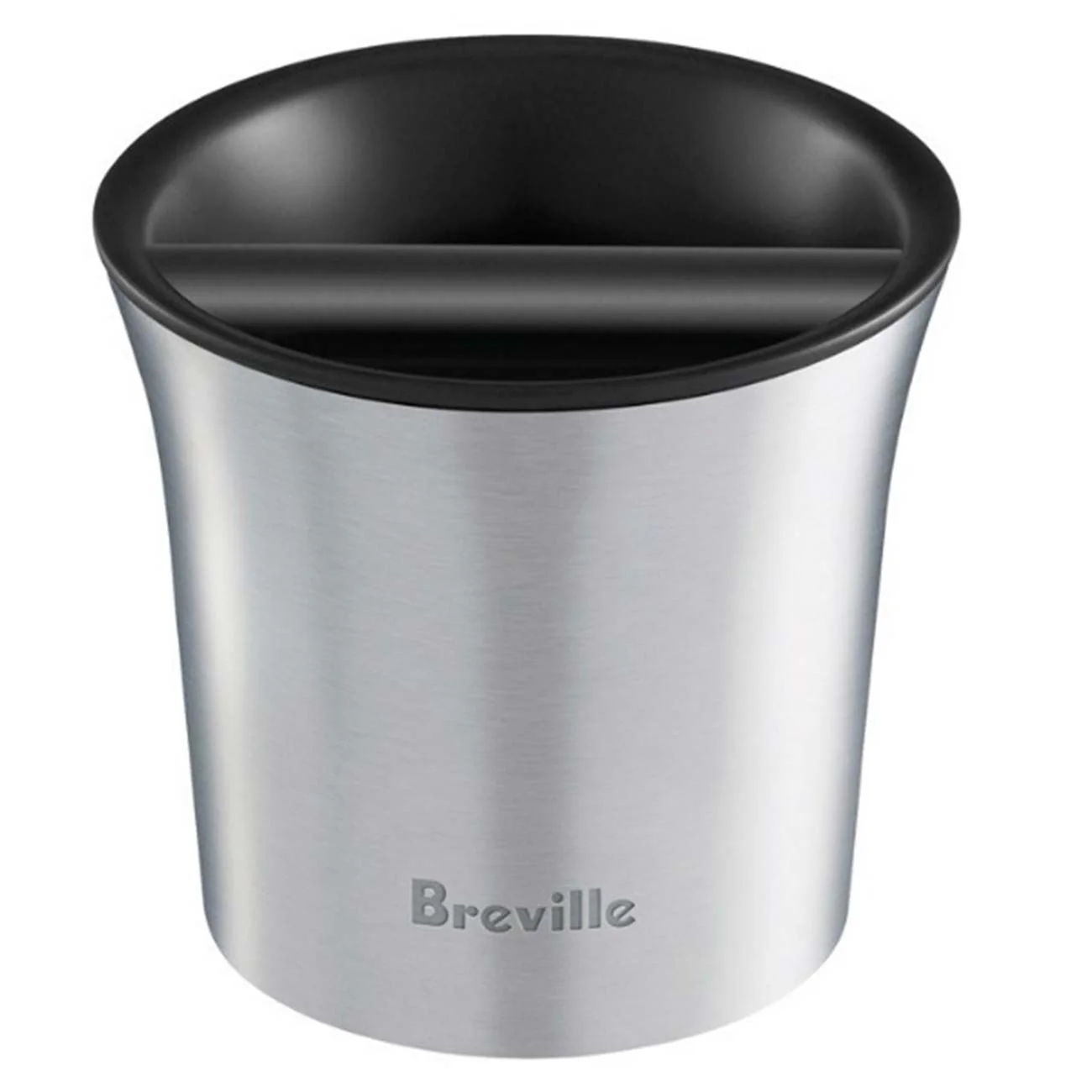
A knock box is the other one. Breville's Knock Box is solid, fits a 58mm portafilter without any wobble, and takes up almost no counter space. Knocking spent pucks into a trash can or drawer is messy and slow. This is $30 that earns its place on day one.


Dejar un comentario