



Quick answer: You can grind coffee beans without a grinder using a food processor (10-20 second pulses), a blender on medium speed, a rolling pin with beans in a sealed bag, or a mortar and pestle. Each method produces a coarser, uneven grind compared to a burr grinder, so match your technique to a forgiving brew method like French press or drip.
Your grinder broke. You're staying somewhere that doesn't have one. You bought whole beans by mistake. Whatever the reason, you have options. None of them perfect, but all workable if you pick the right brewing method to go with them.
Can You Grind Coffee Beans in a Food Processor?
Yes, and it's probably the most practical emergency option if you have one on the counter. Add your beans and pulse in 10-20 second bursts until you hit a coarse, sand-like consistency. Don't run it continuously. The blades generate heat fast, and hot grounds go stale in minutes.
The grind won't be uniform. Food processor blades chop rather than mill, so you'll get a mix of fine dust and coarse chunks. That's fine for French press or drip, where a medium-coarse grind works well and the brew time compensates. Skip this method if you're trying to pull an espresso shot.
How to Grind Coffee Beans with a Blender
A blender works on the same principle as a food processor: fast blades, imprecise grind. Use the pulse setting rather than continuous run. Try 3-5 short pulses, shake the blender to redistribute the beans, then pulse again. Medium speed works better than high. High speed shreds the beans and heats them unevenly.
If your blender has a dedicated "grind" mode, use it. If not, pulse is what you want. The result will be coarser than anything a burr grinder produces, but it'll brew. Shake periodically so beans at the top don't escape the blades entirely.

Once you're grinding consistently, you'll want a setup that doesn't require workarounds. The Breville Barista Express has an integrated burr grinder built in, which removes the whole problem at the source.
Grinding Coffee Beans with a Rolling Pin
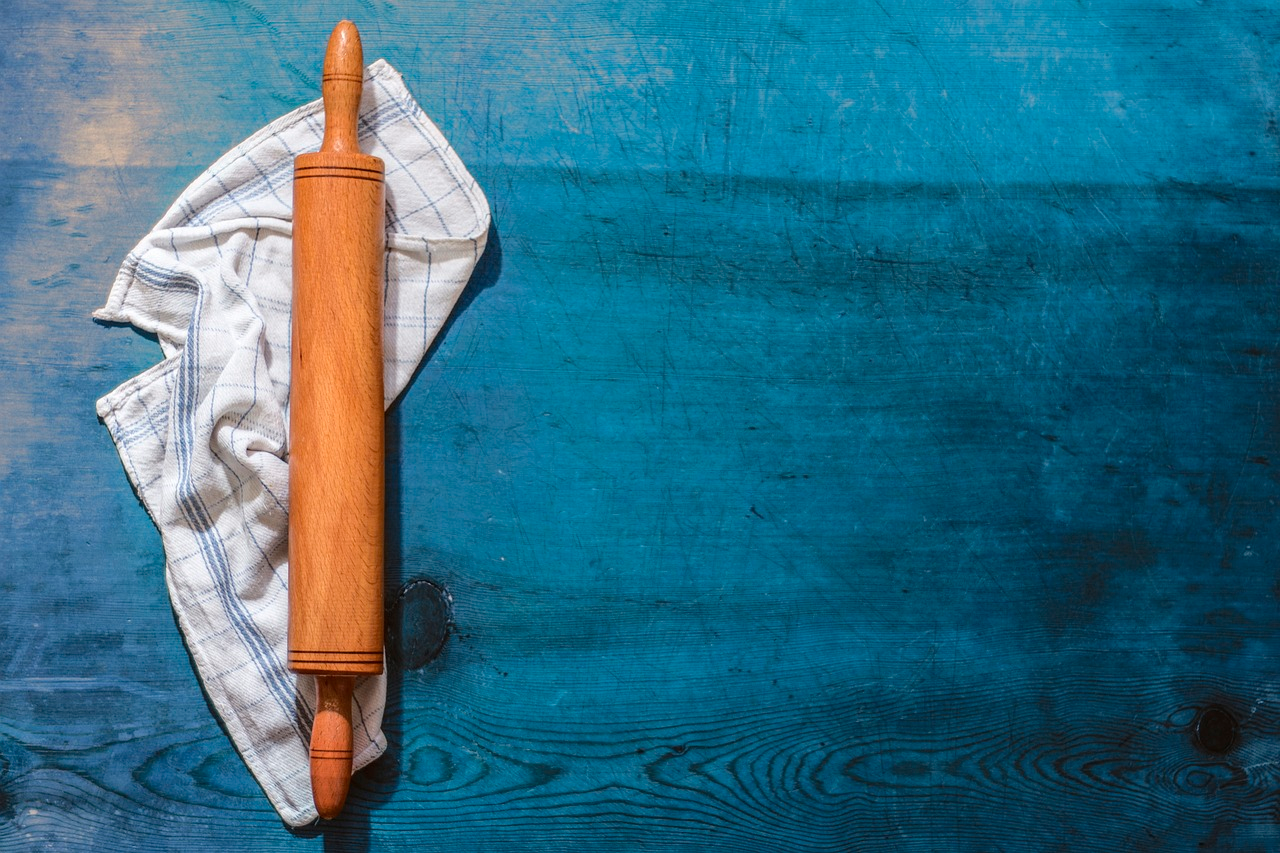
Low-tech, slow, and it actually works for coarse-grind applications. Put the beans in a sealed zip-lock bag or wrap them in a clean kitchen towel so they don't scatter. Lay the bag flat on a cutting board, then press and roll with a rolling pin, working from the center outward. Apply steady, even pressure.
For best results:
- Seal beans in a sturdy zip-lock bag or fold them into a tea towel
- Distribute the beans in a single layer on a cutting board
- Press and roll with the rolling pin, working from center outward
- Apply equal pressure across the full width for a more even crush
You won't get a fine grind this way. Think coarse French press territory at best. But if it's what you have, it gets the job done. The towel method keeps beans from puncturing the bag and going everywhere.
Using a Mortar and Pestle to Grind Coffee Beans
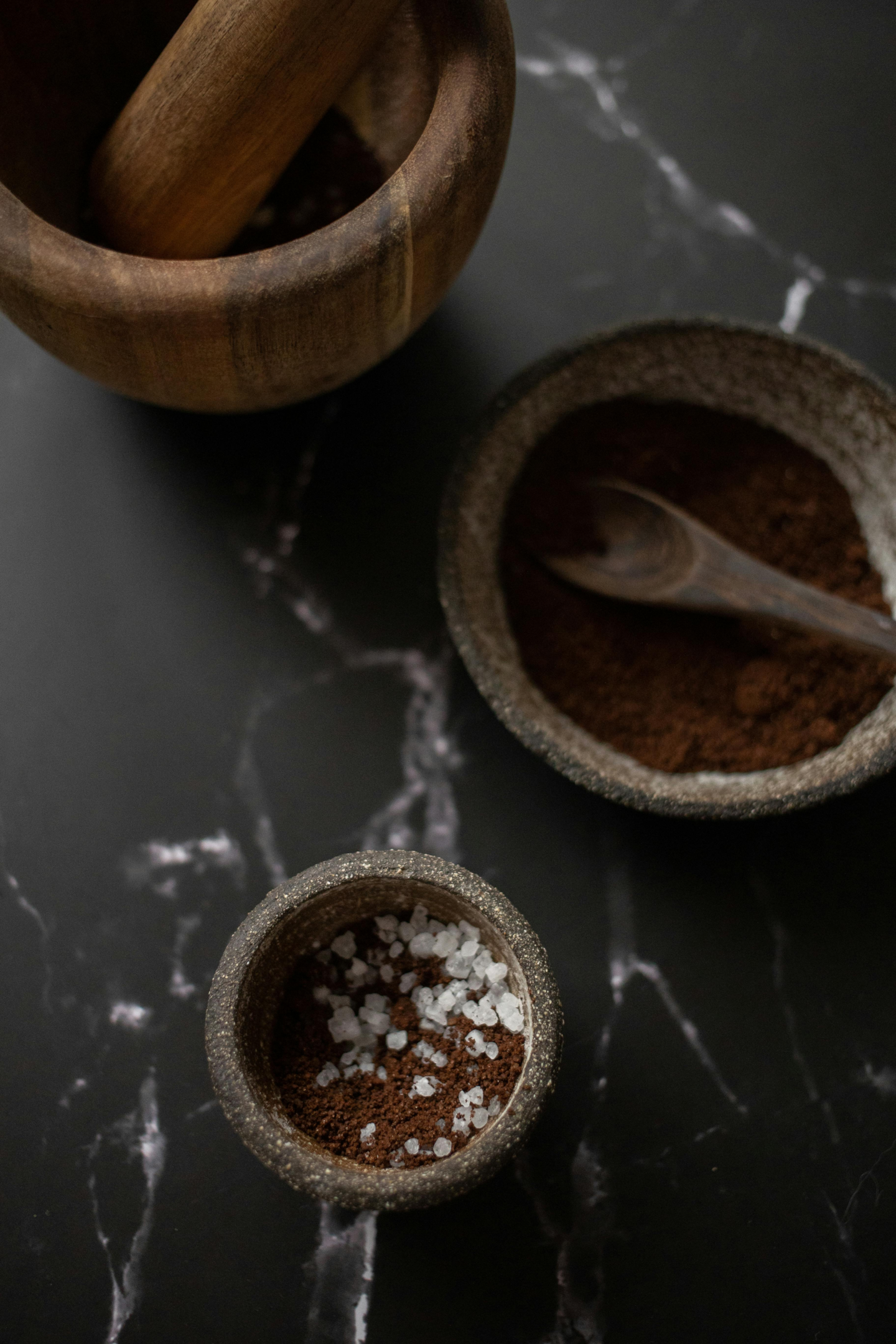
This is the method that gives you the most control. Add a small batch of beans (no more than 2-3 tablespoons at a time) and press the pestle firmly against the side of the mortar rather than straight down. A rocking, grinding motion works better than just pounding.
The mortar and pestle is the only grinder-free method that can approach a consistent medium grind, which opens up pour-over and drip coffee as options. It takes 5-8 minutes of real effort for a single dose, but the grind size is more predictable than a blender or food processor.
Understanding why this matters: coffee extraction pulls caffeine, lipids, carbohydrates, and acids out of the ground coffee into water. Grind consistency directly controls how evenly that extraction happens. Inconsistent grounds produce a mix of over-extracted fines (bitter) and under-extracted coarse pieces (sour) in the same cup. The mortar and pestle minimizes that problem compared to the other emergency methods.
How to Grind Coffee Beans with a Stone Grinder (Sil Batta)
If you've ever cooked South Asian food, you may already have one. The Sil Batta is a traditional Indian grinding tool: a flat rectangular stone (Sil) and a cylindrical grinding stone (Batta). Place beans on the flat stone and roll the Batta over them with downward pressure.
It produces a grind that's coarser than a mortar and pestle but more controlled than a rolling pin. The stone-on-stone contact generates less heat than metal blades, which is genuinely better for preserving volatile aromatics. It's slow. It's also surprisingly effective.
Why Grind Size Matters for Each Method
Coarser grounds have less surface area exposed to water, so extraction is slower. Finer grounds have more surface area, so they extract faster. That's why grind size determines which brew method you can use.
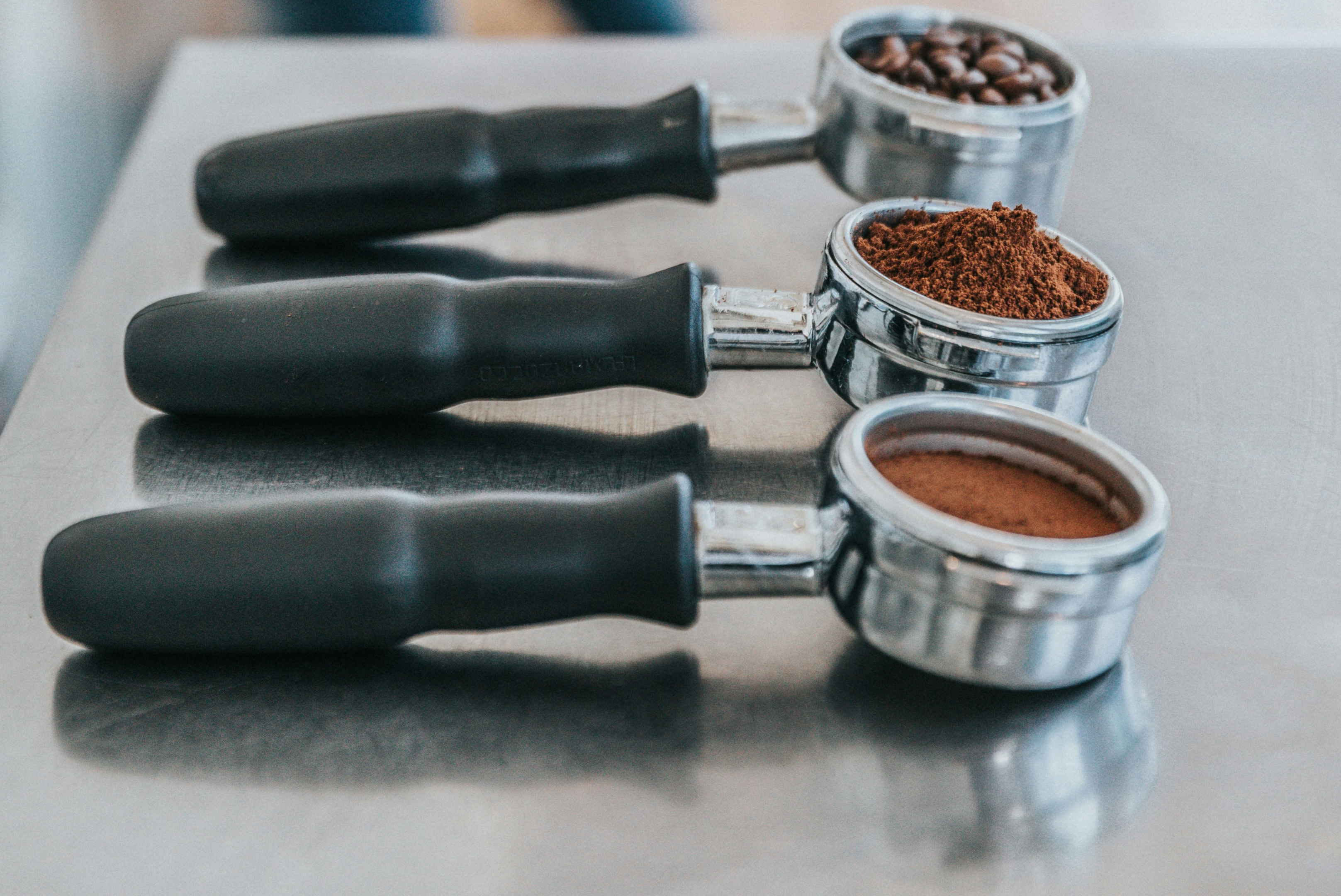
Here's the practical takeaway for grinder-free methods: every technique above produces a coarse, uneven grind. That matches best with French press (4-minute steep, coarse grind), drip coffee (medium grind, 4-6 minute contact), and cold brew (very coarse, 12-24 hour steep). Don't try to pull espresso with any of these. Espresso requires a fine, precise, consistent grind that only a burr grinder can produce reliably.

If you're choosing beans to roast at home, a consistent grind from a dedicated burr grinder will always outperform any of the emergency methods above. CoffeeRoast Co. has a full range of home roasters if you want to start earlier in the process.
Frequently Asked Questions
What's the best no-grinder method for French press coffee?
A blender or food processor, pulsed in short bursts. You want a coarse, sandy grind, roughly what you'd get from a burr grinder set to its coarsest setting. French press is forgiving of grind inconsistency because the 4-minute steep time compensates for some unevenness. Avoid grinding too fine or you'll end up with muddy, over-extracted coffee and grounds that slip through the filter.
Can I grind coffee beans with a mortar and pestle for espresso?
Not practically. Espresso requires a very fine, consistent grind (particle size in the 200-400 micron range) and the mortar and pestle can't produce that uniformity. You'll get something that looks fine enough but has too much variation in particle size, which causes channeling and produces an unbalanced, bitter shot. Stick to French press or drip if you're working without a grinder.
Will grinding coffee in a blender make it taste worse?
A little, yes. Blenders generate more heat than burr grinders, and heat accelerates oxidation of the volatile aromatic compounds that give fresh coffee its character. The effect is real but modest if you use short pulses and brew immediately. Don't pre-grind and store blender-ground coffee. Brew it within minutes of grinding.
How fine can I get with a rolling pin?
Coarse at best. The rolling pin crushes and cracks beans rather than milling them, so you'll end up with irregular pieces ranging from near-powder to large chunks. That's workable for cold brew or French press. For drip coffee you'd need to keep working the rolling pin longer, which increases heat and inconsistency. It's an emergency method, not a technique.
Does grind consistency affect taste that much?
More than almost any other variable. Inconsistent grounds mean some particles over-extract (bitter, astringent) while others under-extract (sour, weak) in the same brew. A good burr grinder produces a narrow particle-size distribution, with most grounds within 50-100 microns of the target size, which is why the cup tastes cleaner. The emergency methods above all produce wider distributions, which is why they taste rougher.
What's the quickest grinder-free method?
Food processor, without question. 10-20 seconds and you have a usable coarse grind. Cleanup is fast too. The mortar and pestle gives better consistency but takes 5-8 minutes of real effort per dose. Rolling pin is slowest and messiest. If speed matters, food processor first, blender second.
When should I just buy a hand grinder instead?
If you're grinding without a grinder more than occasionally, a hand burr grinder changes the situation entirely. A Hario Skerton or Porlex Mini runs $40-$60, produces a genuinely consistent grind, and fits in a travel bag. The cost is recovered in cup quality within the first week. Any of the methods above are fine for an emergency. None of them are a substitute for even an entry-level burr grinder used regularly.
Key takeaways:
- Food processor and blender are fastest; use pulse mode to avoid overheating the beans.
- Mortar and pestle gives the most consistent coarse grind of any no-grinder method.
- All grinder-free methods produce uneven grounds best suited to French press, drip, or cold brew. Espresso is not a realistic target.
- Grind right before brewing; don't store grounds made with these methods.
- A hand burr grinder ($40-$60) solves this problem permanently if it comes up regularly.


Leave a comment