

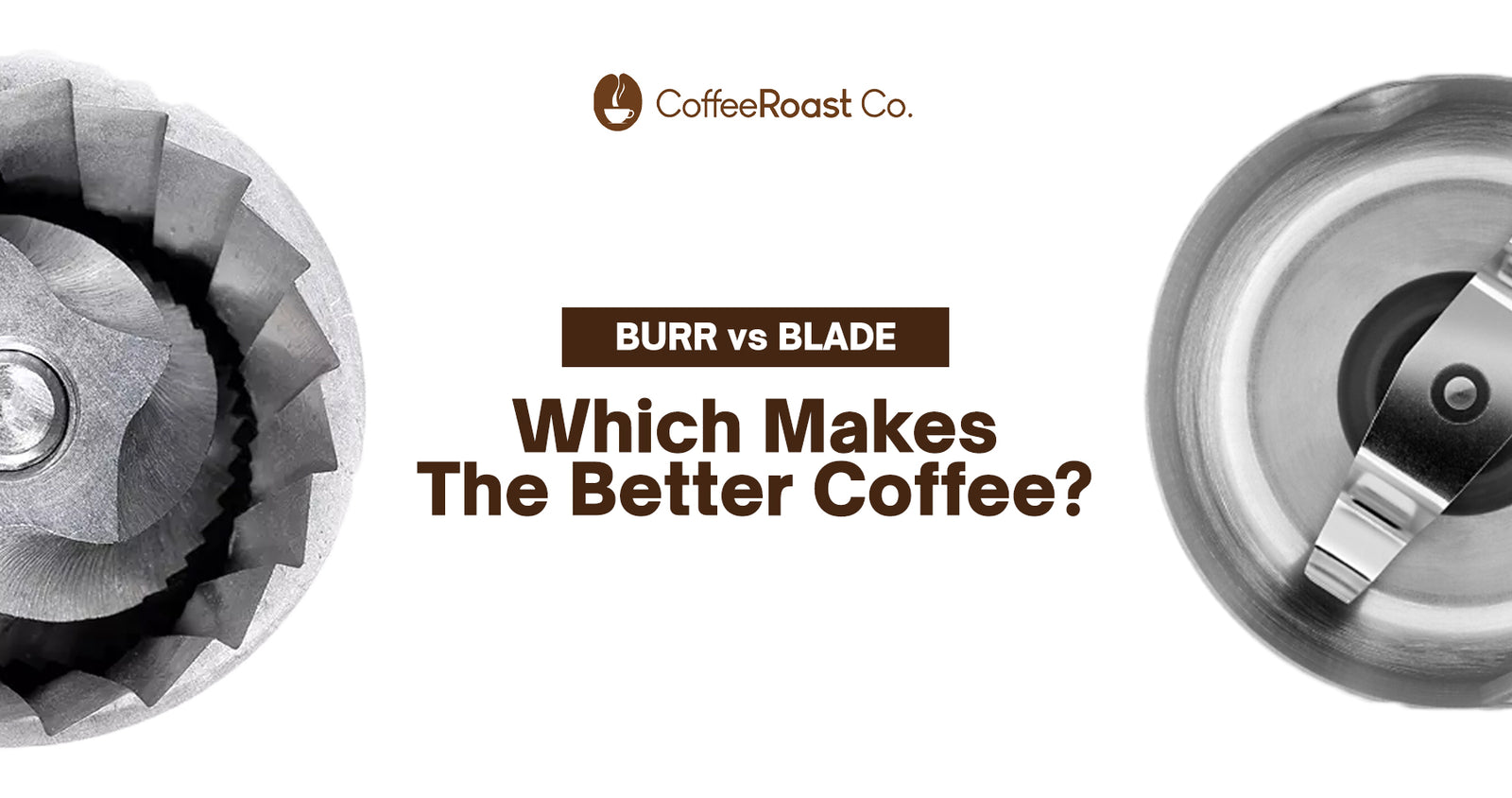
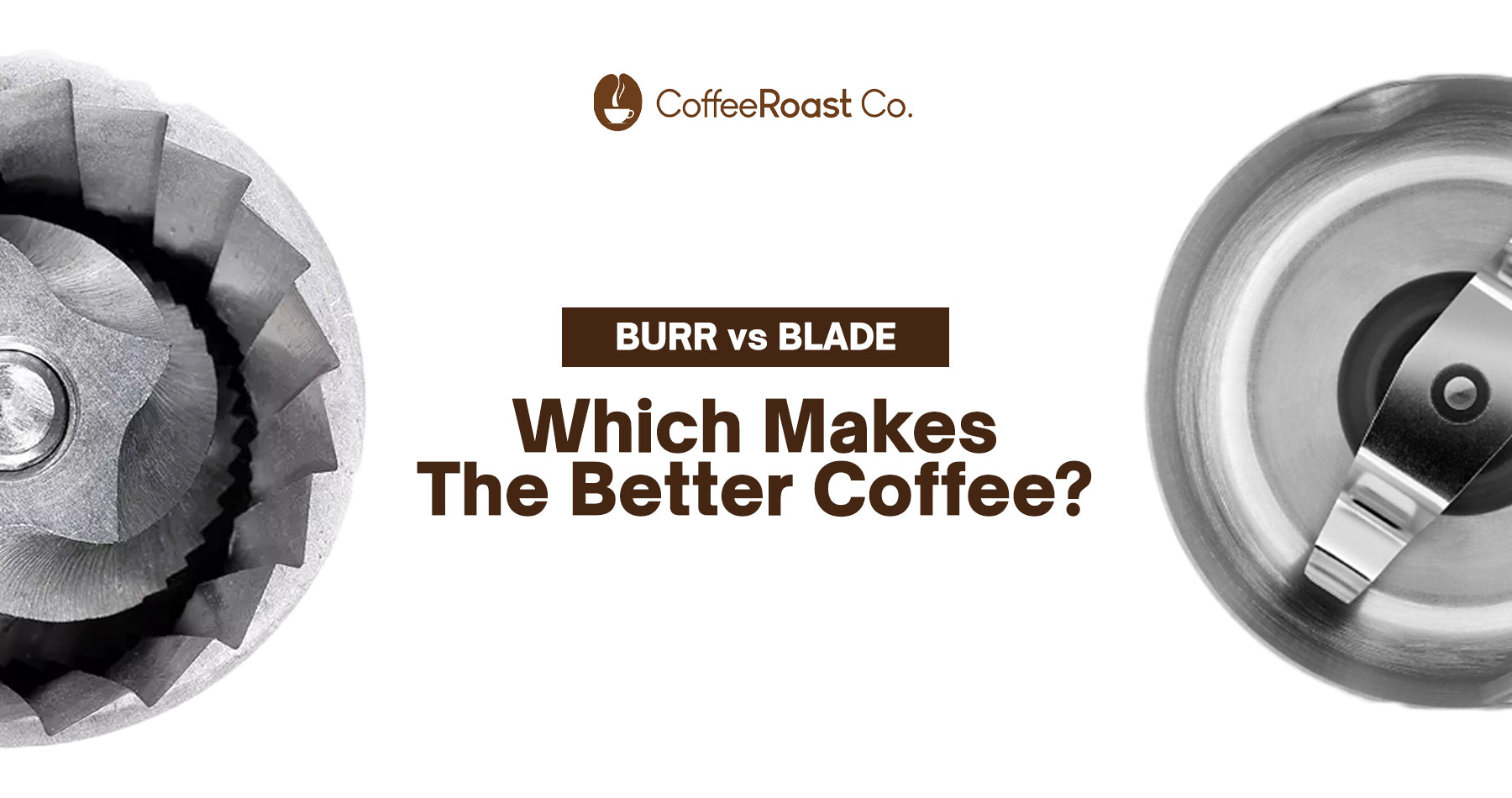
Quick answer: Burr grinders crush beans between two abrasive surfaces to produce a consistent, adjustable particle size. Blade grinders chop randomly and can't hit a repeatable grind target. For espresso, pour-over, or any brew where extraction precision matters, a burr grinder is the right tool. The Baratza Encore ESP ($199) is the practical electric entry point; the Timemore C3 (~$75) for manual.
You've probably tasted the damage without knowing where to point the finger: a shot that's somehow both sour and bitter, or a pour-over that stalled halfway through and came out muddy. Nine times out of ten, the grinder did it. Grind consistency matters more than water temperature, kettle brand, or brewing vessel — before a single drop touches your coffee. And the gap between a burr and a blade isn't a matter of taste preference. It's physics.
Why grind size matters more than most people think
Water extracts flavor from coffee by dissolving soluble compounds off the surface of each ground particle. Too coarse and water rushes past without pulling enough sweetness — your cup ends up thin and sour. Too fine and you overshoot into harsh, bitter territory. The usable window between those two extremes is narrow, and hitting it consistently is the entire game.

Espresso machines push water through at 9 bar and need a fine, consistent grind to hold extraction in a 25–30 second window. French press steeps for 4 minutes and wants something coarser, or it turns muddy and bitter. Pour-over sits between those two. Each method has a specific target, and your grinder either hits it or it doesn't.
Freshness compounds this. Whole beans off-gas CO2 slowly after roasting, which protects the volatile aromatics inside. The moment you grind, those compounds start escaping within minutes. Pre-ground coffee from a grocery bag has been oxidizing since before you bought it. Grinding fresh before each brew is the single highest-return habit change most home setups can make. For the specific grind targets per brew method, our guide to the best grind size for every brewing method has them all.
How each grinder actually works
How a burr grinder works
A burr grinder has two abrasive surfaces set a fixed distance apart. Beans fall from the hopper into the gap, where one burr rotates against the other. Particles exit only when they're small enough to pass through that gap. Adjust the gap, adjust the grind size. It's a deterministic system — the same setting produces the same particle distribution every time.
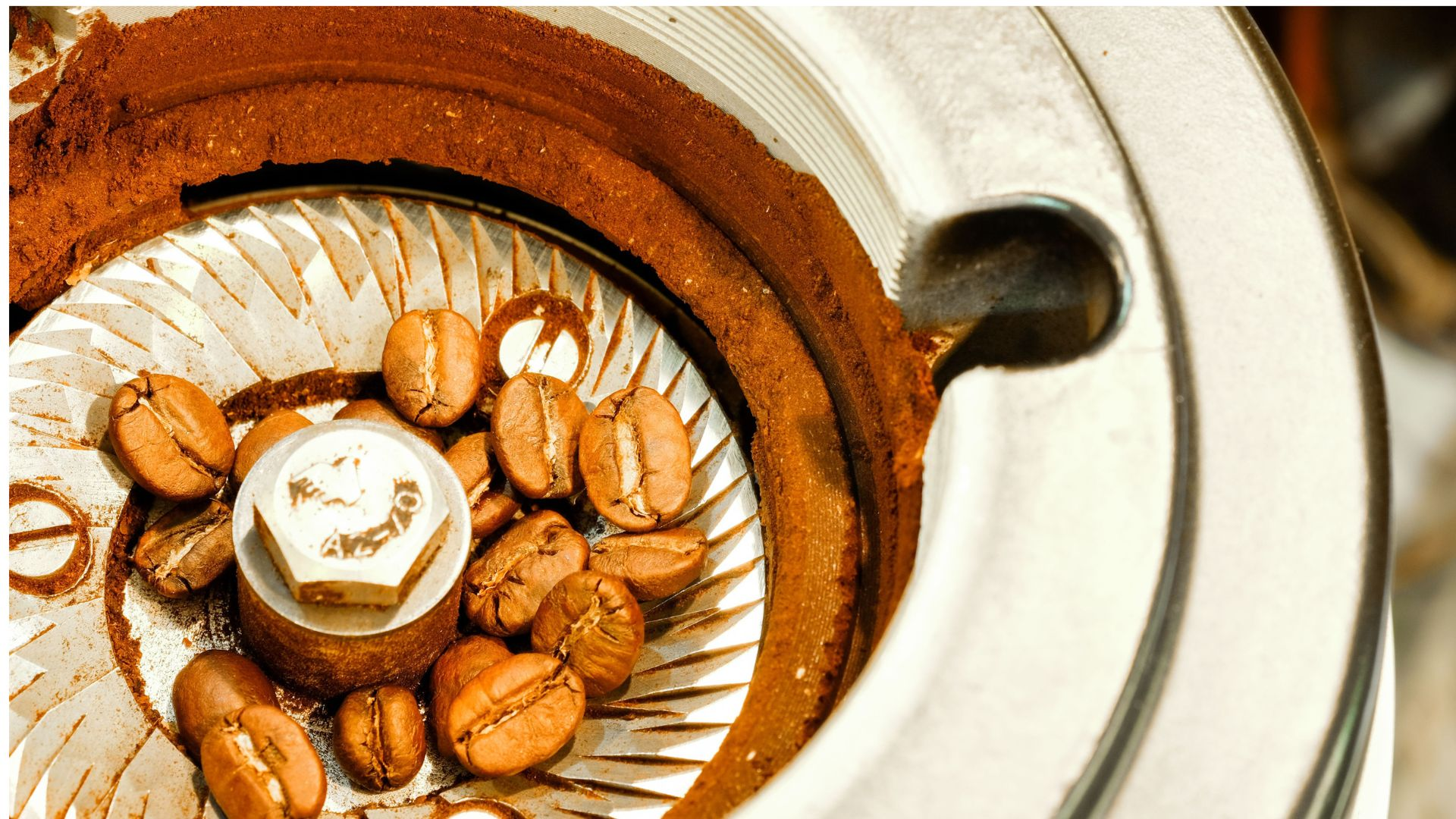
Burrs come in ceramic or hardened stainless steel. Ceramic runs cooler and quieter; steel tends to be sharper out of the box and holds up better at high daily volumes. A quality steel burr set like the 64mm flat burrs in a Eureka Mignon Specialita will hold its edge through tens of thousands of grams before needing replacement. The Baratza Encore ESP, by contrast, uses a conical steel burr at 40mm diameter — a real-world trade-off in distribution tightness that shows up in espresso but is invisible in filter brewing.
How a blade grinder works
A blade grinder spins a metal propeller at high speed inside an enclosed chamber. Beans bounce around and get chopped wherever they happen to make contact with the blade. There's no mechanism controlling particle size. Run it longer and the average drops, but the spread stays enormous: some particles end up powder-fine, others are practically still whole beans.
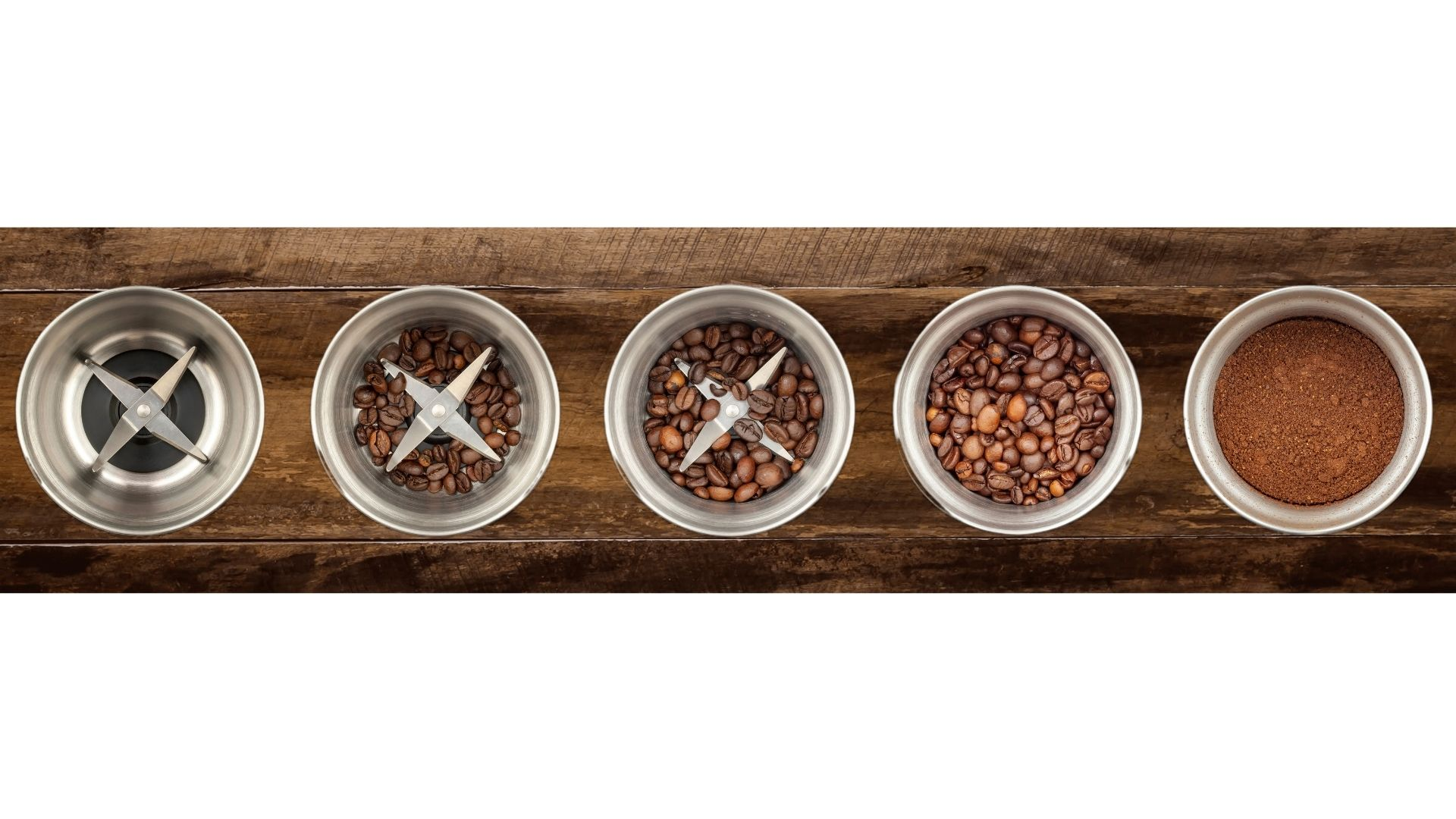
That's the problem. When you brew with those uneven grounds, the fines over-extract fast and go bitter. The coarse pieces under-extract and stay sour. Both end up in the same cup, at the same time. That's a particle-size problem the blade grinder created, and no amount of brew technique will fix it.
What burr grinders do better
Consistent particle size is the headline. But a few concrete downstream effects are worth spelling out.
When your grounds are uniform, you can pick a water temperature and trust it. With a blade grind, you're constantly compensating: hotter to extract from the coarse chunks, which then scorches the fines. That temperature-chasing spiral is one reason blade-ground espresso shots never dial in properly.
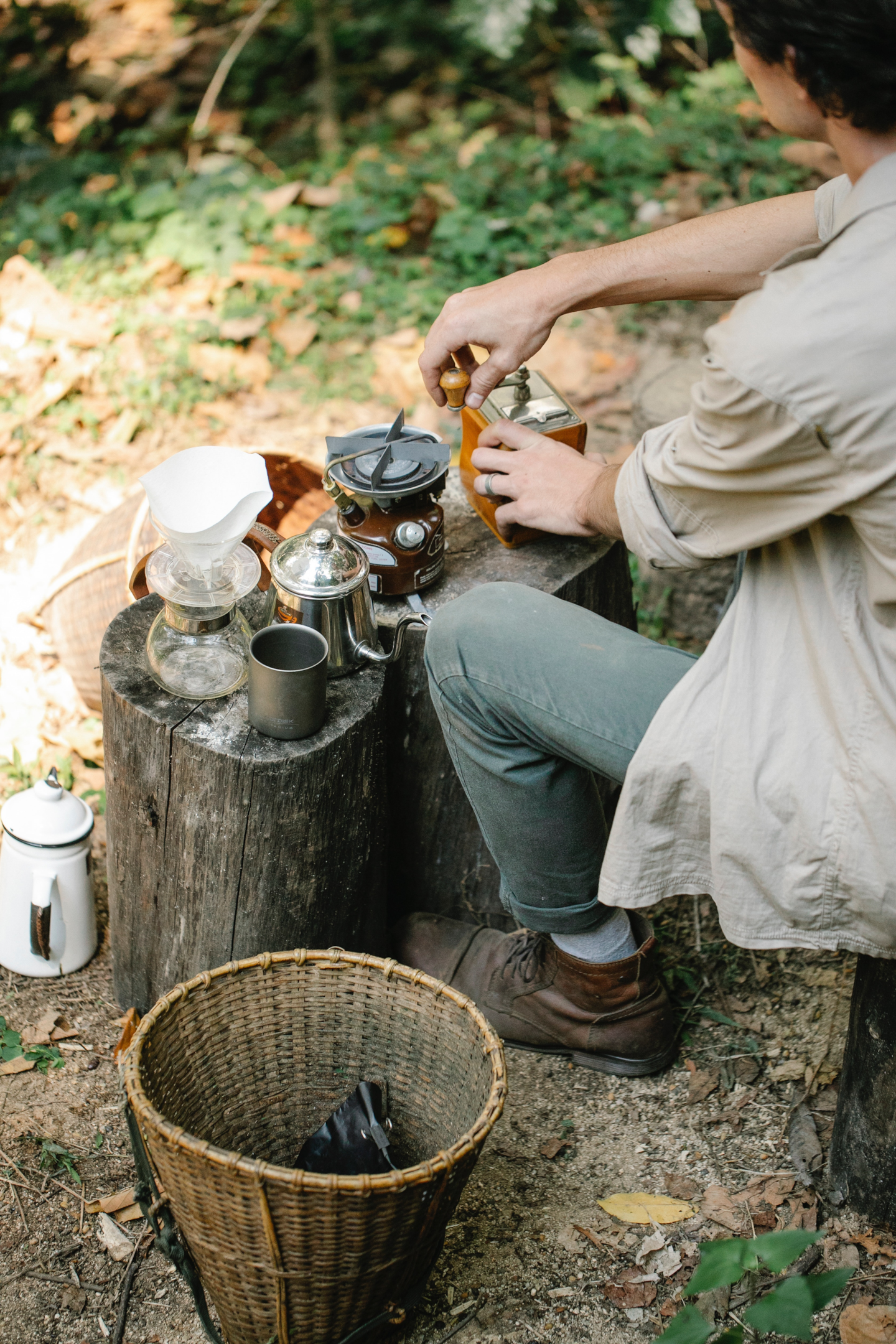
Burr grinders also run cooler. Spinning blades generate friction heat, and coffee's aromatic compounds are volatile enough that heat drives them off before water ever reaches them. This matters most with light-roast single-origins from Ethiopia or Kenya, where the aromatics are delicate and the flavor window is narrow.
Long-term value is real too. A cheap blade grinder's blades dull within a year or two of daily use. Burrs wear much more slowly. A Baratza Encore ESP at $199 will outlast several blade grinders and produce measurably better coffee every day it runs. One failure mode worth knowing: the Encore's hopper doesn't seal, so if you store whole beans in it between sessions, they'll go stale faster than if you just load what you need each morning.
Conical vs flat burrs: which should you buy?
Both geometries work well. They produce slightly different results, and the difference is real enough to understand before you spend money.
Flat burr grinders use two horizontal discs facing each other. Beans enter at the center and grind outward toward the edge. That geometry produces a tight, near-unimodal particle-size distribution, which most baristas associate with clarity and brightness in the cup. Flat burrs run hotter and louder than conicals, and they're the standard in commercial espresso grinders for good reason.
Conical burr grinders use a cone-shaped inner burr rotating inside a ring-shaped outer burr. They run quieter and cooler, retain fewer stray grounds between sessions, and produce a slightly broader particle distribution that many people describe as adding body and sweetness to filter coffee. James Hoffmann's grinder comparison series confirmed this effect is real — but small enough that water quality, brew ratio, and coffee freshness will swamp it for most home setups.
For espresso at home: flat burrs at 64mm or larger. For filter coffee, conical works beautifully and is easier to maintain. If you brew one method, match the geometry to it and move on.
When a blade grinder actually makes sense

A blade grinder costs $20–$40. If you're making drip coffee twice a week and haven't developed strong opinions about extraction yields yet, a blade grinder isn't a wrong choice. It still produces fresher coffee than anything pre-ground, and the gap between blade and burr narrows significantly when you're not pulling espresso or doing careful pour-overs.
They're also genuinely good for spices. If you already own one for cumin and cardamom and you're just starting to explore coffee, there's nothing wrong with using it while you figure out whether the hobby is worth a bigger investment.
Where blade grinders fall apart: espresso needs a specific, narrow grind target you simply can't hit with one; pour-over fines choke the filter and stall flow completely; and any time you want to replicate a result, there's nothing to return to. You can't dial anything in because there's nothing to dial.
Getting better results from a blade grinder
You won't close the gap fully. But these steps reduce variance in a meaningful way:
- Fill to no more than two-thirds of the chamber. Overfilling causes uneven blade contact and heat buildup.
- Pulse for 2–3 seconds, stop, shake the grinder to redistribute the grounds, and repeat. This moves beans into the blade path more evenly than running it continuously.
- Shake with the lid on between pulses. Coarser grounds sitting on top fall back toward the blade.
- Sieve the output through a fine mesh strainer. Rebrew or discard the coarse chunks; what's left is considerably more uniform.
- Press the grounds lightly on a paper towel. The superfine dust sticks to the paper. Imprecise, but it removes the worst offenders.
- Clean after every use. Coffee oils go rancid fast. A stiff pastry brush — or a single piece of bread run through the chamber — clears residue before it contaminates the next batch.
How to choose the right grinder
Three questions cut through the noise.
What brew method do you use? Espresso or pour-over requires a burr grinder, full stop. Drip or French press a couple of times a week: a blade grinder is survivable, but you'll taste the difference once you've run the same beans through a burr.
What's your actual budget? The Baratza Encore ESP ($199) is the practical floor for an electric burr grinder worth owning. The electric burr grinder lineup at CoffeeRoast Co. runs from there up through the Eureka Mignon range ($350–$550) and into commercial flat-burr machines. For hand-cranking, manual burr grinders start around $30 for the Hario Skerton and climb to ~$75 for the Timemore C3. The Timemore edges out the Hario on grind consistency for pour-over; the Hario holds up better for people who are rough on gear.
How much do you care about replicating a result? If you want to find a setting that works and come back to it reliably, you need numbered click-stops or a micrometric adjustment ring. Even a budget burr grinder with 10–15 click-stop settings gives you a repeatable reference point. A blade grinder gives you nothing to return to.
Here's the thing: if you care about the coffee you're drinking, the grinder is the first upgrade worth making. Not the machine. Not the kettle. The grinder.
Frequently asked questions
Does grind consistency actually affect taste, or is it just coffee snobbery?
It affects taste in measurable ways. Uneven grounds produce a cup where fine particles over-extract (bitter, harsh) and coarse particles under-extract (sour, weak) simultaneously. The SCA's extraction yield target of 18–22% assumes consistent particle size; blade-ground coffee makes hitting that window nearly impossible. You taste both defects in the same sip, and adjusting anything other than the grinder won't fix it.
Can a blade grinder work for espresso?
Not reliably. Espresso needs a fine, consistent grind in a narrow range — roughly 200–400 microns for most baskets. A blade grinder produces a particle-size spread from under 100 microns to over 800 microns in the same batch. The fines choke the basket and stall flow; the coarse pieces gush through under-extracted. You'll spend more time fighting the grinder than learning anything useful about the machine.
What's the minimum burr grinder worth buying?
For filter coffee, a Hario Skerton Pro (~$60) or Timemore C3 (~$75) hand grinder produces genuinely usable results. For espresso, you need electric with at least 40mm burrs; the Baratza Encore ESP ($199) is the practical floor. Below that, grind adjustment resolution is too coarse to dial in espresso properly.
How long do burr grinders last?
At home volumes, a long time. Steel burrs in a grinder used daily for two cups of coffee typically need replacement after 5–7 years; ceramic burrs can go longer at lower duty cycles. The motors and grind-adjustment mechanisms usually fail first in budget burr grinders. Mid-range machines from Baratza, Eureka, and Mahlkonig are built for commercial servicing and can run 10+ years with occasional burr replacement.
Is there a meaningful difference between ceramic and steel burrs?
Yes, though it depends on use volume. Ceramic burrs stay cooler and are harder, giving better long-term edge retention — but they're brittle and can crack if a small stone or fragment gets into the hopper. Steel burrs tolerate contamination better and tend to be sharper out of the box. For home use at typical daily volumes, either works. For a grinder doing 5+ kg per day, steel handles the thermal load better.
Why does my burr grinder produce fine powder along with the regular grounds?
Fines are normal in any grinder. All grinding produces some powder-fine particles regardless of burr geometry. The question is how much. Flat burrs with tight tolerances produce fewer fines than conical burrs; lower-RPM grinders produce fewer fines than high-speed ones. If you're seeing an unusual amount and the grinder is relatively new, the burrs may just need seating: run a few hundred grams of cheap beans through at medium-coarse to break in the surfaces.
Can you use a burr grinder for spices?
Technically yes, practically no. Coffee oils absorb into the burrs and contaminate everything that follows. Ground cumin after fresh-roasted Ethiopian Yirgacheffe will taste like Yirgacheffe, and your next coffee will taste like cumin. Keep a separate blade grinder for spices. That's genuinely the one job they're better suited for.
Key takeaways:
- Burr grinders produce consistent particle sizes by controlling the gap between two abrasive surfaces. Blade grinders chop randomly and can't replicate a target grind.
- For espresso or any precision brew method, the grinder is the first upgrade worth making. The Baratza Encore ESP ($199) is the practical floor for electric; the Timemore C3 (~$75) for manual.
- Flat burrs suit espresso with a tighter distribution and higher cup clarity; conical burrs suit filter brewing and are easier to clean between sessions.
- A blade grinder is acceptable for casual drip coffee and genuinely useful for spices. For anything requiring a repeatable grind setting, it falls short.
- If you own a blade grinder, pulse in short bursts, shake between pulses, and sieve the output to reduce variance. It won't close the gap with a burr, but it helps.


Hugh Powell
July 08, 2024
Burr grinders in my opinion are the way to go regarding the precise grind required. Who ever believes that frozen beans direct into an electric blade gives great coffee is really missing out