



Quick answer: For a cafe roasting 10–20 lb/week, the Santoker R1.5 Pro (2 kg batch, $12,000–$14,000) gives you the best cost-to-capability ratio in 2026. If you're clearing 30+ lb/week and want Cropster compatibility with Italian-made motors, step up to the Golden Roasters GR5 5 kg ($12,000–$14,000) and save $8,000–$9,000 versus a comparable Diedrich.
Your roaster shapes what ends up in the cup more than almost any other equipment decision you'll make. A drum that can't hold rate-of-rise accurately will flatten the brightness out of Ethiopian naturals and muddy the clarity in washed Kenyan lots you paid serious money for. Buy the wrong batch size for your throughput, or choose the wrong heat source for your space, and you'll feel it every single production day. The right machine tracks your actual weekly volume — not your aspirations for year three.
How do commercial coffee roasters actually differ?
A commercial coffee roaster runs the same fundamental physics as a home machine — just at higher volume with tighter tolerances. Three variables are where the real differences live.
Batch size and hourly throughput. A 1–2 kg drum running 3–4 batches per hour delivers roughly 4–8 kg/hour. A 5–6 kg machine at the same cadence triples that output. If you're roasting for one espresso bar, a 1–3 kg machine probably covers you. If you're wholesaling to other cafes, you'll hit the 2 kg ceiling within a few months.
Gas vs. electric. Gas responds faster and delivers a higher BTU ceiling — most professional roasters rely on it for dark roast profiles where you need to push heat quickly through the development phase. Electric installs cleanly without combustion venting requirements, holds low temperatures more steadily, and genuinely suits light-roast work where subtle, gradual heat curves matter. Neither is universally better. It comes down to your production profile and what your building can actually support.
Manual vs. computer-controlled. A fully manual roaster asks your operator to manage flame, airflow, and drum speed simultaneously in real time. That's an advantage if you employ an experienced roaster chasing complex profiles. It's a liability if staff turnover is part of your business reality. Machines that connect to Artisan or Cropster log every batch and make profiles reproducible regardless of who's running the session. Most commercial operators end up wanting automatic profiling as the baseline, with manual override available when they need it.
Six commercial roasters worth a serious look
Bideli 1 kg Coffee Roaster
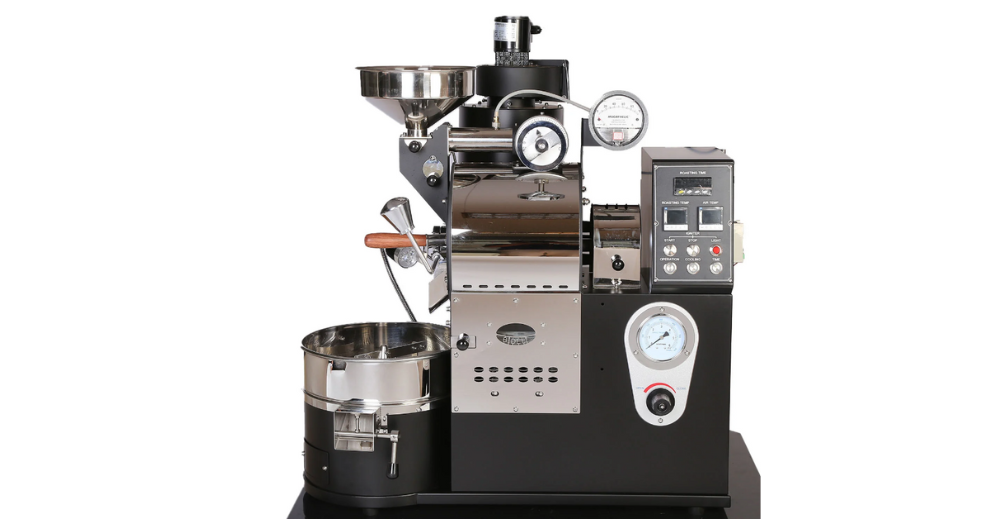
The Bideli 1 kg runs gas or electric, handles 100 g to 1,500 g batches, and is built around a double-walled drum with manual flame and hot-air controls. Cooling takes 1–2 minutes. It connects to Artisan via USB Data Logger. Price: $4,500–$6,500, 1-year warranty.
Honest read: at 1 kg max commercial capacity, this fits a popup operation, a small roastery running limited production, or a cafe where roasting is part of the customer experience rather than the primary supply chain. If your weekly volume climbs above 15–20 kg, you'll outgrow it fast. The 1 kg model competes against entry-level fluid-bed units in the $2,000–$3,500 range, but the drum heat profile develops noticeably better body on medium and dark roasts than those alternatives.
One thing that catches operators off guard: natural-processed and honey-processed beans carry more husk and generate significantly more chaff. The collector fills faster than you'd expect. Build 10 minutes into the start of each session to clean it out. Skip that step and your airflow readings drift by the third batch, which throws your entire profile.
Bideli 6 kg Commercial Coffee Roaster (Manual Version)
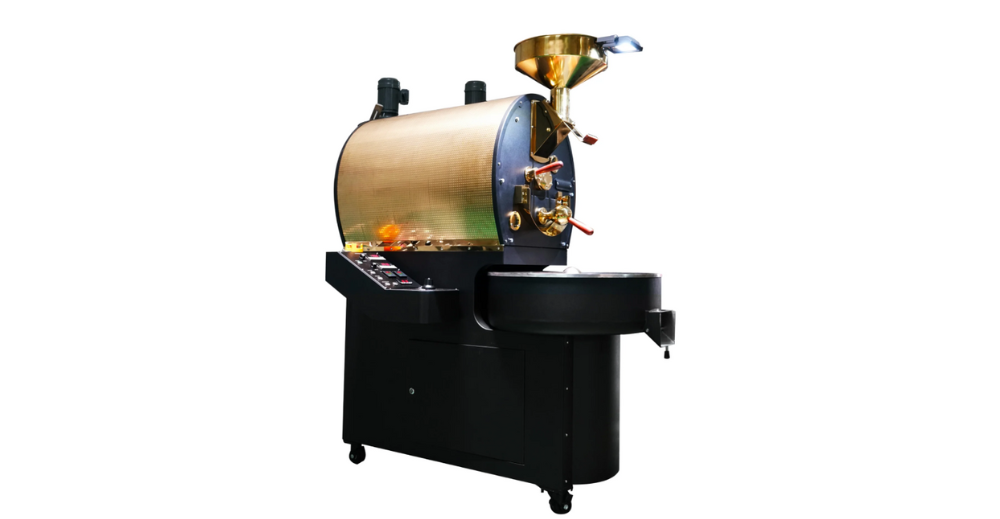
A half-direct-fire, half-hot-air drum roaster built with stainless steel throughout: cooling tray, hopper, and drum. The carbon steel machine body is manufacturer-rated for 30+ years of production use. Dark roast cycles run 15–18 minutes. The cooling fan motor and mixing cooler lock aroma right after the drop. Price: $15,000–$18,000 depending on configuration, with optional USB Data Logging for Artisan, a Vacuum Pressure Gauge, and a choice of cast iron or double-walled carbon steel drums.
Say this plainly before you get excited about the specs: the manual version demands an experienced operator. Hand it to a part-time employee without drum training and you'll pay in inconsistent batches and wasted green. If you have the right person on staff, this is a serious production machine. If you don't, the computer-assisted options from Santoker or Golden Roasters will serve you better.
Santoker R3 Pro Automatic Coffee Roaster (3 kg/batch)
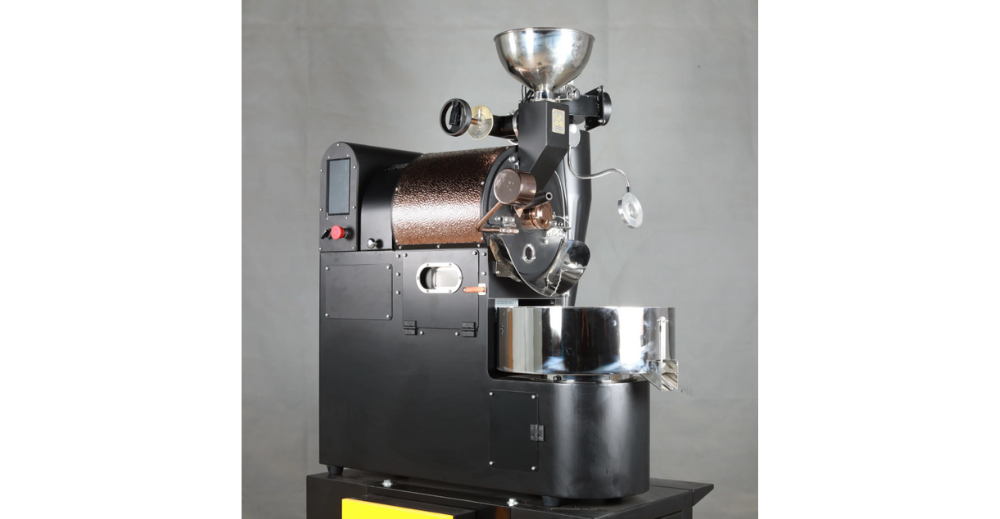
Gas or electric, 500 g to 3,200 g batch range. The R3 Pro has a separated chaff cyclone for cleaner removal, simultaneous roasting and cooling, and independent controls for airflow and gas pressure. Real-time temperature display, sight glass, sampler spoon, and burner window glass are all included. Bluetooth and USB connect to Artisan. Price: $13,000–$15,000, which compares favorably against the Diedrich IR-3 at $22,000–$25,000 for roughly equivalent 3 kg capacity.
The automatic control works well, but there's one warm-up detail worth knowing before your first production session. On the first two batches, the automatic profile runs slightly cold because the drum mass hasn't reached thermal equilibrium. Santoker's own operator documentation calls for a 10-minute pre-heat at high flame before you charge any beans. Skip it and your first batch under-develops by 3–5°F at first crack, which shows up as grassy notes in a washed Sidamo. That's a warm-up requirement, not a design flaw. Know it going in.
Santoker R1.5 Pro Automatic Coffee Roaster (2 kg/batch)
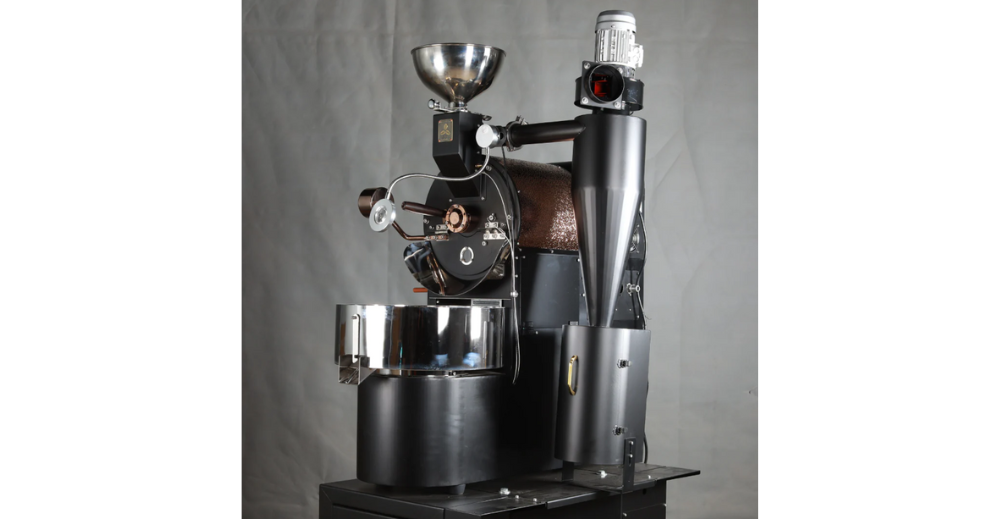
The R1.5 Pro is the most accessible entry point in the Santoker lineup. It handles 500 g to 2,000 g batches with four independent motors driving the drum, cooling fan, agitator, and smoke exhaust separately. High-grade insulation, stainless steel cooling tray, gas or electric, real-time temperature display, adjustable airflow, one-key warm-up, and an LED magnifying glass for monitoring bean color. Artisan-compatible via Bluetooth and USB. Price: $12,000–$14,000, roughly $4,000–$5,000 under the comparable Probatino 2 kg.
For a single-location specialty cafe roasting 15–25 kg per week without a veteran roaster on staff, this is what CoffeeRoast Co. would recommend. The combination of automatic profile handling and manual override covers most of what you'll encounter day to day, and the English-language troubleshooting documentation is genuinely usable. Be honest with yourself about one thing, though: if you expect to cross 25 kg/week within 18 months, price out the R3 Pro now. The R1.5 batch ceiling becomes a real production bottleneck faster than most operators expect.
Golden Roasters GR3 Mini 3 kg Coffee Roaster
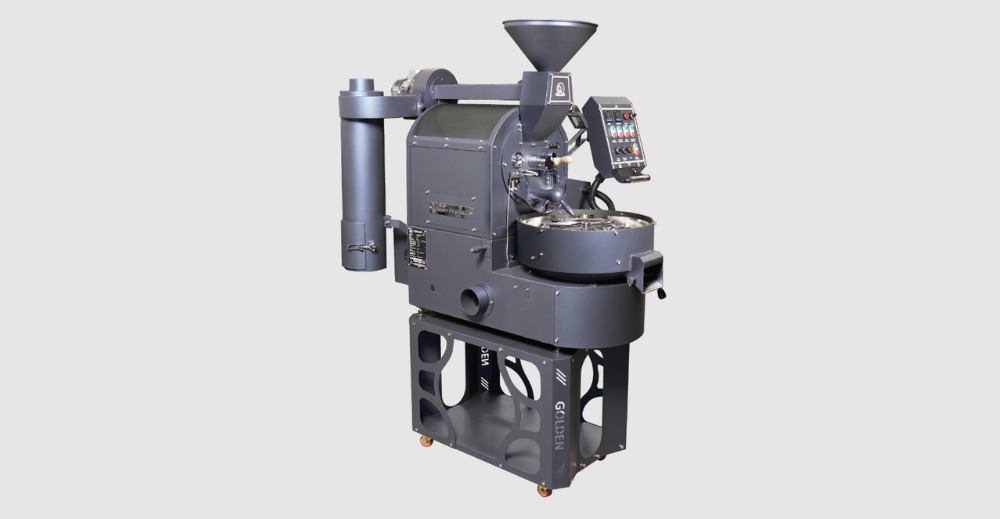
The GR3 Mini runs a carbon steel drum with whole-body heat insulation, pneumatic gate control, and simultaneous roast-and-cool capability. Independent thermocouples give you probe redundancy, which matters mid-session when you can't afford a sensor failure. Available fully manual or fully automatic. CE and UL certified. USB and wireless PC connections, Artisan and Cropster compatible, audible alerts at temperature milestones. 4-year parts warranty. Price: $11,000–$13,000, putting it below the Mill City Roasters 3 kg at $14,000–$16,000 for comparable capacity.
What earns the GR3 Mini its spot is that 4-year parts warranty. At the 3 kg class, drum bearings and thermocouple probes are where machines start failing in years two and three. Golden Roasters covering parts through year four is a concrete operational advantage over Santoker's standard 1-year coverage on the R3 Pro. If that warranty difference weighs more than the Santoker's automatic control refinement, the GR3 Mini wins this price tier.
Top pick for most shops: Golden Roasters GR5 5 kg
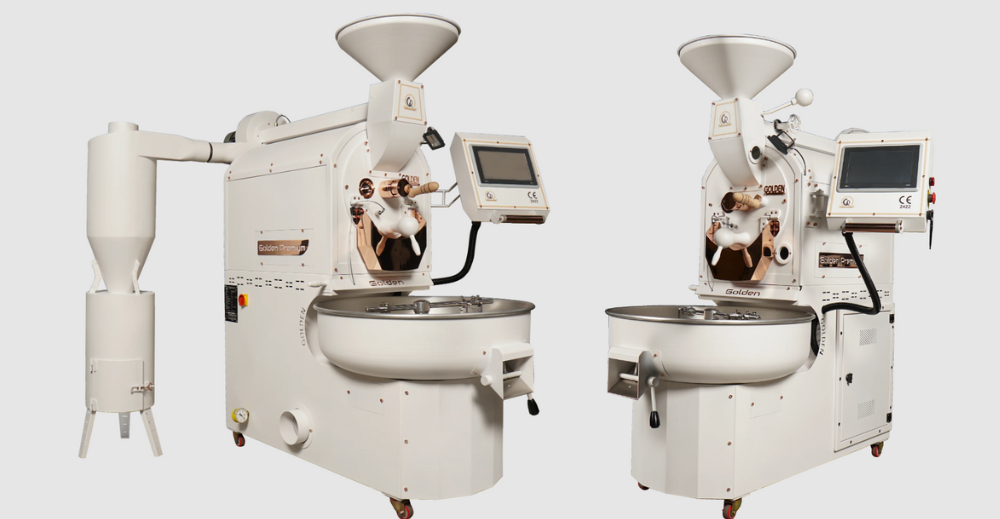
The Golden Roasters GR5 is the machine CoffeeRoast Co. would point a growing specialty shop or a micro-roastery doing retail and wholesale toward. Here's the specific reasoning.
The drive system uses Italian-made 3-phase motors and gearboxes with long-life bearings. That's a meaningful spec difference from the Chinese OEM motors in most machines at this price point. Italian gearbox tolerances are tighter, which means more consistent drum RPM across a full production session as the machine heats up. You'll feel it on your rate-of-rise curve in batches 6 through 10, where cheaper drives start to drift.
The carbon steel "slippery drum" has a polished interior that keeps friction low. Beans tumble more cleanly and develop more evenly than on rough-cast drums. Whole-body heat insulation holds ambient heat loss in check, which matters for energy costs when you're running the machine five days a week.
Three configurations are available: Manual, Auto, and Full Auto. The Full Auto version requires an external air compressor for pneumatic gate control — plan for that in your installation budget before it catches you off guard. Artisan and Cropster compatible via USB or wireless. CE and UL certified, gas security system, emergency button. 4-year parts warranty plus a lifetime service warranty.
Price: $12,000–$14,000. The Diedrich IR-5 runs $20,000–$23,000 for the same 5 kg capacity. The GR5 doesn't carry Diedrich's resale depth or 40-year reputation — that's a real tradeoff worth naming. But for a business in years one through five, the $8,000–$9,000 difference can fund green sourcing relationships, a better grinder, or simply healthier cash flow.
Frequently asked questions
What batch size do I need for a small cafe?
A single-location cafe serving 100–200 espresso-based drinks per day can usually cover demand with a 1–2 kg roaster running 3–4 batches per hour. Most single-location specialty cafes in the US roast 10–25 kg of green coffee per week. A 2 kg machine at four batches per hour clears 25 kg in roughly three hours of active roasting. Once you're consistently crossing 30 kg/week, moving to a 3–5 kg drum gives you the headroom you need without pushing the smaller machine's thermal limits every session.
Is a gas or electric commercial roaster better?
Gas responds faster to heat adjustments and delivers more BTUs per minute, which matters for dark roast profiles and high-volume production. Electric installs more easily in spaces without gas infrastructure, holds low temperatures more steadily, and gives you cleaner development on light roasts where gradual heat curves are the priority. For a specialty cafe focused on single-origin light and medium roasts, electric is a genuinely workable choice. For a roastery running significant dark roast volume or operating the machine 5+ hours per day, gas is the professional standard.
What is Artisan Software and do I need it?
Artisan is free, open-source roast-profile logging software that connects to your roaster's temperature probes via USB or Bluetooth. It records bean temperature, drum temperature, rate-of-rise, and environmental data in real time, giving you a logged curve to replicate batch after batch. For any operation roasting more than one origin or employing more than one person, Artisan or its commercial counterpart Cropster is essentially required for consistent output. Without it, replicating a profile depends entirely on one operator's memory — and that doesn't scale.
How long does a commercial coffee roaster last?
Well-maintained commercial drum roasters in the 1–6 kg class typically run 15–30 years. The Bideli 6 kg carries a manufacturer rating of 30+ years. Main wear items are drum bearings, thermocouple probes, and heating elements on electric models. Neglecting chaff cleaning is the single most common cause of premature failure across this class: it restricts airflow, builds heat in the wrong places, and creates a fire risk. Clean the collector before every session.
Can I roast different coffee origins on the same machine?
Yes, and most commercial roasters do exactly that. The key is a logged profile per origin and an understanding of how bean density and processing method shift the curve. Washed Ethiopian beans are denser than Brazilian naturals at the same roast level and need more heat input to reach first crack at the same rate of rise. Natural-processed beans produce more chaff, which affects airflow mid-roast. A machine with adjustable airflow, independent heat control, and Artisan or Cropster logging handles the full origin range a specialty menu demands.
What is the difference between the GR3 Mini and the GR5?
Primarily batch size: 3 kg versus 5 kg per cycle. Both share the same carbon steel drum design, whole-body insulation, and 4-year parts warranty. The GR5 adds Italian-made 3-phase motors and gearboxes that keep drum RPM more consistent across long production sessions. If you're roasting 20–25 kg/week and expect to grow, the GR5 gives you headroom the GR3 Mini doesn't. If you're confident you'll stay under 20 kg/week for the next three years, the GR3 Mini saves $1,000–$2,000 upfront and covers everything you need.
Key takeaways:
- Match your machine to your current weekly volume: 10–25 kg/week fits a 1–2 kg drum; 30+ kg/week needs a 3–5 kg class machine.
- The Santoker R1.5 Pro (2 kg, $12,000–$14,000) is the strongest cost-to-capability pick for a cafe without a veteran roaster on staff.
- The Golden Roasters GR5 (5 kg, $12,000–$14,000) is the top pick for growing shops: Italian motors, 4-year parts warranty, Cropster-ready, and $8,000–$9,000 under a comparable Diedrich.
- Manual machines require an experienced operator. If staff turnover is part of your reality, spec automatic or semi-automatic from the start.
- Artisan or Cropster logging is non-negotiable once you're roasting more than one origin or employing more than one person.
Browse the full lineup of commercial coffee roasters or visit the CoffeeRoast Co. blog for deeper guides on roast-profile methodology and equipment selection.
Article reviewed by the CoffeeRoast Co. Editorial Team. Pricing verified against CRC product pages and manufacturer documentation in May 2026. Competitor pricing sourced from distributor websites and may vary by region and configuration.


Tom Bruccoleri
February 13, 2024
Please send information on commercial coffee roasters.