

Quick answer: People drink coffee primarily for caffeine's alertness effect, which kicks in within 30–60 minutes of consumption by blocking adenosine receptors in the brain. Beyond the energy boost, research published in the British Medical Journal links 3–5 cups daily to a 15% lower risk of heart disease and reduced risk of Parkinson's and Alzheimer's. Taste, ritual, and social connection keep most people coming back.
The average American drinks roughly 3 cups of coffee per day, according to the National Coffee Association's 2024 drinking trends report. That's not pure habit. Caffeine does something concrete and measurable in your brain, and coffee delivers it wrapped in complex flavors, deep cultural roots, and a social role that no energy drink has come close to replacing.
How did coffee spread across the world?

Coffee's origins trace to the highland forests of Ethiopia, where legend credits a goat herder named Kaldi with noticing his animals were unusually energetic after eating certain berries. Whether that story holds up or not, Ethiopia is genuinely where Coffea arabica grows wild — that part's verifiable. From there, the plant reached the Arabian Peninsula by the 15th century, and Yemen became the first place to cultivate and trade it commercially.
By the 17th century, coffeehouses called qahveh khaneh had spread across the Middle East and into Europe. London alone had over 300 of them by 1675. They weren't just places to get a drink — they were where merchants, scholars, and politicians swapped news and argued ideas, functioning like a proto-internet for the pre-print era.
Coffee cultures diverged as the drink spread. In Italy, an espresso is still consumed standing at the bar, finished in two or three sips. In the US, coffee is portable and continuous: the 12-ounce paper cup that goes everywhere. In Ethiopia, the traditional ceremony involves three rounds of progressively weaker brew shared with neighbors over an hour. Same plant. Completely different rituals, and each one tells you something real about the culture that built it.
What does caffeine actually do in your brain?

Caffeine is an adenosine receptor antagonist. Adenosine is the compound your brain accumulates while you're awake — the more it builds up, the more tired you feel. Caffeine blocks those receptors without activating them, so the tiredness signal doesn't get through. It doesn't give you energy directly; it removes the brake on your natural alertness. That distinction matters if you want to understand why caffeine works, and why it stops working as well once your receptors adapt.
You'll feel the alertness effect within 30–60 minutes, and it peaks around 60–90 minutes after you drink it. The half-life is roughly 5–6 hours, though that varies significantly by genetics. Some people carry a variant of the CYP1A2 gene that metabolizes caffeine slowly — which is why a 3pm espresso wrecks their sleep while a colleague drinks the same shot and is fine by evening.
Beyond alertness, caffeine's blockade of adenosine also triggers a release of dopamine and norepinephrine. That's the mood lift and sharper focus you notice alongside the energy. It's also part of why habitual coffee drinkers feel flat and irritable on days they skip it — not just tired, but genuinely worse mood-wise, until the adenosine receptors stop waiting for their usual signal.
Research has also linked regular coffee consumption to lower rates of Parkinson's disease and Alzheimer's disease, though the mechanism isn't fully established. The working theory involves caffeine's neuroprotective effect on dopaminergic neurons, but "associated with" is the honest phrasing until causation is clearer.
What does the health research actually say?
The most useful summary is the 2017 umbrella review published in the British Medical Journal, which pulled together over 200 meta-analyses on coffee and health outcomes. The headline numbers hold up across multiple independent analyses:
- 3–5 cups daily is associated with a 15% lower risk of heart disease compared to non-drinkers
- 3–4 cups daily correlates with a 21% reduced risk of stroke
- 3 cups daily is associated with a 19% lower rate of cardiovascular mortality
- Regular consumption is linked to lower rates of Parkinson's disease, Alzheimer's disease, and type 2 diabetes
The BMJ review also found that drinking 7 cups per day correlated with a 10% decrease in all-cause mortality, though the authors note diminishing returns and potential confounding at very high doses. Worth knowing: these are observational associations, not controlled trials. Coffee drinkers differ from non-drinkers in ways that are hard to fully control for. The associations are consistent enough to be credible, but you're not being prescribed coffee by a doctor because causation isn't proven.
Coffee is also a meaningful source of antioxidants for most Western diets. Chlorogenic acids in particular have been studied for anti-inflammatory effects — and this is a separate story from the caffeine. Decaf shows some of the same associations with reduced type 2 diabetes risk, which suggests the polyphenols matter independently of the stimulant.
Coffee as a social ritual
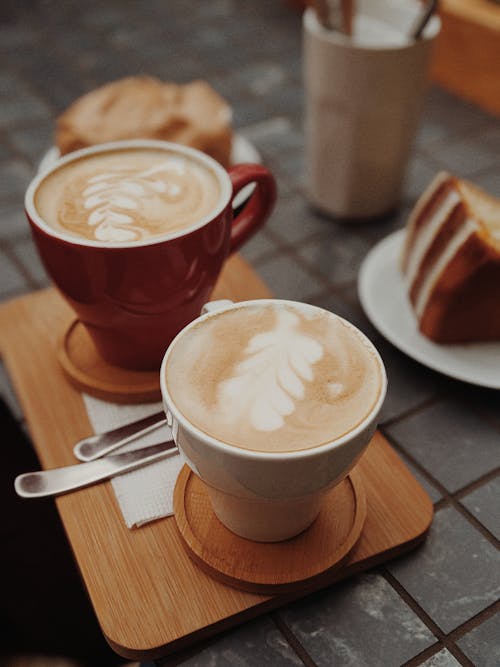
If caffeine were the only draw, people would just take caffeine pills. They don't, and that gap tells you something. Coffee has a ritual dimension that's genuinely hard to explain biochemically. The preparation itself — whether you're grinding beans, waiting for a bloom, or watching an espresso pull — slows you down in a way most people don't get anywhere else in their day.
The social side is just as real. A standing Sunday morning café habit isn't really about the coffee. It's about the fixed time and place with people you like. Workplace coffee corners function as informal meeting spaces that no Slack channel has successfully replaced. Coffee shows up at the exact moment people want to talk, which means it's accumulated cultural weight that caffeine alone never earns.
The flavor dimension is doing real work too. Specialty coffee, sourced from a single origin and freshly roasted, has a complexity that beer and wine enthusiasts will recognize immediately. A washed Ethiopian Yirgacheffe can have bright citrus and jasmine notes that taste nothing like a dark French roast. That range keeps coffee interesting across decades in a way a pre-workout drink simply doesn't. At CoffeeRoast Co., we've found that customers who start paying attention to roast origin and freshness almost never go back to commodity supermarket coffee.
What are the real drawbacks of drinking coffee?
Here's the thing — coffee is worth being honest about. The same caffeine effect that makes you sharp at 9am can leave you wired and anxious at 2pm if you've had five cups. The jitteriness threshold varies: slow metabolizers and people with anxiety disorders often hit it at 2–3 cups; fast metabolizers may handle 5–6 with no issue. If you're adding coffee to an already-stressed system, you're not doing yourself any favors.
Acidity is a legitimate concern if you deal with GERD or a sensitive stomach. The pH of brewed coffee sits around 4.5–5.0, and certain organic acids in coffee relax the lower esophageal sphincter — meaning even low-acid roasts can trigger reflux in susceptible people. Cold brew, which extracts at lower temperatures and has a pH closer to 5.5–6.0, is genuinely easier on the stomach for most people. That's not just marketing.
Sleep disruption is the most common real-world problem. With a 5–6 hour half-life, a 3pm cup still has half its caffeine active at 8–9pm. Most sleep researchers recommend cutting off caffeine by 2pm if you want to be asleep by 11pm. Moving your last cup earlier is the single most reliable fix for people who can't sleep well but also drink coffee in the afternoon.
The bone density concern is real but often overstated. The effect shows up primarily in people whose calcium intake is already low. If you're getting adequate calcium and vitamin D, moderate coffee consumption doesn't meaningfully affect bone density.
Frequently Asked Questions
Why do people drink coffee in the morning specifically?
Cortisol peaks naturally around 8–9am in most people, which already produces alertness. Caffeine stacks on top of that by blocking adenosine receptors, extending and deepening the alert period. The morning window is also when adenosine hasn't yet built up from a full waking day, so the effect is cleaner and stronger than an afternoon cup hitting a system that's already loaded with adenosine.
Is coffee actually addictive?
Caffeine produces physical dependence, not addiction in the clinical sense. Regular consumers develop tolerance — more caffeine needed for the same effect — and experience withdrawal symptoms when they stop: typically headaches, fatigue, and irritability starting 12–24 hours after the last cup and peaking around 20–51 hours. Symptoms resolve within 2–9 days. That's dependence, which is meaningfully different from the compulsive use and craving pattern that defines addiction.
Does the type of coffee affect the health benefits?
Yes, to a degree. Filtered coffee (drip or pour-over) removes cafestol and kahweol, two diterpene compounds in coffee that raise LDL cholesterol. Unfiltered coffee like French press and espresso contains them. The BMJ umbrella review found benefits across brewing methods, but if your LDL is already elevated, you'll probably want to favor filtered brewing. Decaf retains most of the chlorogenic acid content and shows some of the same diabetes-related associations as caffeinated coffee.
How much coffee is too much?
The FDA considers 400mg of caffeine per day — roughly 4 standard cups of drip coffee — the threshold above which healthy adults start seeing consistently adverse effects: anxiety, heart palpitations, and sleep disruption. The BMJ review found diminishing returns on health benefits above 3–5 cups per day, with some risks (fractures, anxiety) trending upward above 6 cups. Pregnant individuals are advised to stay under 200mg daily.
Why does coffee taste bitter to some people but not others?
Sensitivity to bitter compounds is partly genetic. Variants in the TAS2R38 gene affect how intensely you perceive bitterness, and caffeine itself is a bitter alkaloid. If you're highly sensitive to bitter flavors, you'll likely prefer lighter roasts or want milk and sugar to buffer things out. Roast level, grind size, and water temperature all affect how much bitterness extracts into the cup — and once you understand those variables, you can dial in a brew that actually works for your palate.
What's the difference between arabica and robusta, and does it matter for why people prefer coffee?
Arabica (Coffea arabica) has roughly half the caffeine of robusta (Coffea canephora) but significantly more aromatic complexity: the esters, aldehydes, and organic acids that produce floral, fruity, and caramel notes. Robusta is higher caffeine, more bitter, and cheaper to grow at lower altitudes. Most specialty coffee is arabica; most commodity instant coffee blends in robusta. If you've ever noticed that a diner drip coffee hits differently than a pour-over from a specialty roaster, the variety and freshness of the bean is a big part of why.
Can you build a tolerance to coffee?
Yes. Regular caffeine consumption causes your brain to upregulate adenosine receptors — growing more of them to compensate for the blockade. That means you need more caffeine to get the same alertness effect over time. Most habitual coffee drinkers have adapted enough that they're largely restoring baseline function rather than experiencing the sharp boost a first-time coffee drinker would feel. A 2-week caffeine break resets receptor density significantly.
Key takeaways:
- Caffeine blocks adenosine receptors, delaying tiredness and boosting alertness within 30–60 minutes. That's the primary biochemical reason people drink coffee daily.
- 3–5 cups per day is associated with meaningful cardiovascular and neuroprotective benefits in large observational studies, including a 15% lower heart disease risk and reduced rates of Parkinson's and Alzheimer's.
- The social ritual and flavor complexity of coffee matter as much as the pharmacology, which is why people drink coffee rather than just taking caffeine pills.
- The main real-world downsides are afternoon sleep disruption (cut off by 2pm if bedtime is 11pm), jitteriness above your personal caffeine threshold, and acidity issues for people prone to reflux.
- If you want to understand what happens between green bean and your morning cup, CoffeeRoast Co.'s guide to the coffee roasting process covers it in depth.


留个言