



Quick answer: The best water for coffee hits 150 mg/L total dissolved solids, 50 to 175 ppm hardness (as CaCO3), roughly 40 ppm alkalinity, and a pH near 7. Those are the targets from the Specialty Coffee Association's Water Quality Handbook. Filtered tap water that meets those numbers outperforms bottled spring or distilled water in almost every blind tasting.
A cup of black coffee is 98 to 99% water. That's it. If your water is off, there's nowhere to hide — not behind a beautiful single-origin, not behind a precise grind, not behind a $1,500 espresso machine. Fix the water and even a modest bag of beans can taste noticeably cleaner. Ignore it and you'll keep chasing problems that have nothing to do with your technique.
What does the SCA actually recommend?
The Specialty Coffee Association's Water Quality Handbook (2018) isn't vague. It gives you specific numbers, because these targets define what "optimal extraction" means within the SCA's Golden Cup standard:
- Total dissolved solids (TDS): 150 mg/L (acceptable range: 75 to 250 mg/L)
- Total hardness: 50 to 175 ppm as CaCO3
- Alkalinity: roughly 40 ppm as CaCO3
- pH: 6.5 to 7.5 (target near 7)
- Sodium: under 10 mg/L
- Chlorine: none detectable
Water outside those ranges doesn't automatically ruin a cup, but it does push extraction in predictable, repeatable ways. Too little alkalinity and the brew's natural acidity runs unchecked — fine if that's what you want, but it usually tips into sharp and uncomfortable. Too much alkalinity and the brightness you paid for in a washed Ethiopian disappears. High hardness is rough on flavor and genuinely destructive to boiler components.
The pH target near 7 isn't arbitrary. Neutral water stays out of the way — it doesn't add acidity to the brew, so what you taste in the cup comes from the bean alone. Drop below pH 6.5 and extraction accelerates, pushing a lively washed coffee into sour, almost aggressive brightness. Climb above pH 7.5 and the water starts suppressing acidity, making something like a naturally sweet Guatemalan taste strangely flat.
How do minerals change your cup?
Magnesium and calcium aren't interchangeable. A 2014 study in the Journal of Agricultural and Food Chemistry (Hendon, Colonna-Dashwood, and Colonna-Dashwood, DOI 10.1021/jf501687c) showed that magnesium extracts soluble compounds more efficiently and pulls toward sharper, more acidic flavor notes. Calcium extracts heavier, sweeter compounds. Same TDS reading, genuinely different cup depending on which mineral is doing the work.
This is why remineralization products like Third Wave Water, which are biased toward Mg2+, often taste cleaner than tap water at the same TDS. You can hit 150 mg/L with either mineral profile. The coffee won't taste the same.
Sodium is worth flagging too. Under 10 mg/L it's essentially neutral. Above that threshold it amplifies sweetness in a way that sounds appealing but actually masks complexity. And bicarbonates — the main driver of alkalinity — buffer the brew against acidity and produce a flat, papery finish when they run too high. If your espresso tastes inexplicably dull even when the shot looks technically correct, high bicarbonate water is the first thing to rule out.
Hardness versus alkalinity: not the same thing
These get used interchangeably, and they're not the same. Total hardness measures how much calcium and magnesium is dissolved in the water. Alkalinity measures how well the water resists changes in pH. High-hardness water scales your machine. High-alkalinity water flattens your coffee. You can have one without the other.
Chicago tap water is a useful real-world example. It runs 130 to 170 ppm hardness and 100+ ppm alkalinity. The hardness isn't catastrophic for flavor on its own, but the bicarbonate load is high enough that most serious Chicago cafes run RO remineralization systems rather than trying to filter their way out of it. If you're brewing on unfiltered Chicago municipal water and the cup tastes dull, that's not your technique. That's your water.
Which type of water makes the best coffee?

The honest answer is that where you're starting from matters as much as what you're aiming for. Here's how each option actually performs.
Filtered tap water (the practical winner for most people)
A good carbon block filter removes chlorine and most chloramines — the main culprits behind that musty, chemical edge in municipal water — while leaving most of the mineral content intact. If your tap water already falls somewhere in the SCA's acceptable TDS range of 75 to 250 mg/L, a carbon filter is genuinely all you need. The Peak Water pitcher is designed specifically for coffee and lets you dial in your target TDS without an under-sink installation.
The catch: carbon filters don't touch hardness or alkalinity. If your tap water comes from a limestone geology area and runs high in bicarbonates, filtering alone won't fix a flat cup. You'll need a softening stage or a full RO system to address that.
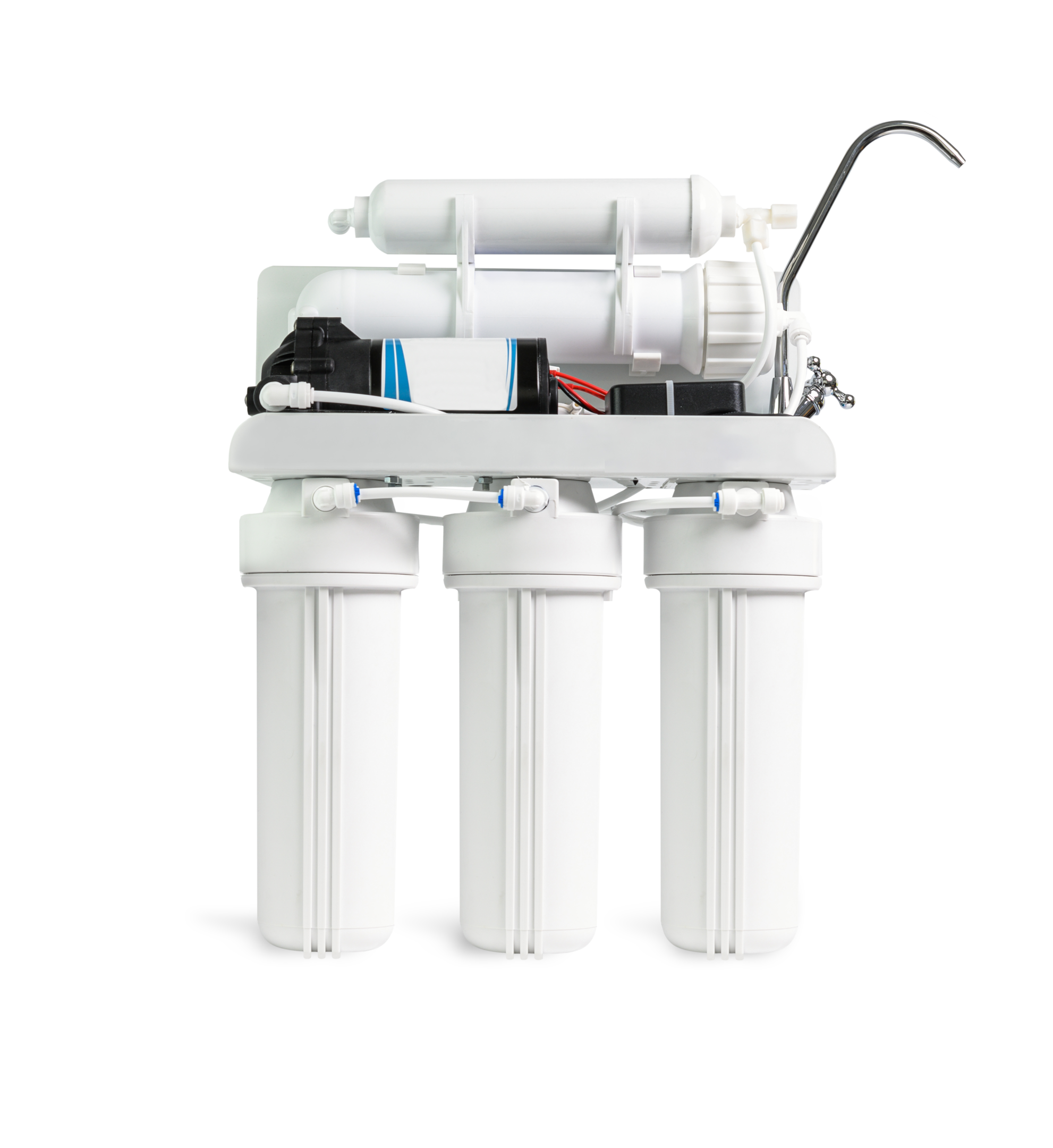
Reverse osmosis water (best starting point for customization)
RO strips water down to near-zero TDS, typically 5 to 20 mg/L out of the membrane. That's a blank canvas — which sounds ideal until you realize blank canvases don't brew good coffee on their own. Zero-mineral water extracts aggressively and unevenly, producing a cup that's bright and thin without any real body behind it.
The right way to use RO water is remineralization. Add a calibrated mineral mix (Third Wave Water, Lotus Water, or a custom formula using food-grade magnesium sulfate and calcium chloride) to bring TDS back up to 100 to 150 mg/L with a controlled Mg/Ca ratio. This is exactly what specialty cafes in London and Chicago typically do, and when it's done well the results are genuinely excellent.
Distilled water (don't brew with it straight)
Distilled water is pure H2O — no minerals, no TDS, nothing. As a base for custom remineralization it works the same as RO. Brew with it straight and you'll get a flat, one-dimensional cup because there are no mineral ions to assist extraction. There's also a longer-term concern: very low TDS water is slightly corrosive to metal components inside espresso machines. Use it as a starting material, not as your brewing water.
Spring water (variable and expensive)
Spring water can be excellent or useless depending entirely on the source. Volvic (around 130 mg/L TDS, roughly 60 ppm hardness, low bicarbonate) comes up regularly on Home-Barista forums as an off-the-shelf option that lands close to SCA targets. Evian, at TDS around 300 mg/L, is too hard for most brewing. The inconsistency between brands and between bottling batches from the same spring makes spring water a poor choice when you're trying to lock in a recipe.
Alkaline water (skip it)
Alkaline water runs pH 8 to 9.5 and gets marketed for health reasons that have nothing to do with brewing. The elevated pH suppresses the acidity that makes fruit-forward origins interesting. Brew an Ethiopian natural with pH 9 water and it'll taste dull and muddled. Alkaline water interferes with extraction chemistry in ways that grind or temperature adjustments can't compensate for. There's no specialty coffee argument for using it.
Purified water (depends on the method)
Purified is a broad label. Some bottled purified water is RO-filtered and then remineralized to a consistent mineral profile. Smartwater is a common example, typically running about 50 to 80 mg/L TDS after remineralization, and it can work reasonably well. Other purified waters are just filtered municipal supply with no further adjustment. Check the TDS on the label. Under 50 mg/L or over 250 mg/L, keep looking.
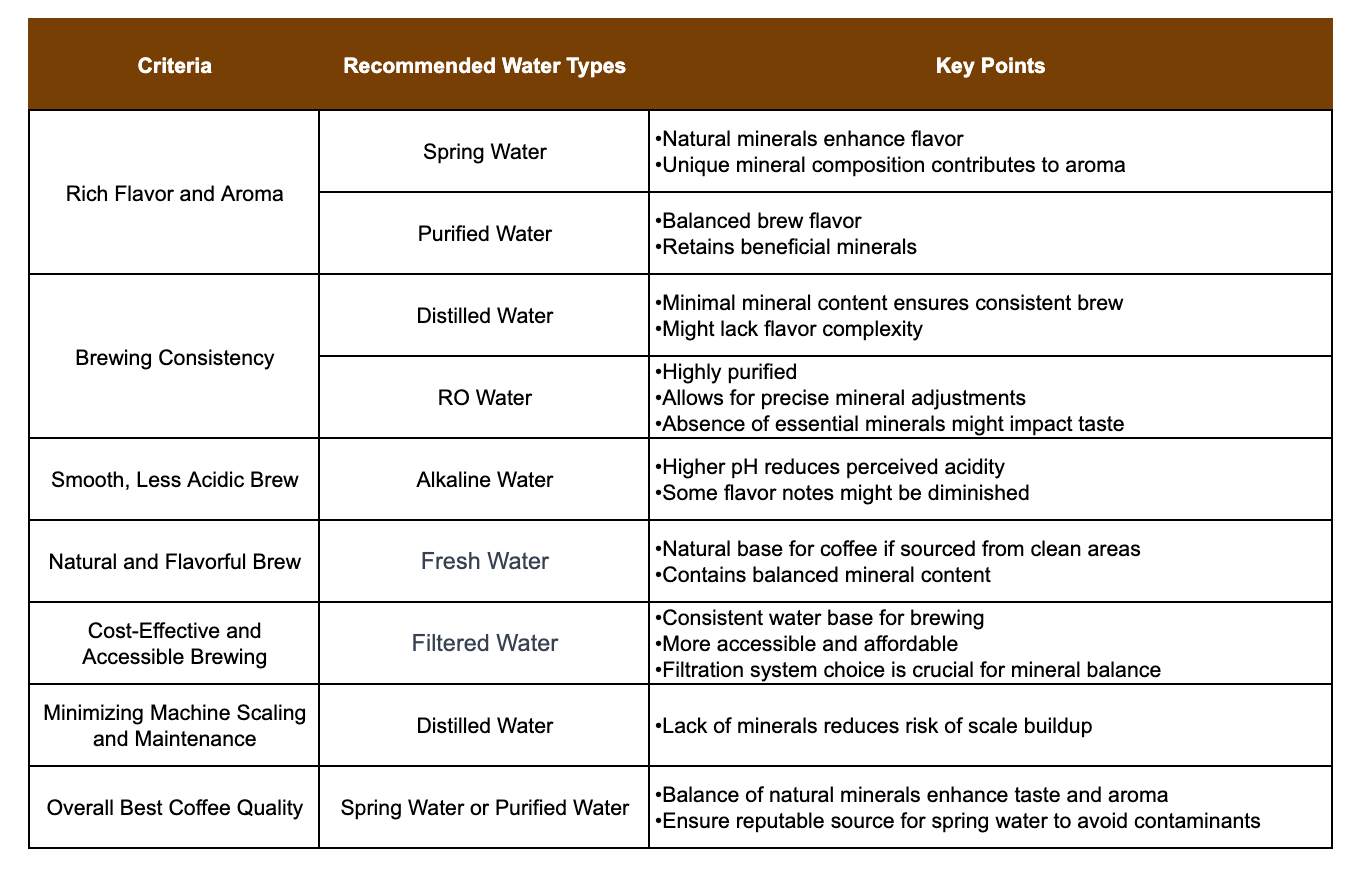
The comparison at a glance
Does water quality damage your equipment?
Yes, and it happens faster than most people expect. Scale — calcium carbonate and magnesium deposits — coats heating elements and chips away at thermal efficiency over time. On a boiler-based espresso machine, enough buildup raises the energy needed to hold temperature, throws off PID accuracy, and can eventually crack ceramic heating elements entirely. Not hypothetical damage. The repair bills are real.
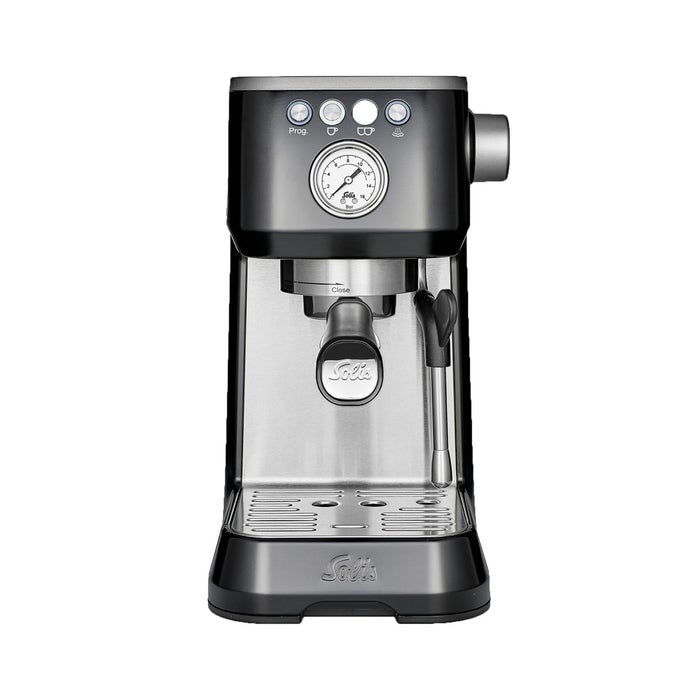
At hardness above 200 ppm CaCO3, monthly descaling is realistic for any machine pulling regular use. Between 100 and 175 ppm, quarterly is usually enough. Commercial descaling tablets like Cafiza and Dezcal are reliable. Citric acid works too. Vinegar is cheap but leaves an odor in the boiler that takes multiple rinse cycles to fully clear, and most machine manufacturers actively discourage it — some will void the warranty if you use it. Always check your manufacturer's instructions before descaling.
If you're running a prosumer machine on hard tap water, do the math on a whole-house softener or under-sink RO system. For many people, the cost pays for itself in avoided repairs within two to three years.
How does water quality vary by region?
Your location sets your starting point before you touch a single variable. This is the real reason the same bag of beans can taste noticeably different brewed in different cities.
- Iceland produces some of the softest municipal water in the world, with TDS often under 50 mg/L from glacial sources. Specialty cafes there typically remineralize to SCA targets rather than brew straight from the tap. The reputation for great Icelandic coffee comes from the cafe culture, not from the raw tap water being magically ideal.
- New York City draws from protected Catskill and Delaware watershed reservoirs. NYC water runs 50 to 120 mg/L TDS with moderate hardness and relatively low bicarbonate, making it one of the closer-to-SCA-ideal tap profiles among major US cities without additional treatment.
- Melbourne relies predominantly on rainwater-fed reservoirs with very low TDS (20 to 60 mg/L). Like Icelandic water, it's a good starting material but often benefits from remineralization for optimal extraction.
- London draws heavily from the Thames and Lee rivers, which run through chalk geology. Hardness commonly hits 250 to 400 mg/L, among the highest of any major city. Cafes using London tap without treatment scale their machines fast and find that even excellent beans taste heavy and flat. The difference between London tap and filtered water in a side-by-side tasting is genuinely striking.
Is a DIY water recipe worth the effort?
For filter coffee, probably not unless your tap water is genuinely bad. A good carbon filter or a Peak Water pitcher gets most people close enough to the SCA window that the improvement from a custom mineral recipe is real but modest.
For espresso, the calculus shifts. Espresso brews at 9 bar through a tiny volume of water, so mineral composition has an outsized effect on both flavor and scale accumulation in the boiler. Serious home espresso brewers who want to control both tend to land on remineralized RO — and that's the right call if you're pulling more than two or three shots a day.
A standard recipe that hits SCA targets: 2 liters of RO or distilled water, 0.35g food-grade magnesium sulfate (Epsom salt), 0.1g calcium chloride. That gets you to roughly 70 mg/L hardness with a magnesium-forward profile and a pH around 6.9. Use a precision scale readable to 0.01g. The amounts are small enough that eyeballing defeats the point.
Keep your base water consistent. Even distilled water from different brands can vary by a few mg/L, and mineral additive concentrations shift depending on what you're starting from. Consistency in the base means consistency in the cup.
The brewing method guides at CoffeeRoast Co. pair water temperature recommendations with brew ratios. Water mineral targets are the next variable worth nailing once you've stabilized method and ratio.
Frequently asked questions
What is the ideal TDS for coffee brewing water?
The Specialty Coffee Association recommends 150 mg/L as the target TDS, with an acceptable range of 75 to 250 mg/L. Drop below 75 mg/L and extraction tends to be aggressive and unbalanced. Go above 250 mg/L and over-extracted, bitter notes start creeping in. Worth knowing: a DiFluid or VST refractometer measures brewed coffee TDS, which is a different number than source water TDS. A basic $10 EC pen measures source water and is still useful for a quick starting-point check.
Is filtered tap water actually better than bottled spring water for coffee?
Often yes, assuming your tap water is in a reasonable starting range. Bottled spring water varies a lot by brand and by batch. Volvic lands close to SCA targets. Evian is typically too hard. Fiji runs around 220 mg/L TDS and sits at the borderline. Filtered tap water from a good carbon block, with TDS in the 100 to 175 mg/L range, brews cleaner and more consistently than most off-the-shelf spring options — and costs a fraction of the price over time.
Can I use distilled or reverse osmosis water for espresso?
Not straight from the membrane. Both distilled and RO water are near-zero TDS, which means almost no minerals to assist extraction — the cup comes out flat and thin. The right approach is remineralization. Bring TDS back up to 100 to 150 mg/L using a calibrated mineral mix like Third Wave Water, Lotus Water, or a DIY magnesium sulfate and calcium chloride recipe. Remineralized RO is actually one of the best options for espresso, especially if your tap water is high in bicarbonates or hardness.
How does water pH affect coffee taste?
Water near pH 7 stays neutral and lets the bean's own acidity come through without interference. Acidic water below pH 6.5 accelerates extraction and pushes fruit-forward origins toward sharp, almost aggressive brightness. Alkaline water above pH 7.5 suppresses that acidity and flattens the cup — which is exactly why alkaline water marketed for health purposes is a poor choice for brewing. Most US municipal tap water sits between pH 7.0 and 8.0; the higher end of that range can noticeably mute brightness in light roasts.
How often should I descale my espresso machine?
It depends on your water hardness. At 100 to 175 ppm hardness, quarterly descaling is usually adequate for a home machine pulling two to four shots a day. Above 200 ppm, monthly is more realistic. Commercial descaling tablets like Cafiza and Dezcal are reliable. Citric acid is a reasonable alternative. Vinegar works chemically but leaves an odor that can take several rinse cycles to clear, and most machine manufacturers discourage it — some will void the warranty if you use unsupported methods.
Does the type of coffee roast change the best water profile?
Roast level shifts solubility, which means the optimal mineral profile shifts too. Light roasts are denser and extract more slowly; a magnesium-forward water at 130 to 150 mg/L TDS tends to pull brighter, cleaner results. Dark roasts are more porous and extract faster; lower TDS (around 100 mg/L) and slightly higher alkalinity can tame bitterness. The SCA targets work as a solid baseline across roast levels, but if you're dialing in a specific single-origin, adjusting toward the lower or higher end of the acceptable TDS range is worth testing.
What happens if I brew coffee with very soft water (under 50 mg/L TDS)?
Very soft water — glacial, highly purified, or heavily filtered — extracts aggressively because there are almost no mineral ions to moderate the process. You'll often get a cup that's sour and thin, with acidic notes that feel sharp rather than bright. The fix is remineralization: even a small amount of magnesium sulfate (0.15 to 0.20g per liter) brings TDS up enough to stabilize extraction. Iceland and Melbourne cafe operators deal with this daily; remineralizing to SCA targets is standard practice in both cities.
Key takeaways:
- The SCA's target is 150 mg/L TDS, 50 to 175 ppm hardness, roughly 40 ppm alkalinity, and pH near 7. These numbers are a useful anchor for every water decision below.
- Magnesium and calcium extract different flavor compounds even at the same TDS. Magnesium-forward water pulls sharper, more acidic notes; calcium-forward water pulls heavier, sweeter ones.
- Filtered tap water is the practical winner for most home brewers. Carbon block filtration handles chlorine and chloramines; RO remineralization handles high-hardness or high-alkalinity tap sources.
- Water hardness above 200 ppm CaCO3 scales espresso machine boilers fast. Monthly descaling at that hardness level is realistic, not optional.
- Three options to avoid for brewing: alkaline water (pH 8 to 9.5), distilled water used straight, and high-TDS spring water like Evian. None of them brew a better cup than properly filtered tap water.


留个言