

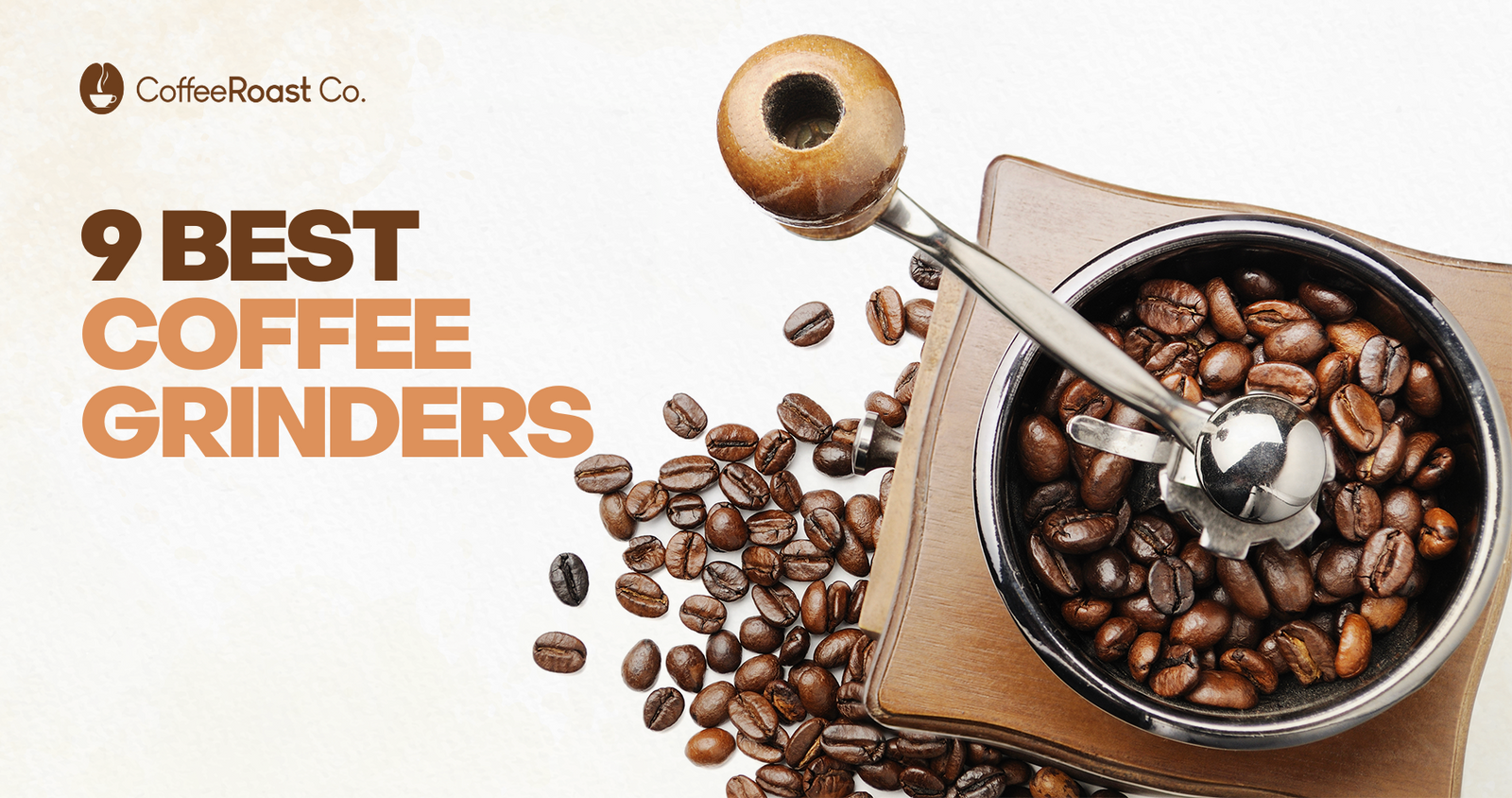
Quick answer: A burr grinder produces consistent particle size; a blade grinder does not. For filter and pour-over under $200, start with the Baratza Encore (40 grind settings). For espresso, step up to the Baratza Sette 270 (30 macro + 9 micro adjustments, near-zero retention) or the Eureka Mignon Crono (65 mm flat burrs, timed dosing). Best manual pick: Kinu M47 Phoenix at 715 g.
The single upgrade that moves the needle most on home coffee quality is the grinder — not the machine, not the beans. Pre-ground coffee starts losing volatile aromatics within minutes of leaving the burrs. A blade grinder makes that worse by chopping beans into a random mix of dust and chunks: fine particles over-extract, coarse ones under-extract, and you get both in the same cup. A burr grinder mills between two abrasive surfaces and produces a consistent particle size, giving water an even surface to work with. That's the whole game.
Best manual coffee grinders
Manual grinding takes 2 to 4 minutes per dose, depending on grind size and burr geometry. That's the honest trade-off. What you get back is grind quality that competes with electric units costing two or three times as much, in something that fits in a carry-on. If you travel with coffee gear, or if you're grinding at 6 a.m. in a shared apartment, manual is worth taking seriously.
1. Best overall manual: Kinu M47 Phoenix

The Kinu M47 Phoenix weighs 715 g and runs 47 mm Black Fusion-coated conical burrs on a dual-ball-bearing stainless steel axle. Kinu used ABS plastic for some body parts — versus stainless on the Classic and Simplicity — to hit a lower price point, but the burr set is identical across the entire M47 line. The burrs are what determine grind quality, so the Phoenix punches well above its price.
One limitation worth knowing before you buy: the stepped adjustment ring feels vague at very fine settings. Dialing in for espresso is doable, but fussier than it needs to be. The Simplicity adds a thumb stopper that fixes exactly that; the Phoenix doesn't have it. For filter, pour-over, and drip you'll never notice. If you're leaving cheap hand grinders behind and want M47 burr quality at the lowest entry cost, this is the right call.
2. Best for long-term daily use: Kinu M47 Classic

The Kinu M47 Classic is the original M47. It's heavier at 1,170 g because both the catch cup and bean funnel are full stainless steel. That weight is a feature: no rattle after years of daily use, consistent grind feel from session one through session five hundred. The high-precision axis alignment runs from Turkish-fine to coarse drip without wobble.
The click-indexing system uses a sprung metal bearing against the adjuster wheel. Coffee dust works its way in over time, but it's removable without touching the grind path. Worth knowing: that dust infiltration is cosmetic, not a performance issue. If you're planning daily grinding for several years and want the grinder that outlasts everything else in the cabinet, this is the one.
3. Best for espresso fineness: Kinu M47 Simplicity

The Kinu M47 Simplicity sits between the Phoenix and Classic. It drops from 1,170 g to 965 g by using food-safe ABS for the funnel and catch cup — same material as the Phoenix. But it keeps the auto-centering full-metal construction and adds the thumb stopper the Phoenix lacks. That stopper lets you apply lateral counter-force against the crank, which cuts axle wobble significantly at espresso-fine settings.
If you're pulling manual espresso shots and the Phoenix's vagueness at fine settings is the problem, the Simplicity is the fix. The 205 g weight reduction over the Classic sounds small until you've ground 20 g at espresso fineness and your forearm disagrees. That difference accumulates over a week of daily shots.
4. Best versatile manual grinder: ROK Coffee Bean Grinder

The ROK Coffee Bean Grinder uses hardened steel conical burrs, a long stable axle, and fine-pitch stepped adjustment. The bamboo composite grounds cup reduces static cling — which sounds like a minor detail until you've watched a conventional catch cup coat itself in coffee dust and realized you've been dosing inconsistently for weeks. Static is a real dosing problem, and the ROK addresses it at the materials level.
The stepped adjustment range runs from medium-fine for moka pot through coarse for French press. It's not the tool for precision espresso fineness; the M47 family owns that. But if you brew different methods on different mornings and want one manual grinder that handles that range without a fight, the ROK covers it better than any of the Kinu options.
Best electric coffee grinders
Electric grinders give you speed and repeatability without the arm work. The better ones also minimize grind retention — the stale grounds that linger between doses and contaminate your next cup. If you're pulling espresso daily and rotating through different coffees, retention matters more than most people realize. The Baratza Sette 270's gearbox design gets near zero retention, which is a real advantage over grinders that cost significantly more.
5. Best conical burr electric: Baratza Sette 270

The Baratza Sette 270 gives you 30 macro-adjustments and nine stepless micro-adjustments per macro step, covering espresso through coarse filter on one machine without swapping burrs. The gearbox grinds directly into the portafilter rather than through a chute — that's how it achieves near-zero retention. Switching between a light-roast Ethiopian and a darker blend mid-week, you're not pulling yesterday's coffee into today's shot. That matters.
The honest caveat: it's loud. Noticeably louder than the Eureka Silenzio. If you're grinding at 5:30 a.m. in a thin-walled apartment or with a sleeping baby nearby, the Silenzio is the better call. The 10-ounce hopper is fine for one or two people; for a household of four grinding every morning, you'll feel the limitation. But on extraction precision and retention, the Sette 270 is the value pick at its price tier.
6. Best flat burr electric: Eureka Mignon Crono

The Eureka Mignon Crono is handcrafted in Milan and runs 65 mm hardened steel flat burrs with stepless adjustment. Timed dosing means you set the run duration for your preferred dose weight once, and the grinder handles it every morning from there. The grind path drops straight into the portafilter or grounds bin with no winding channel, which cuts clumping and keeps grounds fresh.
Flat burrs produce a bimodal particle distribution: a concentration of fines around 100 to 200 microns alongside a coarser fraction. That mix creates puck resistance and flavor clarity that espresso drinkers consistently prefer. The Crono delivers it without the $1,000-plus price of a Mahlkonig E65S or La Marzocco Swift. One thing to be clear-eyed about: flat burrs are loud, and the Crono is no exception.
7. Best under $200: Baratza Encore

The Baratza Encore has been the default entry-level burr grinder recommendation in specialty coffee for over a decade. Forty grind settings, precision conical steel burrs, tool-free disassembly for cleaning. Replacement parts — burrs, motor, hopper — are available directly from Baratza, which matters when you're buying a machine you plan to run daily for five years. Parts availability is genuinely better here than on most of the competition.
The Encore is a filter grinder. It excels at drip, pour-over, and French press. It's not an espresso grinder — forty steps don't give you the micro-resolution espresso dialing requires, and the particle distribution runs coarser than a shot needs. If espresso is in the picture, direct that budget toward the Sette 270 instead. But if your mornings involve a V60 or a drip machine and you want consistent grounds under $200, this is the right answer every time.
8. Quietest electric grinder: Eureka Mignon Silenzio

The Eureka Mignon Silenzio earns its name. A sound-insulated case with rubber damping mounts produces a genuinely quiet result — not "quiet" in the sense that still means "pretty loud." The 50 mm hardened steel flat burrs run stepless, so you're not locked into click positions when dialing in. Timed dosing keeps your shot dose consistent without weighing every morning.
The bottom-burr adjust system lets you pull the lower burr for cleaning without losing your grind setting. Small detail, real convenience after the first hundred shots. One real limitation: the 50 mm burrs are smaller than the Crono's 65 mm. At similar RPM, smaller burrs run hotter, which affects flavor on light-roast beans under sustained back-to-back loads. Two espresso shots in the morning and you'll never notice. Grinding for four people before work, the Crono's larger burr handles that better.
At a glance: all eight grinders compared
| Grinder | Type | Burr size | Weight | Best for |
|---|---|---|---|---|
| Kinu M47 Phoenix | Manual conical | 47 mm | 715 g | Filter, pour-over, entry espresso |
| Kinu M47 Classic | Manual conical | 47 mm | 1,170 g | Daily use, Turkish through drip |
| Kinu M47 Simplicity | Manual conical | 47 mm | 965 g | Fine espresso, lighter carry |
| ROK Coffee Grinder | Manual conical | Not disclosed | Not disclosed | Versatile: moka through French press |
| Baratza Sette 270 | Electric conical | Not disclosed | Not disclosed | Espresso, low retention, multi-roast |
| Eureka Mignon Crono | Electric flat | 65 mm | Not disclosed | Espresso, timed dosing |
| Baratza Encore | Electric conical | Not disclosed | Not disclosed | Filter coffee, best under $200 |
| Eureka Mignon Silenzio | Electric flat | 50 mm | Not disclosed | Espresso, noise-sensitive households |
How to choose the right grinder for your brew method
The right grinder depends on one question first: what are you brewing? Every other spec flows from that answer.
For filter brewing — drip, pour-over, French press, Chemex — the Baratza Encore covers everything under $200 and you won't need more than its 40 steps. For manual pour-over on the road, the Kinu M47 Phoenix at 715 g is the right carry size. For espresso at home, the Baratza Sette 270's near-zero retention matters more than any other spec if you rotate through multiple coffees. If noise is the constraint, the Eureka Mignon Silenzio is the answer — its 50 mm burrs run warmer under sustained load than the Crono's 65 mm, but for typical home volumes the difference is negligible.
CoffeeRoast Co. stocks the full grinder collection across all of these categories. If you're not sure where your use case lands, the comparison table above is the fastest way to narrow it down.
Frequently asked questions
Is a burr grinder actually better than a blade grinder for home coffee?
Burr grinder, no contest. A blade grinder chops beans randomly — fine particles over-extract and taste bitter while coarse ones under-extract and taste sour, and you get both in the same cup. A burr grinder mills between two abrasive surfaces and produces consistent particle size, giving water an even surface to extract from. A $150 to $200 burr grinder like the Baratza Encore delivers a measurable improvement over any blade grinder, regardless of how expensive the beans or the machine are.
Is a manual grinder worth it if I already have an electric one?
Depends on the use case. For travel, a manual grinder like the Kinu M47 Phoenix at 715 g fits in a bag and outperforms most hotel-room electric options by a wide margin. At home where speed matters every morning, your electric grinder wins. Manual grinders at the M47 level are genuinely competitive with electric grinders costing two to three times as much — the trade is your arm effort instead of electricity and two to four minutes of grinding time.
What is the difference between flat burrs and conical burrs in a coffee grinder?
Flat burrs produce a bimodal particle distribution: a strong concentration of fines around 100 to 200 microns alongside a coarser fraction. That combination creates puck resistance and flavor clarity that espresso drinkers prefer. Conical burrs produce a narrower distribution that's more forgiving across a range of brew methods. In practical terms: flat burrs suit espresso particularly well, while conicals handle filter methods cleanly and work for espresso too. The Eureka Mignon Crono and Silenzio run flat burrs; the Kinu M47 line, the Baratza Encore, and the Sette 270 run conicals.
How often should I clean a burr grinder?
For daily home use, brush out the burr chamber every one to two weeks. A full disassembly and wipe-down every one to three months is sufficient unless you're grinding unusually oily dark roasts, which coat burrs faster. Urnex Grindz tablets work well for electric grinders and are simpler than disassembly for routine maintenance. The Baratza Encore disassembles tool-free; the Eureka Silenzio lets you pull the lower burr for cleaning without losing your grind setting.
Do I need a separate grinder for espresso and filter coffee?
Not necessarily, but there's a real trade-off. The Baratza Sette 270's 30 macro-adjustments and nine stepless micro-adjustments per step cover espresso through coarse filter on one machine. The problem is re-dialing: espresso dialing takes time, and if you're resetting between methods daily, you're spending that time every morning. If you genuinely split between methods, the Sette 270 is the most practical single-grinder answer.
What makes grind retention a problem for espresso?
Retention is the ground coffee that stays inside the grinder between doses. It goes stale, and the next dose you pull carries some of it into the shot. For filter coffee the effect is small. For espresso — where you're often rotating through different coffees and chasing precise extraction — yesterday's grounds muddying today's shot is a real problem. The Baratza Sette 270's gearbox-to-portafilter design minimizes this; most other grinders accumulate several grams of retention and require a purge dose to clear them before each session.
Key takeaways:
- A burr grinder is the single highest-impact upgrade for home coffee quality. A blade grinder produces uneven extraction by design.
- For filter and pour-over under $200, the Baratza Encore (40 settings, tool-free disassembly, good parts availability) is the right starting point.
- For espresso, grind retention and micro-adjustment range matter most. The Baratza Sette 270 wins on retention; the Eureka Mignon Crono wins on flat-burr flavor clarity.
- Manual grinders at the Kinu M47 level compete with electric grinders costing significantly more. The trade is time and arm effort.
- Noise-sensitive households should route to the Eureka Mignon Silenzio (50 mm flat burrs, sound-insulated case, stepless adjustment).



Leave a comment